From Pages to Puppets: A Gripping Retelling of Bykov’s Wartime Saga
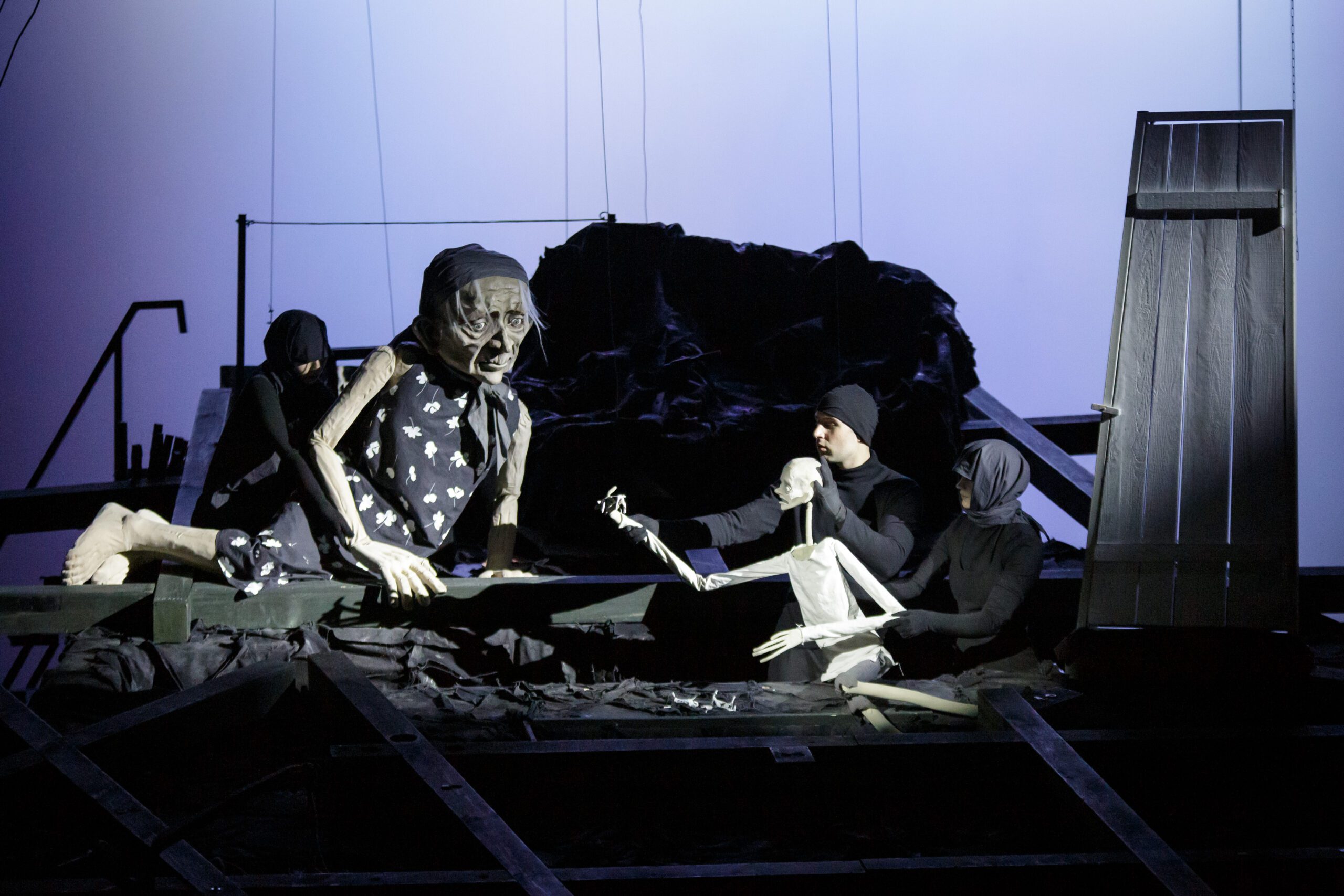
A Daring Feat of Puppetry
In the year commemorating the 80th anniversary of the victory in the Great Patriotic War, the Belarusian State Puppet Theater has accomplished the seemingly impossible. They’ve brought to life a performance based on Vasily Bykov’s novella “Sign of Misfortune,” a literary masterpiece renowned for its intricate subtext and profound psychological depth.
An Unforgettable Experience
The premiere of “The Hamlet,” held on June 21, 2025, marked not only a significant date in the theater’s calendar but also the 101st anniversary of Vasily Bykov’s birth. This performance is not for the faint-hearted. Lasting 2 hours and 10 minutes without an intermission, it’s a physically demanding experience designed to immerse the audience in the harsh realities of war.
Breaking the Fourth Wall
Under the direction of Eugeny Korniag, the audience is denied the comfort of passive observation. The performance is an immersive experience that provokes thought, evokes emotion, and awakens a genetic memory of fear. The auditorium transforms into a hamlet, trapping the audience in a world where they must confront the harsh realities of war.
The Magic of Puppetry
The creative trio of Korniag, Tatyana Nersisyan, and Ekaterina Averkova have crafted a performance that captivates audiences young and old. The theater’s unique magic lies in its puppetry, brought to life by masters like Oleg Nikolaichik, a veteran stagehand with 60 years of experience.
Puppets with a Life of Their Own
The puppets in “The Hamlet” transcend their inanimate nature, becoming extensions of the actors who manipulate them. The audience forgets they’re watching puppets, instead seeing the characters’ struggles, fears, and triumphs unfold before their eyes.
Symbolism and Character
The performance is rich in symbolism, with each puppet’s scale reflecting its character’s personality. The traitors and policemen are small and pitiful, while the Nazis are represented by towering boots. Death is depicted as a giant skeleton, a constant reminder of the ever-present threat of mortality.
The main characters, Stepanida and Pyatrok, are disproportionate in scale, mirroring their contrasting personalities. Stepanida, a symbol of courage and resilience, is a large puppet, difficult to control yet impossible to ignore. Pyatrok, on the other hand, is small and fearful, reflecting his hesitant and doubtful nature.
A Conversation with the Self
The performance creates a silence so profound that it rings in your ears. In this silence, each audience member engages in an internal dialogue, questioning how they would act in a war where neutrality is not an option. This introspective conversation is a testament to the performance’s power and impact.
Further Reading
For more information on the historical context of this performance, you can refer to History.com’s World War II section.