From Ancient Egypt to Madonna: The Timeless Allure of Red Lipstick
The Rich History of Red Lipstick
Red lipstick boasts a vibrant and storied past. It stands as one of the most iconic symbols of feminine beauty and sensuality worldwide. Despite its controversial reputation and the contentious issues surrounding its production in the past, women continue to be captivated by the alluring crimson shade on their lips. Let’s delve into the fascinating journey of lipstick, from its ancient origins to its modern-day significance.
Ancient Civilizations
Many historians credit the Sumerians with the invention of lipstick, while others believe it first emerged in Ancient Egypt. There, both men and women adorned their lips with a mixture of red ochre, carmine, wax, and fat. In Ancient Greece, women were socially restricted from wearing red lipstick in public, as it was associated with women of ill repute. Lipsticks of that era were concocted from red dye, sheep sweat, and crocodile dung. This led to the world’s first law prohibiting courtesans from appearing in public without lipstick, to maintain the social status of respectable women.
Conversely, in Ancient Rome, red lipstick signified high status, luxury, and wealth. Despite the toxic ingredients used in its production, both men and women wore it to flaunt their social standing.
The Middle Ages
During the Middle Ages, red lipstick was deemed inappropriate due to religious beliefs. It was considered provocative by the clergy. However, lipstick still indicated one’s social class. In 1200 AD Italy, upper-class women wore pink lipstick, while lower-class women were restricted to crimson shades.
The Renaissance
While English pastors in the 1500s condemned red as ‘devilish,’ Queen Elizabeth I boldly used a mixture of cochineal, Arabic gum, egg white, and fig milk to create her signature bright red lips. In the 1600s, the clergy continued their crusade against the ‘sinful’ color, but townspeople wore various red shades to denote their social status.
The 1700s
In the 18th century, the British government banned red lipstick, accusing women of using it to provoke and seduce virtuous men. Wearing red lipstick was considered evidence of witchcraft. Following the British, some American states also sought to protect men from alleged witchcraft and manipulation. A law was passed allowing a man to annul his marriage if his wife wore red lipstick in public. Fortunately, women in pre-revolutionary France faced no such struggles and freely wore bright red lipstick to accentuate their porcelain-white skin.
The 1800s
Influenced by Queen Victoria, red lipstick fell out of fashion and was largely forgotten throughout the 19th century. However, some historians claim that red lipstick made a comeback in the 1860s as a challenge and a testament to the evolving cosmetics industry. In 1870, the Parisian cosmetics brand Guerlain successfully launched a lipstick made from grapefruit, oil, and wax. As lipstick use was still considered taboo, actress Sarah Bernhardt caused a scandal by appearing in public with bold red lips in the late 1800s.
The 1900s
At the dawn of the 20th century, makeup finally gained social acceptance. According to Madeleine Marsh, author of ‘Compacts and Cosmetics,’ the most famous red lipstick manifesto was associated with the appearance of suffragettes on the streets of New York with bright red lips. After centuries of male dominance, social, moral, and religious persecution, red lipstick became a true symbol of women’s freedom and the fight for equality.
In 1915, Maurice Levy introduced the world to the first lipstick in a metal tube, which we still use today. Despite this progress in the cosmetics industry, lipstick ingredients still contained toxic substances, and the color did not last long. It wasn’t until 1938 that the government took effective measures to protect consumers from harmful cosmetics.
The 1920s-30s
Thanks to the development of cinema, the ban on bright red lipstick faded away. On black-and-white screens, more and more stars appeared with incredibly dark lips. The appearance of lipstick in films significantly increased its popularity and demand among ordinary people. In 1939, Vogue declared lipstick the ‘most important element of women’s cosmetics,’ which served as clear evidence of the growing interest in makeup, despite the Great Depression of the 1930s. This era also saw the emergence of the ‘lipstick effect,’ which economists explained as the need for people to buy products like lipstick to cope with crisis periods.
The 1940s
During World War II, lipstick advertising reached new heights, promoting victory with limited-edition shades like ‘Victory Red.’ This campaign aimed to encourage women to wear victorious red as a symbol of civic duty. Lipstick helped secure victory and became another symbol of women’s right to remain beautiful and feminine under any circumstances.
The 1950s
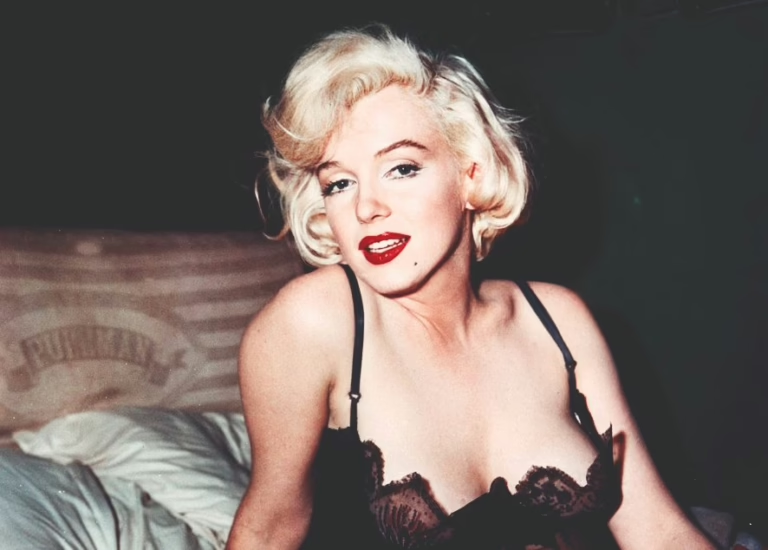
Revlon launched its popular ‘Fire and Ice’ advertising campaign in 1950, which was a huge success and entered the history of the cosmetics industry. The advertisement consisted of two pages and included a fifteen-question test showing readers’ attitudes towards bright red lipstick, advertised by model Dorian Leigh. To further fuel the popularity of bright lips, actresses like Elizabeth Taylor and Marilyn Monroe often left imprints of their crimson lips as signatures, making bright lipstick desirable and relevant for women of that time.
The 1960s-70s
The 1960s saw a decline in the popularity of red lipstick due to a new fashion trend favoring natural lip colors, popularized by the hippie culture and continuing into the 70s. Some feminists rejected lipstick as a tool to please men. However, by the late 90s, they changed their stance, promoting red lipstick as a symbol of femininity and sexuality that women should not shy away from.
With the advent of the disco and glam era, cherry-shine lips returned to fashion. Glam and punk rock cultures also contributed to the increased demand for bright lipstick among both men and women. This is not surprising, as the Egyptians used it long before David Bowie.
The 1980s-90s
The 1980s saw a surge in the popularity of bright colors, with Madonna at the forefront of her career. However, the late 90s showed a steady trend towards soft, pastel shades. But with the onset of the 2000s, women began to choose lipstick based on their mood, not shying away from bright colors.
Modern Times
Today, cherry lips look as stunning as they did many years ago. Fortunately, the content of harmful substances has been minimized. Now, women worldwide can afford bright red lipstick for self-expression, free from moral and gender prejudices. The only question in choosing modern lipstick is finding the perfect shade.
For more information on the history of cosmetics, you can visit the Smithsonian Magazine.