Exclusive Archival Photos of the Bolshoi Theatre You Won’t Find Anywhere Else
Exclusive Archival Photos of the Bolshoi Theatre You Won’t Find Anywhere Else
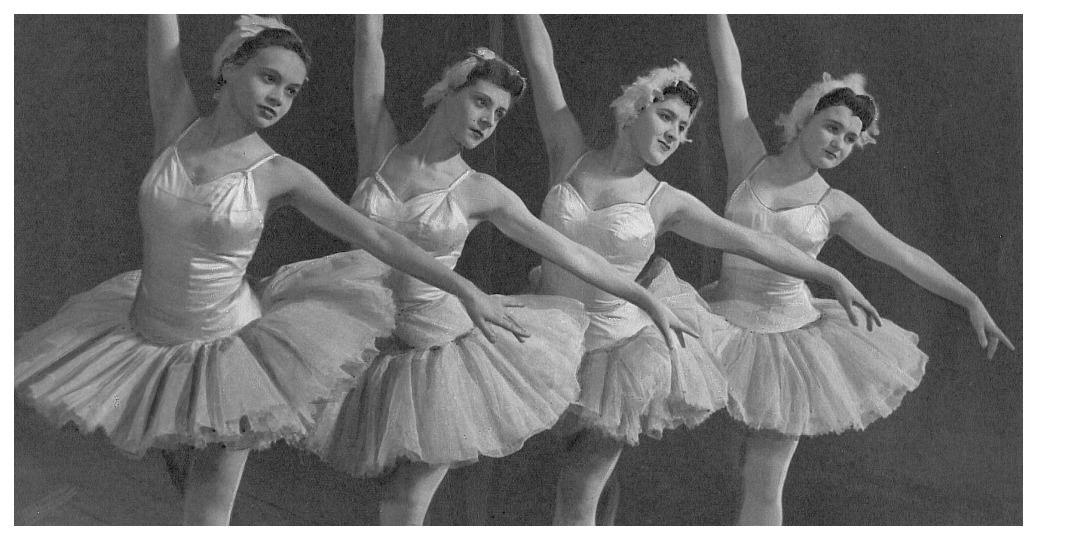
On May 25, 1933, the Belarusian Opera and Ballet Theatre opened its doors in Minsk. Before this, residents of Minsk and other cities could only enjoy visiting performances by opera and ballet artists, as they did not have their own dedicated musical theatre. Olga Savitskaya, the editor of the marketing communications service at the Bolshoi Theatre, has specially selected unique archival photos for “City of Women” that narrate the theatre’s history.
The Beginnings in 1924
The journey began in 1924 when a music college was established in Minsk, based on an old music school. Talented young individuals were trained by professional educators, including renowned former singers from Russia’s Bolshoi Theatre, V. Tsvetkov and Anton Bonachich.
1930s: From Studio to Grand Theatre
A few years later, in 1930, the Belarusian State Opera and Ballet Studio was organized on the basis of the college to train young artists. The studio was led by conductor Ilya Gitgarts, choreographer Lev Kramarevsky, and choir director Georgy Petrov.
Within three years, the studio had trained true professionals who became the first generation of stars at the Belarusian Opera and Ballet Theatre.
The future Bolshoi Theatre (this honorable title, bestowed upon only two Soviet theatres—Moscow and Tashkent—was given to the Minsk Theatre in 1940) was solemnly opened in May 1933 with Bizet’s opera “Carmen.”
The title role was performed by future People’s Artist of the USSR, Larisa Alexandrovskaya. The first performances of 1933 included operas “Eugene Onegin” and “The Queen of Spades” by Pyotr Tchaikovsky, “The Tsar’s Bride” by Nikolai Rimsky-Korsakov, and the ballet production “The Red Poppy” by Reinhold Glière.
The young collective was led by prominent masters of the Russian theatrical scene: conductor Vladimir Pirogov, choreographers Fyodor Lopukhov and Alexey Yermolayev, and artist Sergey Nikolaev.
The first generation of artists included opera soloists L. Alexandrovskaya, I. Bolotin, S. Druker, D. Kroz, N. Lazarev, V. Lapin, R. Mlodek, I. Muromtsev, V. Talankin, V. Tsepova, E. Shchetikhin; and ballet soloists Z. Vasilyeva, Y. Veprinsky, N. Gurvich, S. Drechin, A. Nikolaeva, T. Uzunova, Y. Khirasco.
The Opera Theatre did not yet have its own building, and performances were held on the stage of the drama theatre BDT-1 (now the Kupala Theatre). The Bolshoi Theatre building, as we know it today, was constructed in 1939 on Troitskaya Hill, where a market had previously been located.
The building was designed by Leningrad architect Iosif Langbard, who also authored the architectural projects of the Minsk House of Government, the Academy of Sciences, and the House of Officers.
1940s: The War Years
During the Great Patriotic War, many theatre artists went to the front or joined the partisan movement. Many became part of front-line concert brigades and performed for soldiers of the Red Army.
In early February 1942, the Belarusian government decided to gather the troupe of the Opera and Ballet Theatre in Gorky (Nizhny Novgorod). Immediately after the liberation of the capital on September 17, 1944, the collective returned to Minsk and began work on the newly completed opera about the heroic struggle of Belarusian partisans—”Alesya” by Yevgeny Tikotsky. This event marked the beginning of a new era and the revival of the Bolshoi Theatre of Belarus.
1950s: Revival
In the 1950s, new Belarusian performers joined the theatre, and young talented artists from other Soviet republics also arrived. Among them were famous singers Tamara Nizhnikova and Viktor Chernobayev, Raisa Osipenko and Mikhail Druzhina, Tamara Pastunina and Leonid Brazhnik, N. Guselnikova, Vladimir and Anatoly Generalov, Nikolai Vorvulev.
In ballet, stars like Basya Karpilova, Nina Mlodzinskaya, Lydia Ryazhenova, Klara Malysheva, Nina Davydenko, Irina Saveleva, Aleftina Korzenkova, Valery Mironov, Leonid Chekhovsky, Nikolai Shekhov, Yevgeny Pavlovich, and many others shone brightly.
More and more performances were staged: classical, modern, and national.
1960-1970s: New Faces and Building Renovation
In 1964, the Opera and Ballet Theatre of Belarus was granted the title “Academic.” In 1967, during another renovation, the theatre was technically re-equipped, a pitched roof was installed, and the interior decor was changed.
In the late 1960s, a generational shift occurred among the ballet artists—a new wave of talent joined the Bolshoi Theatre, including Lyudmila Brzhovovskaya, Yuri Troyan, Olga Lappo, Viktor Sarkisyan, and many others.
In 1973, the ballet troupe of the theatre was headed by Valentin Yelizariev.
1990s: Packed Halls and National Status
In the late 1980s, the opera “The Wild Hunt of King Stakh” was written by composer Vladimir Soltan in close collaboration with the production team and the performers of the main roles. The production caused a sensation among the public and critics, becoming a true sensation in the theatrical life of the country.
The history of “The Wild Hunt” is one of packed halls, the prestigious State Prize, rave reviews in the press, and an unforgettable performance of the opera under the open sky in Minsk’s Troitskoye Suburb in the mid-90s.
For more information, visit the official website.