Embracing Your Cultural Identity: A Journey of Self-Discovery
Embracing Your Cultural Identity: A Journey of Self-Discovery
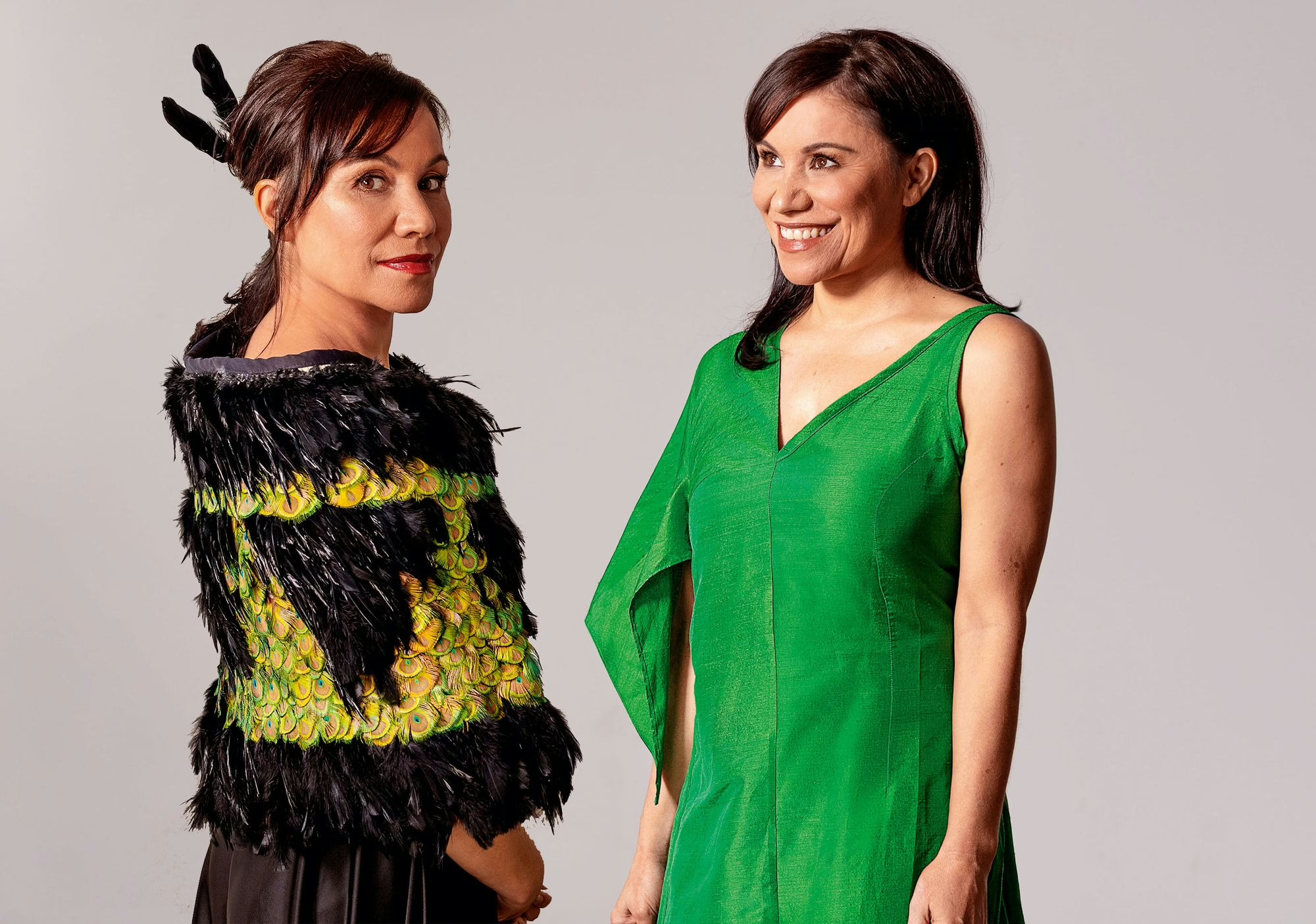
Stacey Morrison delves into the complexities of expressing your cultural identity and explores the question: “Am I Māori?”
The Power of Punctuation and Identity
It’s fascinating how punctuation can shape meaning. With a question mark, the statement “Am I Māori?” becomes an inquiry into one’s identity. Without it, “I am Māori” is a declaration of self. This subtle difference highlights the challenges many face when identifying as Māori, especially when unsure of their lineage or disconnected from their marae for various, often traumatic, reasons.
The Importance of Whakapapa
In Aotearoa, whakapapa (genealogy) is central to Māori culture. It connects us to our iwi (tribe), hapū (subtribe), and whānau (family). These concepts are deeply rooted in our understanding of identity and belonging. For instance, the terms hapū, iwi, and whānau have layered meanings related to pregnancy—hapū (bone), iwi (strength), and whānau (birth)—emphasizing the importance of blood ties.
The Challenge of Unknown Lineage
Many people know they have Māori ancestors but may not be aware of the wider connections. Statements like “Poppa was Māori” or “My great-great-grandmother was Māori” indicate a knowledge of Māori ancestry, but the broader links might be unknown. This can lead to questions about blood quantum and whether it determines one’s right to identify as Māori.
Indigenous Identity and Blood Quantum
Indigenous peoples worldwide have often had to justify their connection to land and resources by verifying the “amount” of indigenous blood they possess. However, if you have whakapapa Māori, you are Māori. Your identification and what it means for your lifestyle and life choices is a personal journey. There is no measurement required; toto (blood) connects us to our tūpuna (ancestors).
Making Connections
For those in the challenging position of knowing or half-knowing their Māori ancestry, making connections can be daunting. An ancestral name can help connect many dots. As Dr. Hinemoa Elder beautifully stated in the book Womankind: “There are people on the marae waiting for you. There’s a community that knows who you are; that knows you exist. There are people out there who are part of you and you’re part of them.”
The Role of Te Reo Māori
Te reo Māori can unlock part of this connection. Learning the ancestral tongue can help express who you sense you are meant to be. Te reo Māori provides words for feelings you might not have known you had. However, it’s essential to understand that fluency in te reo Māori is not a qualification required to be Māori. With whakapapa, toto, and whanaungatanga (kinship), you already are.
Conclusion
Embracing your cultural identity is a journey of self-discovery. It involves understanding your whakapapa, connecting with your community, and expressing your identity in ways that feel authentic to you. Whether through language, cultural practices, or simply acknowledging your heritage, each step brings you closer to embracing who you are.