Elena Ksenofontova: The Enigma of a Dramatic Actress Unveiled
Elena Ksenofontova: The Enigma of a Dramatic Actress Unveiled
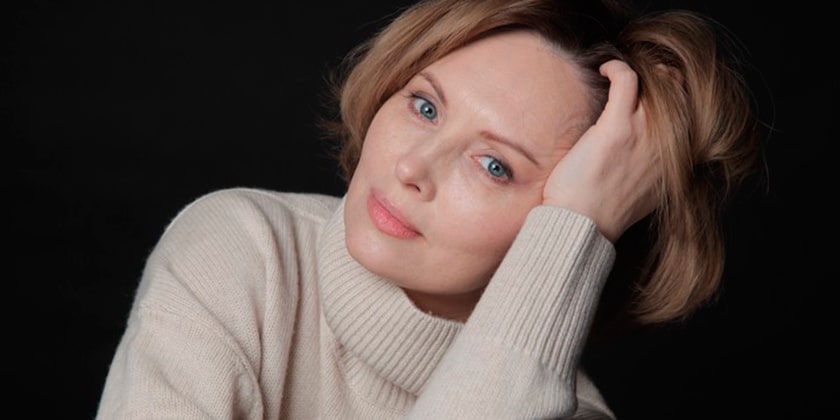
Elena Ksenofontova, with a gaze as enigmatic as the Sphinx—mysterious, captivating, and alluring. Her eyes hold a dangerous charm, drawing you in with an irresistible pull. She fascinates and enchants, igniting a passion within that beckons you to follow. Yet, she remains elusive, a puzzle that defies deciphering. Do not attempt to unravel her mysteries. Even if you think you have uncovered her secrets, disappointment awaits. For before you stands a woman who embodies not one, but many goddesses.
The Actress Always Wins
“Men cannot handle the volatile mix of beauty and intelligence,” Sharon Stone once claimed. Who better than Elena to confirm these words?
“Their problem,” she smiles. “Primarily, it’s a matter of men’s weakness. Rarely, but occasionally, you find men who can handle such a volatile mix. I am with someone who can. So far, he’s managing,” she smiles.
“My legs are not that beautiful; I just know what to do with them,” Marlene Dietrich once admitted. Does Elena know how to turn her flaws into objects of admiration?
“You see, I’m not a diva of show business but a dramatic actress, a clown, a jester, a performer—call me what you will; the essence remains the same. I must be versatile. Sometimes flawless.”
But when a role requires revealing certain imperfections, why not do it for the sake of the character? After all, our interests align. Like any woman, I know my weaknesses. And in certain situations, I can easily highlight them, despite my insecurities and the loud protests of my inner voice.
“That’s the actress in me. And as a woman? Naturally, I carefully hide all my real and imagined flaws. But when necessary, the actress in me prevails. And that’s how it should be.”
Perfectionism and Personal Boundaries
“Are you strict with yourself, or do you indulge in self-pity?”
“It varies; I can be indulgent. But mostly, I am ruthless to myself and others. We all measure others by our own standards. Demanding the highest standards from myself, I expect the same from others.”
“Being around me is not easy because I have much to overcome—from physical ailments to my own views on life, daily routines, and profession.”
“Perfectionists are terribly inconvenient for those around them. I don’t try to judge whether this is good or bad. It’s not easy for me either because the chances to relax become fewer and fewer.”
“I am rarely satisfied with what I do. Completely satisfied? I don’t remember when,” she smiles.
“Can you define a male territory that no woman should encroach upon?”
“I consider it indecent to pry into a man’s earnings or how much he spends on himself. It’s degrading. I have never known and never wanted to know.”
“Scenes of jealousy, if their cause is not a fact but merely a suspicion, degrade the woman more, showing her weakness and, most importantly, degrade the relationship with the man. It’s the first and giant step towards their destruction.”
“A man, like a woman, should have his territory of freedom, and this territory should be significantly larger than the territory of non-freedom.”
“In one play, my character says a good line: ‘An ideal couple is not when you have one ideal, but when your ideals do not interfere with each other.’ It’s important that a woman retains some mystery.”
“It can be arranged (this option is ideal for me) so that your daily lives hardly intersect. A man should always strive to understand you. If he knows in advance how you will react and what you will say, he will quickly get bored. As soon as he figures you out, he will lose interest. Because men are like children. Once he dismantles the toy, he says goodbye to it,” she smiles.
“On Heels, I Am a Queen!”
“In one of Elena Mikhalkova’s books, there is a phrase: ‘If you dress for men, you will be vulgar. If you dress for women, you will be boring. Dress for yourself if you have a brain.’ In your opinion, who do women dress for?”
“These are some feminist notions. What does ‘for yourself’ mean? I dress as I like, but these are still my (albeit not always conscious) ideas of what men find appealing. And partly women too.”
“Because it’s not yet clear whom you want to impress more when going out into society. You can endlessly repeat, ‘I follow my own taste.’ But we all know that there are malicious aesthetes whose words, ‘Nothing special, but how it suits her!’ would be very pleasant to hear. Much more pleasant than receiving a standard banal compliment from a man.”
“Marilyn Monroe once said, ‘The higher the heel, the closer to heaven.’ Do you relate to this position?”
“A woman on heels looks more elegant. I envy those who can walk on them for a long time. And Monroe could do it fantastically; it’s impossible to imagine her without heels.”
“I can and often do without them. There are objective reasons for this: otherwise, I would have to pay with severe pain in my legs and back. But when I am on heels, I feel like a queen.”
“Obviously, Monroe meant that a woman must look stunning under any circumstances without showing her problems to the world. She succeeded, which earns my immense respect.”
“According to Freud, how a woman relates to her shoes is how she perceives her sexuality. What kind of shoes do you love?”
“To some extent, I agree. I have always dreamed of a large shoe cabinet. It appeared, but there is still not enough space. I have plenty of shoes, but I only wear about 10% of them. There are shoes I bought eight years ago but have never worn. When I see beautiful shoes, I just can’t resist.”
Self-Critic
“To restrain yourself when offended and not to make scenes when hurt—that is what an ideal woman is,” Coco Chanel believed. What does the female ideal mean to you?
“I don’t know. A woman often suppresses a large part of her feminine nature, hiding emotions inherent to her nature out of fear, pride, or unwillingness to be pitied.”
“But is this an ideal? Perhaps the ideal is unpredictable? If Chanel referred this phrase to herself, she is far from my ideal of a woman. Undoubtedly a woman. Fantastic. Genius. But not ideal. Everyone has their own ideal. And those who know the truth will not reveal it to us.”
“Strangely, people are most offended by the truth. How do you relate to the truth about yourself? Are there people who can criticize you or make accurate remarks?”
“Of course, and I am one of them,” she smiles. “The truth, as they say, hurts. There is a truth you don’t want to know; you push it away, but someone takes you by the elbow and insists, ‘No, look.’ You have to.”
“When I hear someone say that they are their own harshest critic, I recognize myself. Very familiar egocentrism. I am my own worst critic, much more than anyone else. I don’t always accept external criticism. But it is necessary to not lose your frame of reference.”
“Most people could succeed in small things if they were not hindered by excessive ambitions,’ wrote American poet Longfellow. Do your ambitions match your personality?”
“Sometimes I lack ambition because I feel I won’t cope, won’t manage, and perhaps I shouldn’t have attempted it. But… All my successes and victories have been driven by ambition and only ambition. Not the desire to prove something to someone, but an irresistible passion to challenge myself.”
“White and fluffy’—is that not about you?”
“It varies,” she laughs. “I can be white and fluffy, but not for long. This is not my most familiar state.”