DIY Delight: Craft Vibrant Clay Labels for Your Herb Garden
DIY Delight: Craft Vibrant Clay Labels for Your Herb Garden
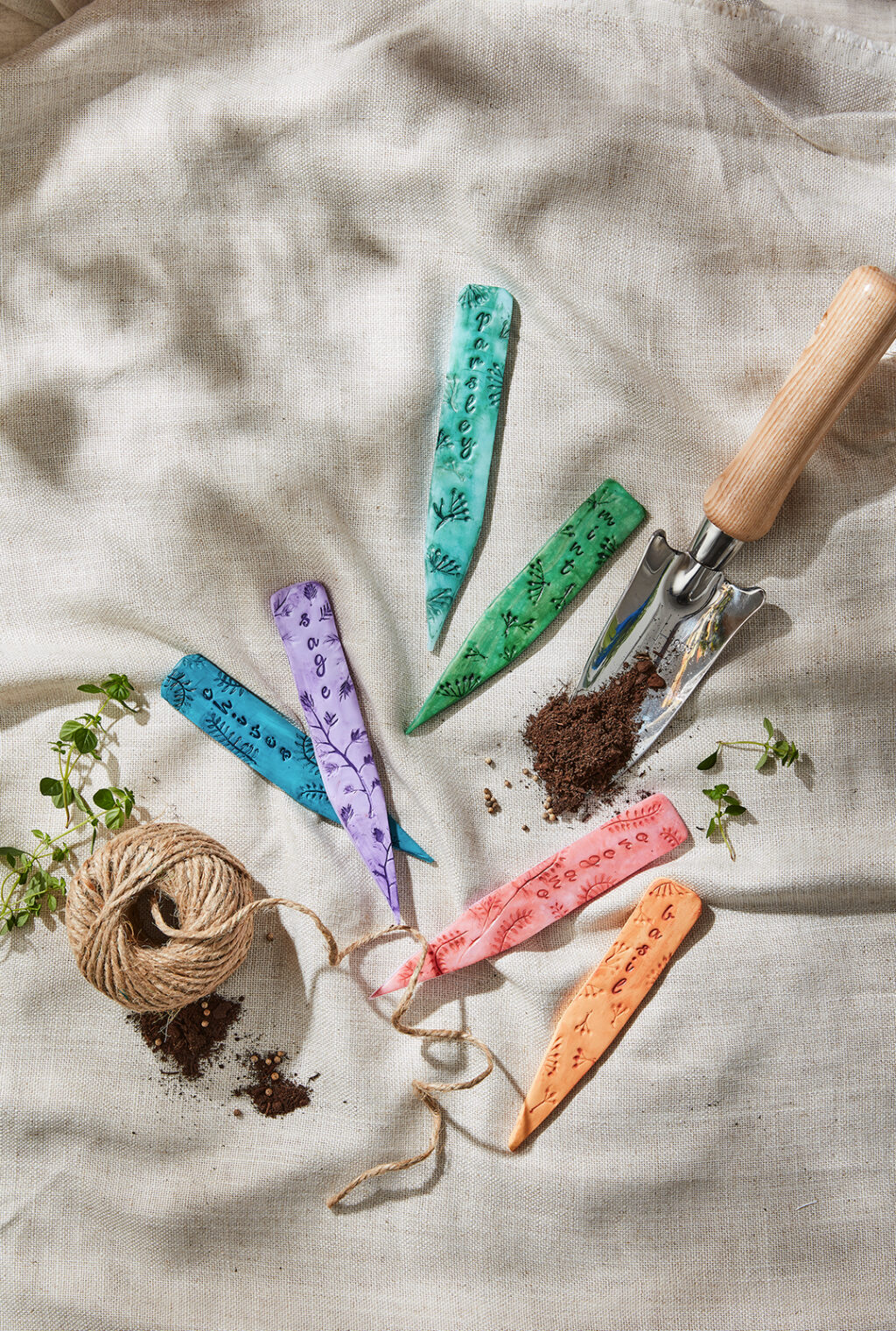
Add a pop of color and a personal touch to your herb garden with these adorable, budget-friendly DIY clay plant markers. Follow these simple steps to create your own vibrant labels.
What You’ll Need
- Rolling pin
- Alphabet stamps
- Colored baking clay (Fimo)
- Faux foliage or similar
- Palette knife
- Ruler
- Paint in darker shades of clay colors
- Baking paper and oven tray
- Wet wipes or old rag
Method
Step 1: Prepare the Clay
Knead the clay until it’s soft and malleable. Roll it out into a long oval shape, about 7mm thick and 20cm in length. Make sure to work on a clean, non-stick surface for the best results.
Step 2: Stamp the Herb Name
Starting a couple of centimeters from the top, spell out the herb name by firmly pressing the alphabet stamps into the clay.
Step 3: Add Foliage Imprints
Take small pieces of faux foliage and use your fingers to make imprints around the herb name. Continue this process down the length of the marker, varying the angles, shapes, and sizes for added interest. Use a palette knife or your finger to smooth out any unwanted impressions.
Step 4: Trim the Sides
Using a ruler, trim the sides with the palette knife, ensuring the herb name is centered and the marker is about 25mm wide.
Step 5: Shape the Marker
Trim the top to create a flat edge. Find the center point at the bottom and make two angled cuts to form a point at the base.
Step 6: Smooth the Edges
Use your finger to smooth all the edges of the marker.
Step 7: Bake the Markers
Place the markers on a baking tray lined with non-stick paper, making sure they are not touching. Preheat the oven and bake according to the clay instructions. At this thickness and size, baking usually takes about 15 minutes at 130°C.
Step 8: Enhance the Imprints
Once baked, the imprints may appear pale and hard to read. Use a darker shade of craft paint to enhance the patterns and herb name.
Step 9: Apply the Paint
Push the paint into all the crevices using your finger. Take a damp rag or wet wipe and gently run it over the surface, removing excess paint while leaving the paint in the impressions. Once you’re happy with the effect, set the markers aside to dry.
To make the markers last longer, especially if you’re using them outdoors, you can spray them with a coat of paint sealant. However, this step is optional.
For more inspiring ideas, check out this guide on garden markers.