Defying Limits: How Natalia, a Barista and Parachuting Enthusiast, Lives Life on Wheels

Defying Limits: How Natalia, a Barista and Parachuting Enthusiast, Lives Life on Wheels
At first glance, Natalia’s story seems like a blockbuster movie filled with triumphs, spectacular victories, and luck. She has conquered Moscow and Minsk, jumped with a parachute eleven times, dances, builds relationships, works, and serves as an inspiring example for many. However, every event in her life happened not by chance, but as a result of her inner choices and the rules she lives by. Together with A1 company, we continue the series of articles about baristas from “Inclusive Cafes” and share Natalia’s story.
“I am just a person living my life”
“Yes, there are moments in my life that others may not have, like the 11 parachute jumps. But otherwise, I am just a person living my life. Often, people in wheelchairs are portrayed as heroes. Like, ‘Oh, you finished school, well done.’ But studying, working, being in relationships, having hobbies—these are not heroic acts. This is just a normal life that anyone should have, whether healthy or in a wheelchair,” Natalia reflects.
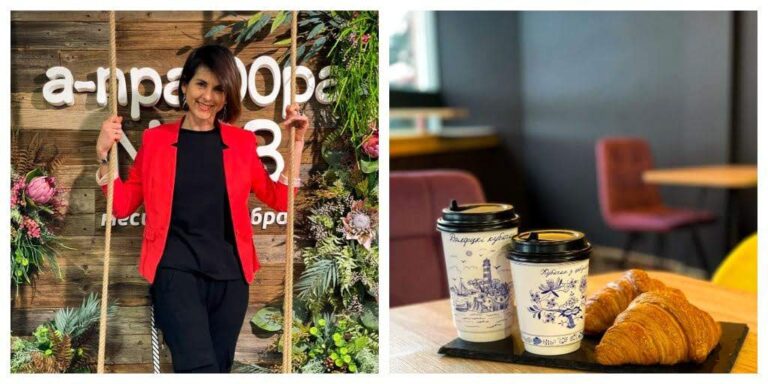
Natalia works as a barista at the main A1 office on Internatsionalnaya Street, 36. The coffee she makes is not just delicious; it’s close to perfect. Every proportion seems precise, well-calculated, yet filled with creativity. This reflects Natalia herself. She comes across as a composed and clear-minded person who knows what she wants and what she needs to do to achieve it. But during the conversation, you can’t help but notice her sensitivity, vulnerability, and a poetic aura that surrounds her. We tried to understand how she manages to live a bright, fulfilling life while remaining a delicate soul.
“If there is an opportunity to try something, why not try it?”
“I live by this motto: if there is an opportunity to try something, why not try it? Thanks to this approach, I became a barista and started parachuting,” Natalia explains. She began following this rule in childhood.
“In my childhood, there were no struggles or hardships. My parents raised me like any other child, and I never thought I was different from others,” Natalia begins her story. She studied the school curriculum at home but didn’t stay indoors. She spent a lot of time outside with other children, and from the age of eleven, she explored new places in her hometown of Lida with her best friend. If she wasn’t out, she found activities at home. She played the guitar, embroidered with ribbons, cross-stitched, beaded, made leather paintings, and crafts from beads and dried flowers. She participated in many competitions and exhibitions with her works.
“At 13, I learned about a center near Minsk—almost 200 km from my home—where people in wheelchairs were taught to dance. I wanted to try it, and I loved it. I even cried after the first session—I didn’t know if I could go back.”
She managed to return. But it took effort. The classes were in the form of gatherings: teenagers in wheelchairs came together for several weeks, trained, and spent their free time relaxing and socializing. Until then, Natalia had never lived away from her parents. Now she had to become completely independent, not just in daily life.
“We didn’t have a car, so at first, acquaintances took me there. Then I started traveling alone by train,” the girl recalls.
Dancing has stayed with Natalia for life and given her a lot. It strengthened her physically, helped her open up, find new friends, and gave her many performances and victories. She has numerous awards from competitions in Belarus and Russia, and her most serious achievement is third place in the World Cup. But for Natalia, this is not the most important thing. What matters more is that dancing gave her the courage to take a crucial step that later influenced her entire life.
“If it weren’t for dancing, I wouldn’t have dared to go study in Moscow. And without that experience, I probably wouldn’t have decided to move to Minsk. I would have been less independent, a homebody, not someone ready for adventures.”
“If something doesn’t work out, I think and analyze”
Adventures didn’t keep her waiting long. After graduating from school with a gold medal, Natalia was going to study to become a speech therapist through correspondence courses at Grodno University. But she received an invitation to participate in a special program and study at the Moscow State University of Humanities and Economics.
“The question of ‘to go or not to go’ didn’t arise. I was interested in how I would cope. My parents also believed in me and let me go without hesitation. But those around me were shocked.” University life fully adhered to the principles of inclusion: students with and without disabilities studied together. So, Natalia’s university life was no different from that of other students. She attended classes, worried about exams, made friends, fell in love, and managed her daily life with her roommates in the dormitory.
Of course, she didn’t deviate from her habit of trying new things and got involved in various activities. She played on a men’s basketball team, fenced, and took makeup courses. She embraced everything Moscow had to offer: regularly attended interesting events and concerts at the Olympic Stadium. At first, she went with friends, then often alone.
“I understood that after my studies, I would return, and so I made the most of everything.”
However, to make the most of it, she had to overcome many obstacles. Moscow is not an easy city for someone who uses a wheelchair; accessibility is far from universal. And surprises could await at any stage. For example, some metro stations lacked not only escalators or elevators but even handrails on the stairs. Of course, climbing or descending such steps was impossible.
“Stopping because of difficulties is not in my nature. At 13, I learned to climb the stairs to the second floor because I wanted to spend more time with my friends and didn’t want to wake my parents. Now the situation was similar: either you sit in the university and see nothing, or you try to figure something out.” And Natalia tried. She always carefully studied different route options before going out and took photos of maps (Google or Yandex maps didn’t exist yet). On the spot, she acted according to the situation. If she could do something herself, she did. If necessary, she asked for help.
“If something didn’t work out, I always thought and analyzed what I needed to do differently next time to succeed.” The girl admits that this habit has stayed with her: now she analyzes everything and always. Starting from how best to froth milk to why negativity arises in relationships. Understanding causes and effects helps her adapt better and take control of the situation. And also not to give up, even if it’s very difficult.
And as a rule, such stories end well. Natalia recalls how once she was going to an exam for a makeup course. The exam was on Saturday, and on Friday…
For more information on inclusive initiatives, visit the official website of A1.