Cheese Etiquette: Savor Like a True Parisian with These Expert Tips
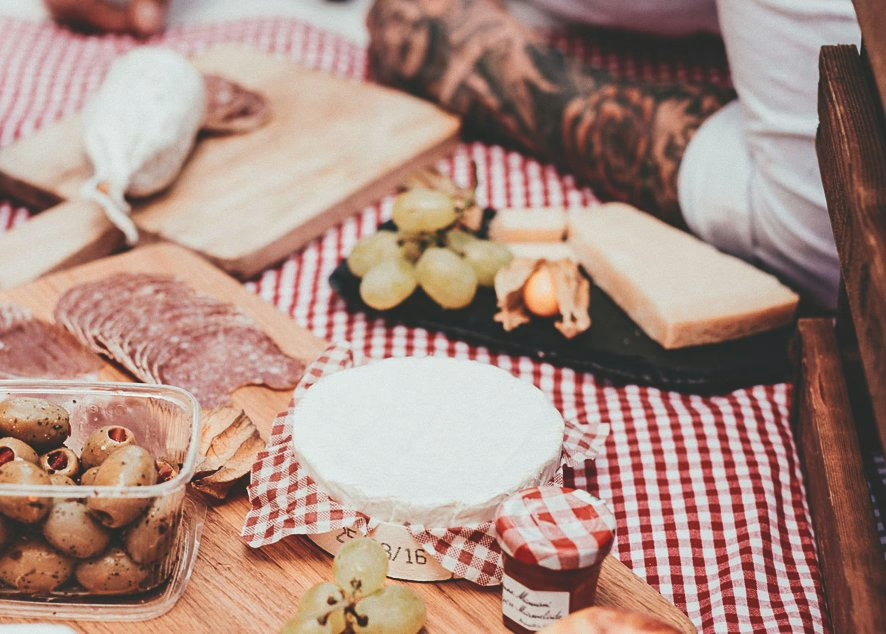
Cheese Etiquette: Savor Like a True Parisian with These Expert Tips
Turophilia, the love of cheese, might not be a household term, but its sentiment is shared by many. After the sanctions in Russia, finding quality cheese became a challenge, often leading us to settle for whatever was available. Fortunately, times have changed, and we can now turn our attention to European traditions, particularly those of the French, who would never consider serving unfamiliar cheese at a gathering.
The Rich History of Cheese
Cheese-making was no simple feat, as historical records indicate. One legend speaks of an Arab merchant who filled a leather pouch with sheep’s milk before embarking on a desert journey. Upon arrival, the enzymes in the pouch had transformed the milk into curds and whey—a refreshing drink and a nourishing food.
Aristotle noted that cheese could be made from a fig leaf and goat’s milk, and Homer’s “Odyssey” mentions Cyclops making cheese. Essentially, wherever there was milk, cheese production followed.
During World War II, cheese production nearly disappeared as many varieties were replaced by standardized national cheeses. Today, however, cheese is abundant, with over 900 varieties worldwide, some even protected by the National Cheese Council! French President Charles de Gaulle once joked about the difficulty of governing a country with 246 different kinds of cheese.
French Cheese Traditions
The French are staunchly against using cheese as an appetizer. In Paris, you won’t find cheese skewered with onions and tomatoes. Turning cheese into canapés is considered sacrilegious. The French believe cheese should be served with nothing more than a baguette, as crackers can detract from the cheese’s true aroma and flavor.
In France, cheese is typically enjoyed after the main course, serving as a unique dessert. To create a gourmet treat, place a small piece of cheese on bread, avoiding the temptation to cover the entire surface—it’s not Nutella.
How to Serve Cheese
Cutting cheese is a matter of geometry and manners. The method depends on the shape:
- Square cheeses: Cut them into triangles.
- Round cheeses like Camembert: Cut them into triangular slices like a cake. The center of the circle is the ripest and most flavorful part, unlike the rind.
- Soft triangular cheeses: Cut them into thin slices along the edge from the tip to best distribute the ripe and less ripe areas.
If you’re serving Brie, never cut off the “nose”—the tip closest to the center, which has the most aroma.
Before serving, let the cheese sit at room temperature for at least an hour to enhance its aroma. Ensure that oxygen and moisture do not penetrate the packaging. Never store more than one type of cheese in the same container or bag.
The Order of Serving Cheese
Cheeses should be served in a variety: one hard, one soft, and one blue. When eating cheese, start with the mildest in the set. For example:
- Brie
- Goat cheese
- Blue cheese
- Camembert
This order allows your taste buds to appreciate both the mild first and the strongly scented last piece. Remember, it’s proper to drink wine with cheese, not to snack on cheese with wine.
For more information on cheese and its rich history, you can visit the Cheese.com website.