Changing Tides: The Transformation of Gender Roles in Families Over the Past Century
Changing Tides: The Transformation of Gender Roles in Families Over the Past Century
In the mid-20th century, Western nations regarded the Soviet Union with a mix of skepticism and curiosity. This was not only due to political differences but also because of a lack of understanding of their societal structures. The Great October Revolution abruptly granted men and women equal rights, a process that was much more gradual and challenging in Europe and the USA. The contrast was stark, as 100 years ago, men and women were largely segregated on social and familial levels. Some aspects of these “Soviet remnants” have had a positive impact, particularly in shaping the roles of men and women within the family. After the dissolution of the Soviet Union, some of these aspects were preserved, leading to the flexible, modern society we see today, which is vastly different from the norms of 1917.
The Kitchen: No Longer Just a Woman’s Domain
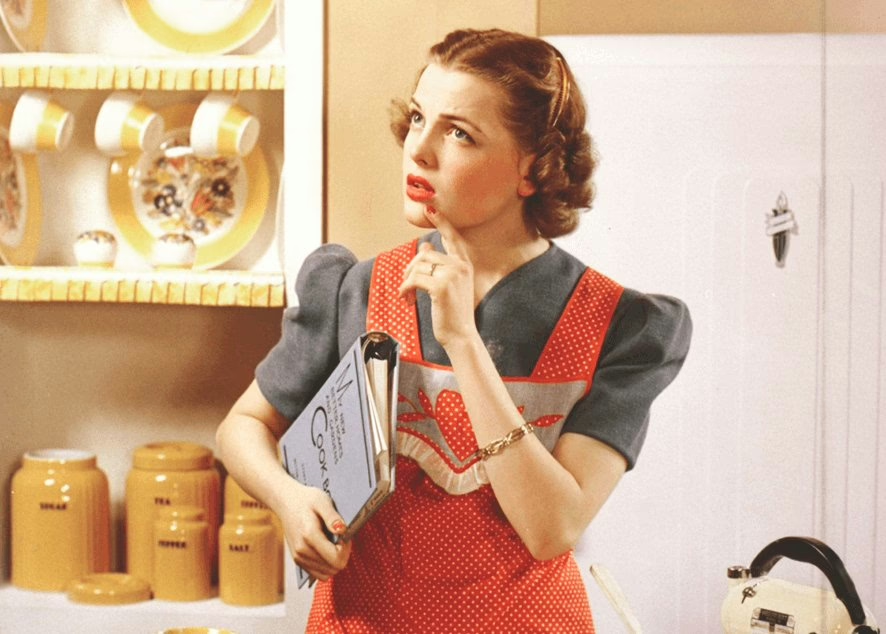
A century ago, the kitchen was solely a woman’s responsibility. By the time her husband returned from work, the table had to be set, and dinner ready. Women woke up earlier than their spouses to prepare breakfast, heat water for morning routines, and lay out clothes. Additionally, women were responsible for all grocery shopping and other household errands. They received a limited amount of money from their husbands and had to manage within that budget. Even if the husband was a chef or cook, the wife handled the cooking at home.
In modern families, cooking responsibilities are not strictly divided. Typically, the better cook handles the meals, regardless of gender. Men often take on grocery shopping as it involves carrying heavy bags. Moreover, families frequently shop for groceries together, making it a shared responsibility.
Household Chores: A Shared Responsibility
Before 1917, household chores and daily tasks were exclusively women’s work. The term “wife” was almost synonymous with “homemaker,” and women rarely thought beyond these roles, even if they worked outside the home. Today, men also participate in home management and care, not just in tasks like fixing shelves and tightening sockets. Household chores are divided equally or based on preference and available time, often done together for efficiency.
Over time, household roles have shifted from being gender-specific to shared family responsibilities, distributed based on convenience and ability.
Financial Equality: A Work in Progress
Historically, men were the primary breadwinners. The reason was simple: any job a woman could get was either incompatible with family life or paid so little that it didn’t contribute meaningfully to the family budget. Without a working husband, women had to work tirelessly at low-paying manual jobs like sewing or cleaning.
Education was also challenging. Most schools were gender-segregated, with girls receiving an education focused on homemaking. If women managed to attend higher education institutions, they were limited to “distracting” humanities fields, which offered few job prospects. At best, they could become teachers. Most working women obtained practical professions from courses and vocational schools, with second education opportunities being nearly impossible.
Today, men and women have equal opportunities for education and employment. In families, there’s no set rule on who should be the breadwinner. If a woman is a successful businesswoman, it’s acceptable for a man to earn less. While there are still disparities in wages for the same positions, societal efforts are continuously addressing this issue. Now, women can support themselves and contribute significantly to the family budget.
Redefining Masculinity
Some activities previously considered exclusively feminine are now accepted when done by men. For example, many men now visit beauty salons, stylists, and undergo cosmetic procedures. Previously, only flamboyant men did this secretly, often facing gossip. Men rarely bought clothes themselves and sometimes didn’t even know their sizes. Wives handled clothing purchases or tailoring. Now, men often know their partners’ sizes and can buy clothing as gifts for their wives and children.
Regarding children, fathers were previously excluded from early childcare. Changing diapers, feeding, and bathing were women’s duties, done away from the husband’s sight. Men only engaged when children were older, to discipline or reward them, but child-rearing was still the wife’s responsibility. Today, both parents equally participate in childcare and upbringing, and changing a diaper is no longer a novelty for fathers.
Over the past century, women have gained the long-awaited opportunity to drive. Before the revolution, female drivers were rare, as it was considered a male activity, and obtaining a driver’s license was nearly impossible for women.
Independence: A Virtue, Not a Vice
Overall, attitudes towards marriage and family have drastically changed over the past century. While a woman in her thirties was once considered an old maid, early marriage is no longer the primary goal and dream of every woman. People now approach partner selection more responsibly, and the divorce system has become simpler and more accessible compared to the pre-revolutionary “marriage made in heaven,” where unhappy couples had little chance of separating.
Society no longer stigmatizes single mothers. Previously, this was considered shameful and could lead to serious issues with neighbors and employment. Landlords might refuse to rent rooms to such “loose women,” as unmarried single mothers were labeled. Today, this situation is unfortunately common, and single mothers receive support.
Late pregnancies are no longer unusual. Many women have children in their thirties or even forties, when they are certain they want a child. Before the revolution, this was problematic due to underdeveloped public healthcare. Civil unions have also become normal, allowing partners to get to know each other better. In early 1917, neighbors would have ostracized a couple living in a civil union.
For further reading on the evolution of gender roles, you can visit this authoritative source.