Cane Corso: Debunking 6 Myths About This Majestic Breed
Cane Corso: Debunking 6 Myths About This Majestic Breed
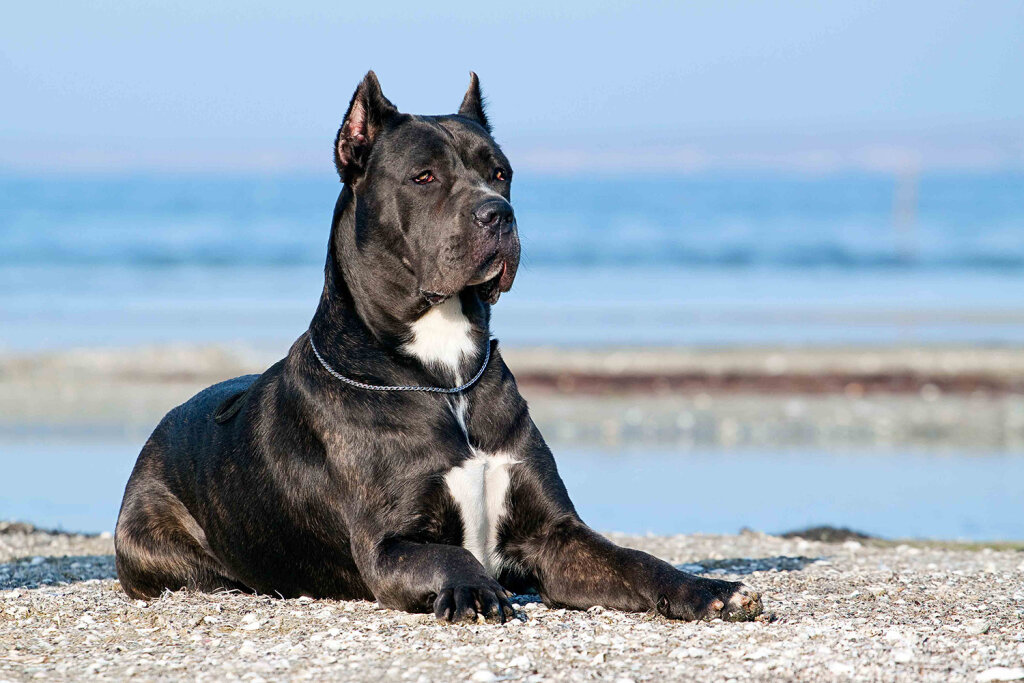
Upon seeing a large, muscular dog, people often say, “Mean, fighting dog.” But if you spot a black, panther-like Cane Corso on the street, with its massive head and thoughtful eyes, rest assured, it won’t bite. Cane Corsos are not common in Belarus, so it’s hard to imagine that such a massive dog can be gentle and affectionate.
My First Encounter with a Cane Corso
A few years ago, I visited the Cane Corso kennel “Roman Warrior” with a friend to choose a puppy. The owner, Elena Chekatovskaya, greeted us at the door:
“Well, let’s meet the father of the puppies?”
And then, a huge dog, as big as a Great Dane, proudly walked out of the room, wagging his docked tail, and came to sniff me.
“He wants you to pet him,” Elena smiled.
I’ve always had a soft spot for large, short-haired breeds, but due to lack of information, I also thought that dogs with such an appearance were unpredictable and aggressive by nature (although a dog’s character largely depends on upbringing). After getting to know the Cane Corso better, I can confidently say that this breed is my favorite. Allow me to debunk some myths about the Cane Corso.
Breed Description
Originally, Cane Corsos were used as shepherds and guards, for hunting and baiting wild animals, and they faithfully served as cattle drovers and fighters. Today, Cane Corsos are primarily used as guard, protection, police, and search dogs. Like any former shepherd dog, the Cane Corso has strong territorial qualities, protecting everything that belongs to its owners, including other pets. As a standard molosser, the Cane Corso has a strong character, shows independence, and can be stubborn. However, the tendency to dominate the owner is less pronounced than in some other breeds of this type. The character of dogs of this breed is quite flexible, and with proper upbringing, this dog is obedient and easy to manage.
For example, during our photo session, the dog models behaved like true professionals—without any whims or disobedience. They patiently endured several hours of shooting, and I think they even enjoyed the process. They walked importantly past curious onlookers. And soon we became so friendly with them that they began to follow commands given by me, of course, looking at their owners. And Jean Mare even deigned to kiss.
“Corsos are happy when there is a large company for games and walks,” Elena said. “A well-bred Cane Corso will not bring any trouble to its owner; it listens well to all members of its family.”
By the way, there is no egoism in Corsos, characteristic of many molossers, when a dog openly jealous of its owner and in every way tries to attract his attention.
How Does the Breed Interact with Children?
Even an adult Cane Corso remains a child at heart. Often up to 13-14 years old, these dogs retain full activity. You can see how a powerful dog, fiercely tearing apart a dummy on the training ground, frolics like a puppy, playing with a 10-year-old girl and her friends. Moreover, this dog allows children to do whatever they want with it: ride on its back, tie ribbons, and play “pile-up.” Of course, not all dogs love children equally. Much depends on the owners of the puppy, on how they treat it and how they raise it. Often, adults buy an expensive toy for their child—a purebred puppy—and what the child will do with this “toy” no longer concerns them. I think it’s unnecessary to describe in detail what can grow out of a puppy that a child constantly “bothers.” Therefore, if you have small children and you plan to buy a dog, be sure to explain to the children how to handle the puppy.
Can You Keep This Breed in an Apartment?
The Cane Corso lives equally easily in an apartment and in a country house. It has a small undercoat, but it is unlikely to keep it warm in -40°C frost, so year-round outdoor living is not recommended. The Cane Corso is also not suitable as a chained dog; it is too freedom-loving and needs communication with its family. It is not a giant (something between a Rottweiler and a Boxer), compact, mobile, but not fussy. Such dimensions allow you to keep the dog in a city apartment. Moreover, the Cane Corso does not have a specific dog smell. “Our townspeople love dogs with a serious appearance, ‘so that everyone is afraid, and it’s not scary to walk the streets,'” Elena smiles. “The appearance of the Cane Corso is quite enough so that others understand—this dog can stand up for itself and its owner.” In addition, the Cane Corso has incomparable facial expressions and a smart, penetrating look—another distinctive feature of the breed.
All Cane Corso Puppies Are Premium Class
“Cane Corsos are not sold at bird markets, and if someone tried to sell you something ‘Cane Corso-like’ there—don’t believe your eyes! So far, breeders have managed to control the situation and prevent particularly enterprising citizens from starting to mass-produce Cane Corsos. In Belarus and Russia, you can count the famous breeders on the fingers of one hand. They have no competitors yet, and their children are just growing up. If you want to buy a real Cane Corso, you should sign up for a puppy in a specialized kennel in advance!” Elena warns.
How to Choose a Purebred Puppy?
The first thing that should alert you is a very low price. “High-class Cane Corso puppies from imported producers. Cheap”—this is complete nonsense! Next, pay attention to the conditions in which the puppies are kept. If it’s something between a pigsty and a dump, and the “breeder” himself resembles a tramp—leave without explanation. Listen carefully to the breeder; if he only praises his “goods” and is not even interested in why you need a Cane Corso—this is a “mass producer.” True professionals treat each puppy like their own child. If they are not sure that the “child” will get into good hands (even for crazy money!), they will refuse the buyer.
History of the Cane Corso Breed
Despite a couple of millennia of existence, the Cane Corso is a young breed. Just 30 years ago, the breed was considered almost extinct, and its triumphant return began at the end of the 20th century. In their homeland, Italy, the breed began to revive in the mid-80s, and only in 1996 did the Cane Corso receive official recognition from the International Canine Federation (FCI). Corsos are considered descendants of ancient Tibetan dogs, which are considered the progenitors of shepherd and fighting dogs. In the Middle East, for example, in the capital of Assyria-Nineveh, there are bas-reliefs with images of dog-like dogs dating back to 2283-2151 BC. There are mentions of them in Chinese literature: in 1121 BC, the Chinese emperor received a dog trained to catch people as a gift from a Tibetan ruler. During the legendary campaigns of Alexander the Great (4th century BC), he was always accompanied by fighting dogs. A whole pack of such dogs was given to him by the Indian king Porus. Fighting dogs were kept in the armies of Assyria, Babylon, Persia, in Europe, dog-like dogs were with the Huns, Celts, and Teutons. The warriors of Ancient Carthage released legions of angry and hungry dogs on the enemy before the attack. The dogs were protected by special chain mail and armor, and for invulnerability from enemy dogs, they wore spiked collars around their necks. In Rome, they guarded slaves and prisoners of war, accompanied the chariots of commanders.