Bridging the Gap: When Doctors and Educators Speak the Same Language
Bridging the Gap: When Doctors and Educators Speak the Same Language
In our rapidly evolving world, the health and development of children have taken center stage. However, a critical question arises: who truly understands the complete picture of a child’s growth? A pediatrician sees one aspect, a speech therapist another, and an orthodontist yet another. Meanwhile, the child continues to face challenges whose root causes remain a mystery. To break this cycle, a unique project called “Round Table” has emerged in Minsk, bringing together the most progressive specialists in medicine and education.
Why Dialogue is Essential
Imagine a scenario where a child struggles with speech, and parents take them to a speech therapist. However, the root of the problem might not lie in the educational realm but in a medical issue, such as impaired nasal breathing, which can affect the formation of the facial skeleton, bite, and even posture. Without timely intervention from an otolaryngologist and an orthodontist, the speech therapist’s efforts might be less effective.
Such complex and interconnected cases were the central focus of the discussion. Orthodontists, pediatricians, otolaryngologists, and special educators each shared how a symptom presented to them could be just the tip of the iceberg. Their common goal was to minimize risks in children’s development by creating an effective system of teamwork.
The Bridge Between Disciplines: The Role of Myofunctional Therapy
Special attention was given to myofunctional therapy, a discipline that embodies the union of medicine and education. This relatively new field in our country is still in its infancy but has already proven to be highly effective.
A myofunctional therapist, often with a background in speech therapy or special education, works with a child’s “muscle framework,” correcting breathing and swallowing patterns, and the resting position of the tongue. These adjustments directly impact the formation of a proper bite, posture, and even speech quality. This specialization stands at the intersection of two worlds, deeply understanding both the pedagogical tasks of child development and the physiological and medical aspects of the problem. The myofunctional therapist often becomes the key link that sees the whole picture and coordinates the efforts of the entire team.
The Uniqueness of the Format: Dialogue Over Monologue
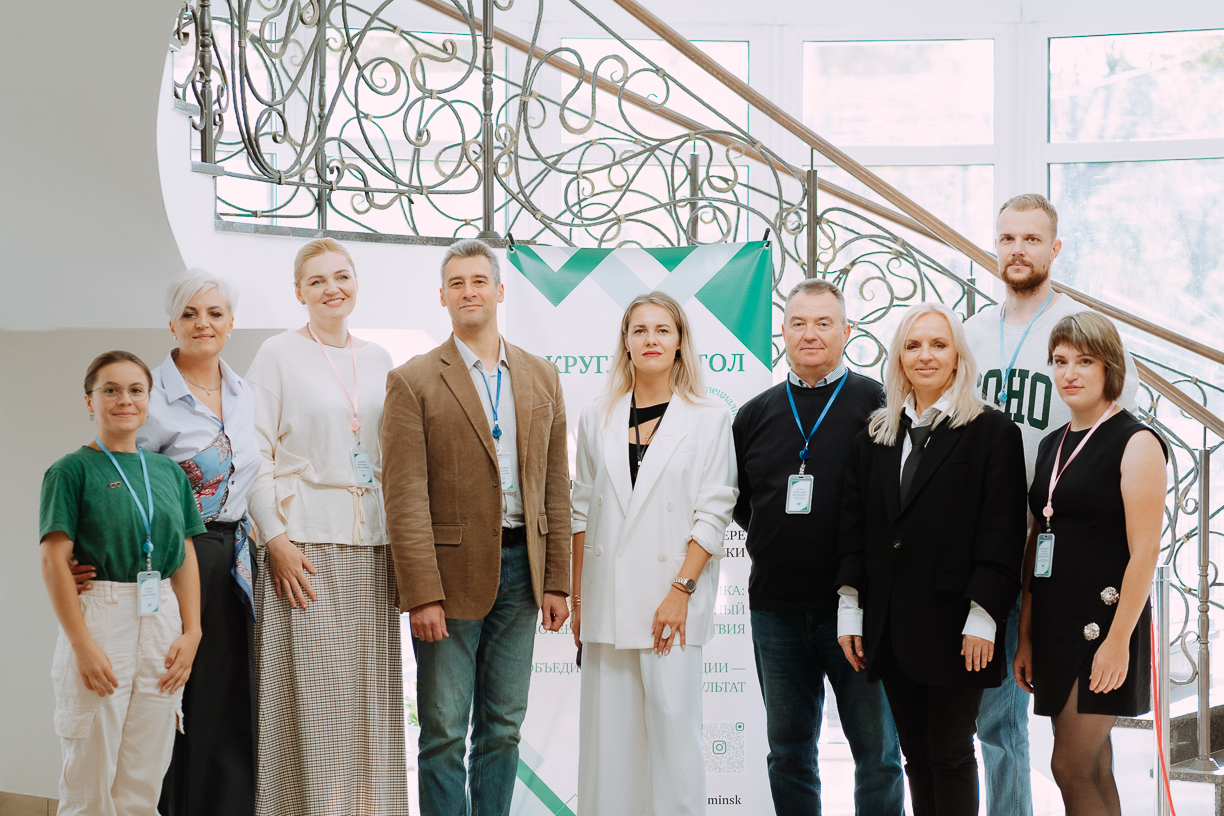
The project initiators—myofunctional therapist Irina Pevneva, special educator Irina Streltsova, and brand strategist Tatiana Abramovich—created not just a conference but a living space for dialogue. Here, a dental surgeon listened to an educator, and a rehabilitation doctor sought common ground with an orthopedic traumatologist.
An Urgency That Cannot Be Overstated
Today, we observe alarming trends: an increase in newborns with various pathologies, deteriorating reproductive health among youth, and children facing emotional overloads and their consequences. In this context, the old principle of “one doctor, one problem” no longer suffices. A comprehensive approach is needed, one that views health not merely as the absence of disease but as complete physical and psychosocial well-being.
The “Round Table” served as a practical response to this challenge. It demonstrated that an educator noticing developmental peculiarities in a child could be the first link directing the family to the right doctor. Conversely, a doctor understanding the entire developmental chain can provide more accurate recommendations for both the child and their educators.
Our Contribution to Children’s Future
The main outcome of this event was not just the exchange of experiences but the beginning of a unified professional community. A community where specialists no longer work in isolation but start speaking the same language for a common goal—to raise a healthy, successful, and happy generation.
This project is a crucial step towards making the principle of “medicine + education” the norm rather than the exception. The next meeting, scheduled for February 2026 and dedicated to dialogue with parents, is a testament to this. When doctors, educators, and parents unite their efforts, care for the child becomes truly comprehensive, timely, and effective.
After all, the health of our children is not just the absence of illness. It is the foundation of their future victories. And we are building this foundation together.