Breaking the Offside Trap: How Women’s Soccer Highlights Global Women’s Issues
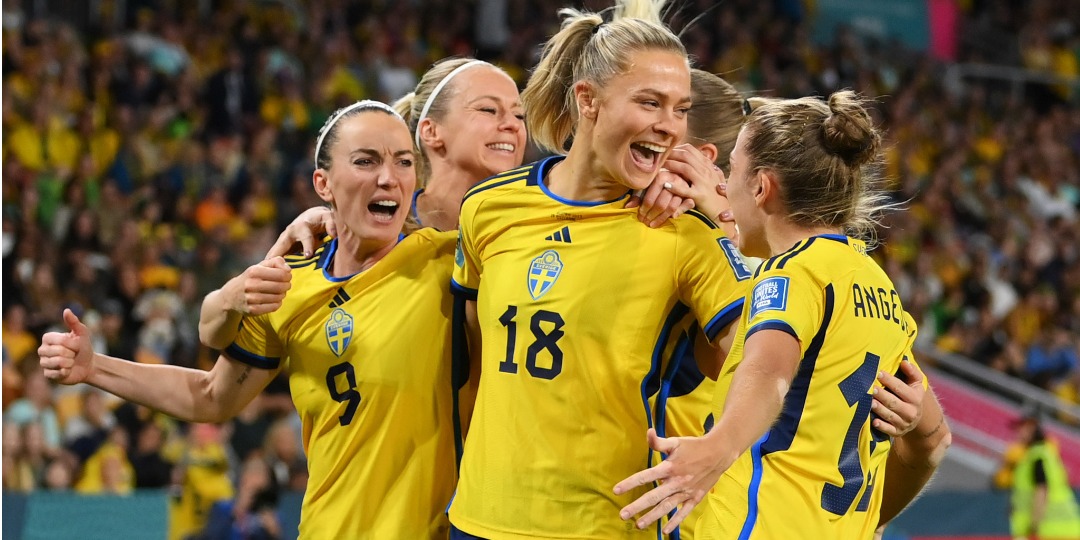
You might think that no one cares about women’s soccer, not even women themselves. But did you know that the 2023 Women’s World Cup took place recently? The Spanish team won the tournament, but the celebration was marred by a scandal when the president of the Royal Spanish Football Association kissed a player on the lips during the award ceremony. This incident overshadowed a significant event, but it’s just the tip of the iceberg. Even if you’re not a soccer fan or only watch the World Cup every four years, let me tell you why it’s essential to follow women’s soccer and how it’s about more than just sports and money.
Orange’s Campaign for Equal Pay
French company Orange released an ad before the 2023 Women’s World Cup. At first glance, it seemed like a typical montage of men’s soccer plays, featuring stars from the French men’s national team. Later, it was revealed that the players were actually women, and their moves were indistinguishable from the men’s. Orange wanted to draw attention to the prize money disparity in women’s soccer, which was almost three times less than in men’s soccer: $150 million in the women’s tournament compared to $450 million in the men’s 2022 World Cup. Orange showed that the excitement and viewership ratings are the same in both men’s and women’s soccer, but the prize money differs vastly.
History: A Successful Start and Decades-Long Ban
Why is it crucial to talk about women’s soccer? Because, in many ways, the fight for equality, resources (ratings, money), and self-realization without stereotypes is rooted in these green fields. Consequently, it’s an opportunity to address women’s issues worldwide. Leah Williamson, the captain of the England women’s national soccer team, recently told the UN General Assembly that the problems in soccer reflect the problems in society for women and girls.
Soccer in Britain
From the beginning, women’s soccer matches, which were actively held primarily in Britain, attracted large audiences. There was a recorded instance of a match attended by about 53,000 spectators. Ironically, it was the popularity that played a role in the decline of women’s soccer. Britain can be considered the founding country of women’s soccer. The first “golden years” date back to the 1920s, and the first information about women’s matches appeared as early as the 1880s. Although, undoubtedly, similar football games were recorded even earlier, both in China during the pre-Christian era and in Scotland starting from the 19th century.
Soccer in Brazil
In Brazil, the country of soccer, there were several reasons why women were banned from playing soccer. Starting in 1913, interest in women’s soccer grew, but due to conflicts based on religious views, women’s soccer was banned in 1941. In 1965, the military regime in the country even criminalized the presence of women on the fields. It wasn’t until 1979 that women could return to the game. Thus, there was no women’s soccer in Brazil for 38 years.
Present Day: Growing Interest, But Not Salaries
The 2023 World Cup broke records in both viewership and attendance in many countries. For example, the Australia vs. England match attracted over 75,000 people to the stadium in Sydney. This figure is in the top 10 attendances in the history of women’s soccer. The numbers are essential as they confirm that women’s soccer is gaining momentum once again. However, the pattern remains that for a woman to pursue her passion (soccer), she often needs to have a primary job as well.