Boost Your Energy & Mood: 4 Fun Ways to Supercharge Your Daily Walk
Why Your Daily Walk Deserves an Upgrade
Walking isn’t just a way to get from point A to point B—it’s one of the simplest, most effective tools for improving fitness, reducing stress, and even balancing your hormones. But if you’ve been sticking to the same old pace and route, you might be missing out on some serious benefits. The key? Mixing it up with different styles of walking that engage your body and mind in new ways.
Your body relies on three primary energy systems, and varying your walking routine keeps all of them firing on all cylinders. The best part? You don’t need to push yourself to the brink of exhaustion. Short bursts of intensity—think quick sprints or power walks—can be just as effective, especially for hormone balance. These little bursts help combat cortisol (the stress hormone that loves to cling to belly fat) while keeping your fast-twitch muscle fibers strong—something we lose faster as we age unless we actively work to preserve them.
Ready to turn your walks into something you’ll actually look forward to? Here are four fun, effective ways to make every step count.
4 Ways to Turn Your Walk into a Powerhouse Workout
1. The Super Stroll: Quick Energy Booster for Busy Days
No time for a full workout? No problem. The Super Stroll is perfect for those days when you’re short on time but still want to feel energized and productive. Think of this as your go-to move when you’re stuck at the airport with a delayed flight or just need a quick pick-me-up during your lunch break.
Here’s how it works: Walk at your normal pace, then randomly pick a landmark—a light pole, a tree, or even a driveway—and sprint (or power walk) to it for about 10 seconds. Recover at your normal pace, then repeat whenever you feel like it. You can also keep your pace steady when you hit a hill or a set of stairs to naturally increase the intensity.
Just 10 to 20 minutes of this can boost your focus, productivity, and problem-solving skills for hours afterward. And the best part? No sweat required—just a little extra pep in your step.
Energy systems worked: Aerobic and phosphagen (your body’s quick-energy system).
2. The Tennis Shoe Trail: Interval Walking for Strength & Hormone Balance
This one’s for when you’ve got a solid 30 minutes to dedicate to your walk. Start by lacing up your most supportive sneakers—this isn’t the time for cute flats. A proper warm-up is key here, so begin with a progressive increase in speed over 5 to 10 minutes. This ensures your muscles, ankles, knees, and hips are all primed and ready for action.
Once you’re warmed up, it’s time for the fun part: intervals. Sprint (or power walk as fast as you can) for 30 seconds to 2 minutes, then recover at an easy pace for 1 to 2 minutes. Repeat this cycle 5 to 6 times, then cool down for 5 to 10 minutes.
This style of walking is fantastic for balancing insulin-like growth hormone (IGF-1), which can get out of whack if it’s too high. Start with shorter bursts and gradually increase the duration as you get stronger.
Energy systems worked: Aerobic and glycolysis (your body’s moderate-energy system).
3. The Wanderlust Walk: Long & Leisurely with a Twist
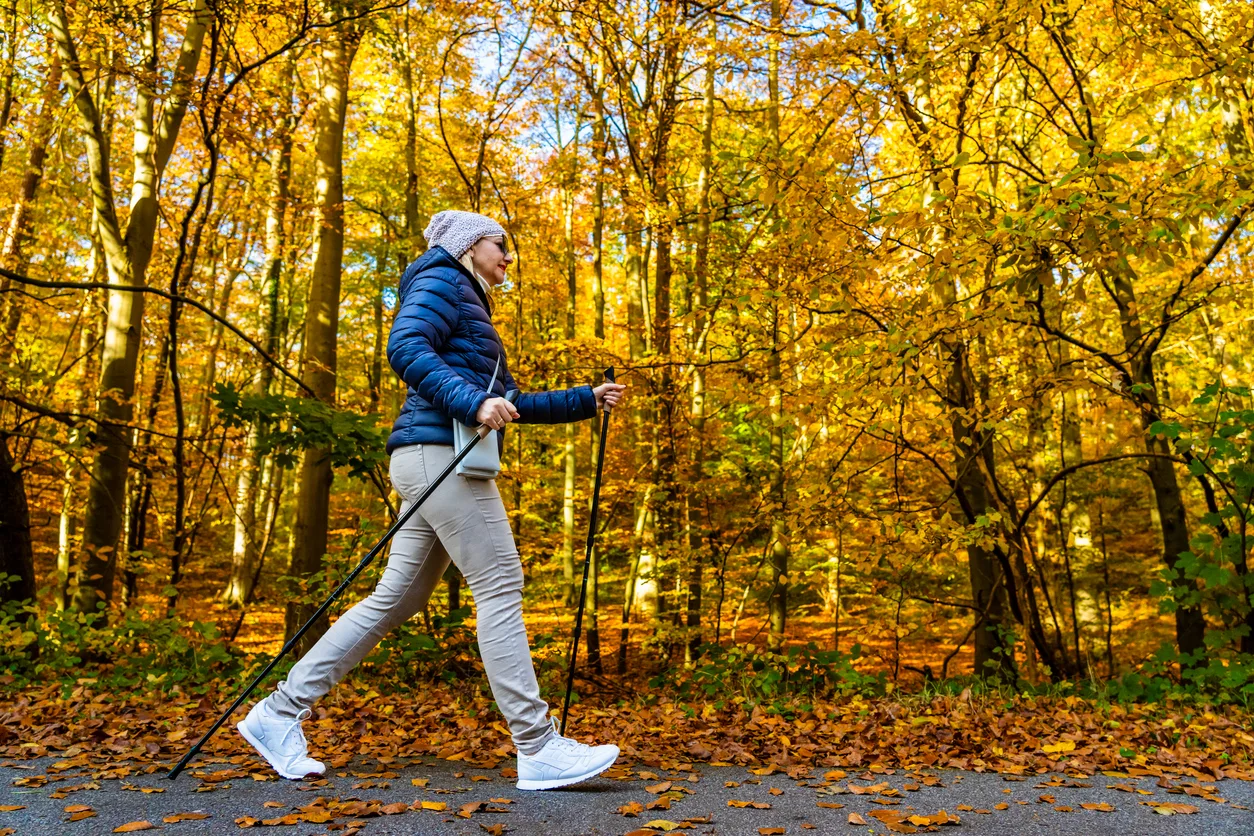
When your schedule allows for a longer adventure, the Wanderlust Walk is your ticket to enjoying the great outdoors while keeping your body engaged. This is especially perfect for those crisp autumn days when the leaves are changing and the air is fresh.
Start with a 10- to 20-minute warm-up walk to get your muscles loose and your blood flowing. Then, pick up the pace to a brisk walk for 8 minutes. After that, slow down to an easy recovery pace for 3 minutes. Repeat this 8-and-3-minute cycle three times. From there, you can either cool down or keep walking at a comfortable pace to extend your time outside.
This walk is all about building your aerobic base—the foundation for all other types of exercise. If you’ve been hitting the high-intensity workouts hard but not seeing results, adding more of this low-and-slow movement (especially in nature) can help lower cortisol and optimize your energy levels.
Energy system worked: Aerobic.
4. The Healthy Hike: Scenic & Stress-Relieving
Sometimes, the best walk is the one that doesn’t feel like exercise at all. Plan a longer hike in a beautiful, scenic location—think a local park, a nature trail, or even a quiet neighborhood with stunning fall foliage. Keep your pace comfortable and let your body guide you. There’s no need to track your heart rate or intensity here; the goal is to enjoy the experience.
This type of walking strengthens your aerobic base, which is the foundation for all other physical activity. If you’ve been relying too heavily on high-intensity workouts without seeing the results you want, adding more of this relaxed, nature-filled movement can be a game-changer. Studies show that spending time in green spaces (or even golden autumn landscapes) can significantly reduce cortisol levels, which may help with weight management and energy optimization.
Energy system worked: Aerobic.
Pro Tips for Safer, More Enjoyable Walks
Before you head out, keep these tips in mind to make the most of your walk:
- Watch your step: Fallen leaves can hide tree roots, acorns, or other obstacles. Fast-twitch muscles help with agility, but it’s best to avoid testing them on uneven terrain.
- Use walking poles: They can increase intensity, improve your posture, and help steady you on tricky trails.
- Stick to familiar paths: If you’re walking in an area with lots of fallen leaves, choose a route you know well to avoid surprises.
- Ditch the tracker (or don’t): If you’re tired of being tied to a schedule, leave the fitness tracker at home and focus on enjoying the moment. Count your blessings instead of your steps. On the other hand, if you love tracking your progress, bring along your Fitbit or Garmin and go for it!
Final Thoughts
Walking doesn’t have to be boring or monotonous. By mixing up your routine with these four styles, you’ll keep your body guessing, your mind engaged, and your energy levels soaring. Whether you’re short on time, craving a challenge, or just want to soak in the beauty of nature, there’s a walk for every mood and every day.
So lace up those shoes, step outside, and start reaping the benefits—one productive, enjoyable walk at a time.
Note: For more insights on fitness and hormone balancing, check out the work of Debra Atkinson, a hormone-balancing fitness expert and author.