Belarusian Brand KANVA on Their Bold Collection: ‘Our Goal Wasn’t to Shock with Men in Skirts’
Belarusian Brand KANVA: A Fusion of Folklore and Modern Fashion
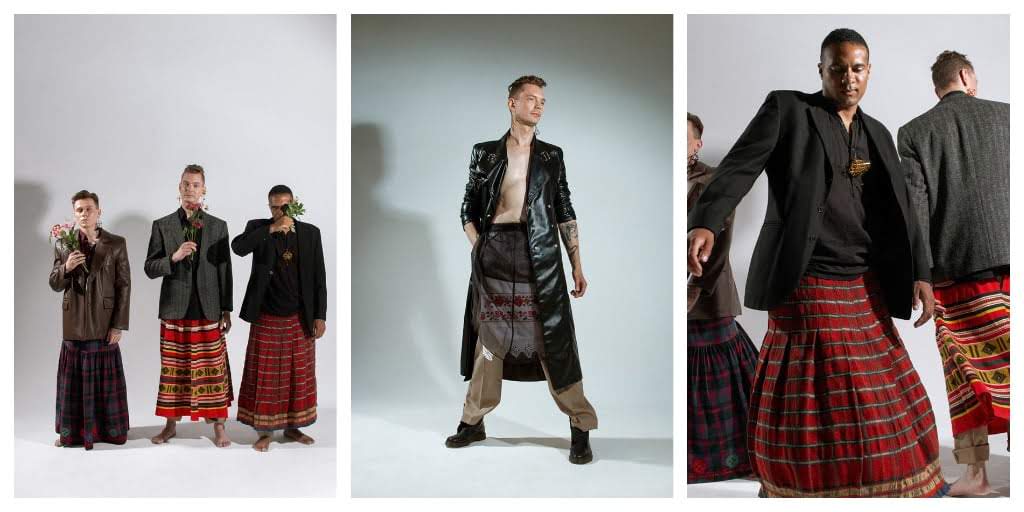
The Belarusian brand KANVA has been popular for years, successfully blending folkloric motifs with contemporary fashion. Recently, the brand released a bold collection featuring men in skirts, sparking widespread discussion. Not everyone embraced this creative idea with open arms.
KANVA’s Vision and Inspiration
Anastasia Vasiuchenko, the creator and designer behind KANVA, notes that all the looks in the collection are ethnically authentic. The goal was not to shock with men in skirts but to convey Belarusian culture through modern fashion. We spoke with Anastasia about femininity and masculinity in fashion, and how the brand came to be.
The Birth of KANVA
“My field is my specialty,” says Anastasia. “I am a costume artist by training, having graduated from the Academy of Arts. Immediately after graduation, a classmate and I won the ‘New Names’ competition from Belarus Fashion Week with a folk-streetwear collection. This gave us the opportunity to intern at Mark Formelle and develop our own collection to present on the runway.”
Anastasia also taught at a clothing design studio and participated in various competitions. In her second year of work, she came up with the idea for a collection dedicated to the 130th anniversary of Yazepe Drozdovich. This fashion installation at the National Art Museum led to the realization that the brand needed a name.
“I always wanted the brand to be more than just a surname; it should be a catchy word reflecting the concept and my initials. KANVA is both the foundation of a work and the fabric for embroidery, which is now a key element in our brand. The name fits us both literally and figuratively.”
The Folklore Concept in Design
“During my studies, we had many subjects and assignments focused on folklore. Gradually, knowledge accumulated, and a love for it grew. My diploma collection was inspired by the Belarusian national costume, executed in the style of ethno-constructivism, as I called it.”
“I always have a source of inspiration. My mind starts working only when I see the source material. The work is still challenging, but I strive to stay on course and fulfill an educational role as a brand, attracting new audiences.”
Sharing Belarusian Culture Through Fashion
“My goal is to convey Belarusian culture, art, and traditions through modern, relevant fashion, costumes, and textiles. My creativity is support for like-minded people.”
“There are many great examples from neighboring designers working with folkloric themes. I believe this is the future. It is what sets us apart and what we know best. The environment I inhabit helps create the product.”
The Growing Demand for Belarusian Motifs
“Over the past year, I have seen an increase in demand. People are waking up and taking pride in Belarusian culture. It’s a slow process, but we are making progress. Even through provocative presentations, a small percentage of people become interested in the roots of our culture.”
Expanding Beyond Women’s Fashion
“The brand remains primarily women’s, but there are collaborations with men’s items, such as with the brand LSTR, a merch collection for the 80th anniversary of the National Museum, and the ‘City of the Sun’ collection for Mark Formelle, which I created under the KANVA brand. Currently, alongside KANVA, I am working on a men’s collection in co-authorship.”
“The brand focuses on small forms and accessories, which are more inherent in women’s images, especially with a large amount of decor and handwork. However, the recent photoshoot shows that all this can be integrated into the men’s wardrobe with a bit of imagination.”
The Idea Behind Combining Men’s and Women’s Fashion
“I love contrasts, and for me, there was nothing out of the ordinary in this. All the guys are not professional models but well-known and very talented Belarusians who perfectly fit our target audience. They all immediately agreed to participate in the project, knowing what they were getting into. It was a creative photoshoot. I brought mainly accessories, while Oleg Gorchanin and his brand handled the masculine part with jackets and shirts.”
“The skirts, which caused a stir (the project was widely discussed online), were brought by our stylist from her personal archive. They were created by reconstructing traditional Belarusian costumes and were used for folk dances and performances. This is a more stage variant but absolutely ethnically authentic.”
Audience Reaction and Breaking Stereotypes
“I did not expect such a lively reaction because it all seemed natural to us. In the fashion industry, there are no rules or stereotypes. It seems that everyone has seen rock stars and shows, and no one is surprised by a man in a skirt, although that was not our goal. We wanted to combine folklore with fashion, men, and music. The photoshoot caused a resonance, exposing society. Not everyone turned out to have such broad views as we do. This was a very useful and indicative experience.”
“The photoshoot was created with a great love for fashion and costumes, with great respect for traditions and our culture. We wanted to express everything we sincerely love and embody it in this, albeit provocative, story.”
The Importance of Challenging Stereotypes
“It is important for a designer to convey what they feel is important because everyone has a unique voice. It is necessary to carry an idea that is sincerely felt; when it is honest and from the heart, everything will be perceived and heard. With stereotypes, it is not so much about fighting them but showing an alternative, your view, and style. Over time, people will get used to it, develop their outlook, grow as consumers, and form their taste.”
Interview by Margarita Dorozhkina
Photos from Anastasia Vasiuchenko’s personal archive