Beauty Trends That Shaped Social Movements
Beauty Trends That Shaped Social Movements
Behind the beauty trends that define modern routines and expand the possibilities of self-expression, there often lie not just the desire to be beautiful, but also profound social and political motives. Clothing and appearance have always served as a mirror of the surrounding world for those attentive enough to notice. Recently, Whoopi Goldberg and Rowan Blanchard used fashion to express their political views at the Spring/Summer 2017 fashion show in New York. Their aim was to showcase the development of democracy in America and the diversity of those involved in its progress. This has always been the case. Therefore, we have compiled the most popular beauty trends that were driven by ideas and social movements that changed the world.
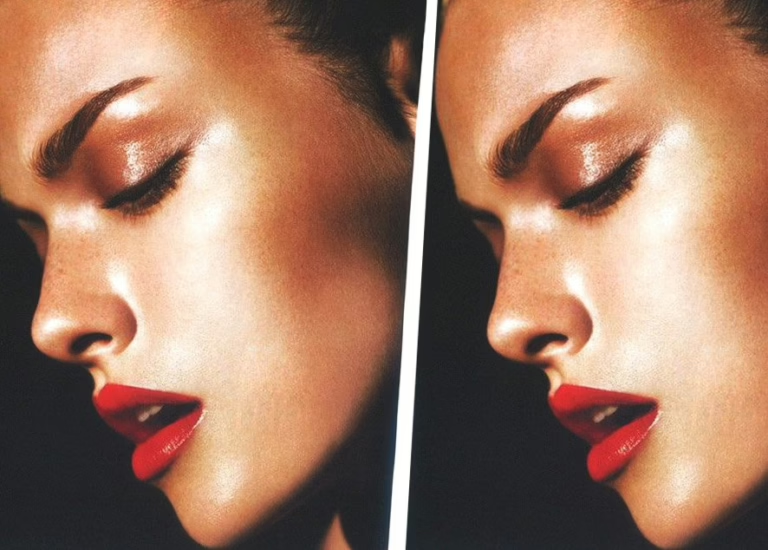
Red Lips and Suffragettes, 1912
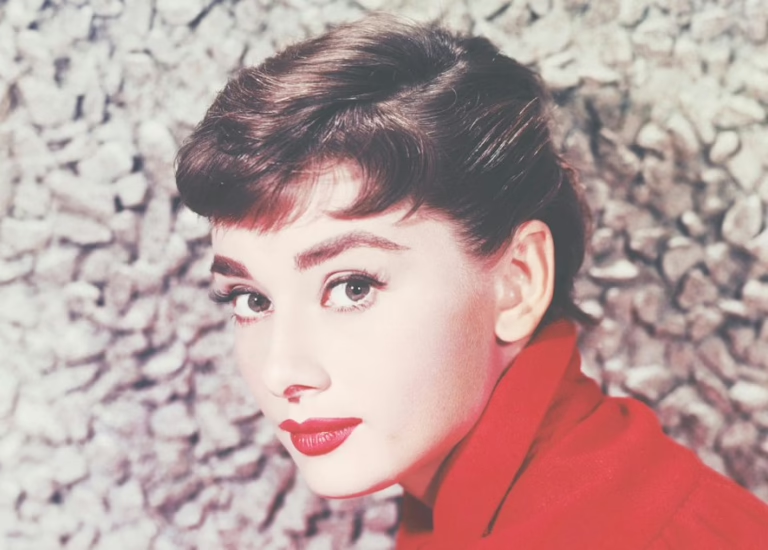
In the 19th century, wearing makeup in public was considered indecent, and those who used it were associated with prostitutes. However, when suffragettes Elizabeth Cady Stanton and Charlotte Perkins Gilman appeared with red lips at the 1912 voting rights movement in New York, supporting women’s right to vote, red lipstick became a symbol of emancipation. Of course, attitudes towards red lipstick did not change overnight. It was only in 1915 that a law was passed in the United States allowing women to wear makeup “to create a false impression.”
The Bob Cut, the Next Step for Feminists, 1915
In an era when women were seen as decorative objects in ridiculous corsets, short haircuts were considered a sign of illness or misfortune. World War I showed women in male roles, working in factories and fields. The traditional female dress code became impractical for the new living conditions. The situation developed when dancer Irene Castle first appeared in public with a short haircut in 1915, stating that this hairstyle was more practical. Many hairstylists refused to cut women’s hair, and those who managed to get the new hairstyle were fired from jobs such as teachers and clerks.
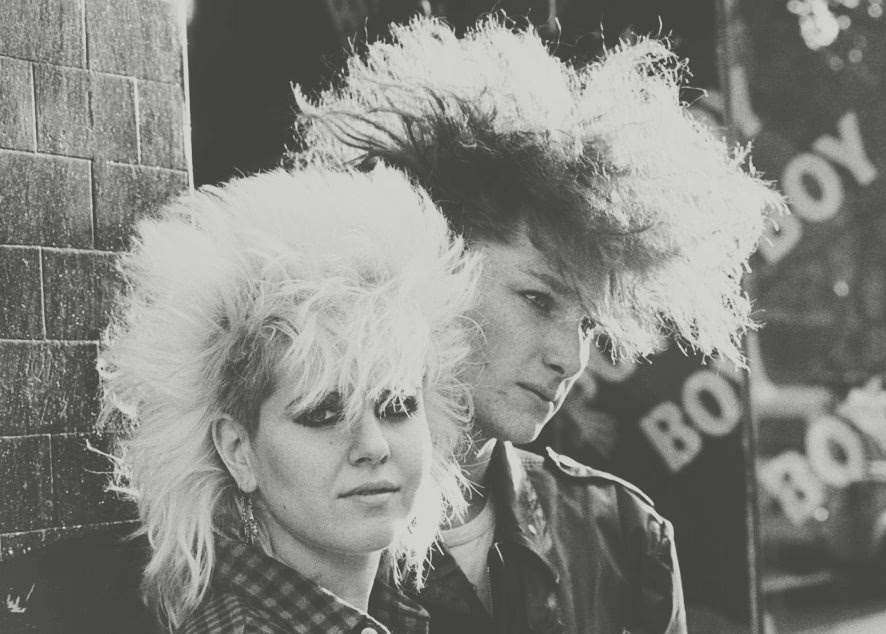
Zazou, Fighting Fascism, 1940s
The Zazou subculture emerged in France during World War II as a protest against the Vichy regime and their collaboration with the Third Reich. During the war, a group of young people calling themselves “Zazou” and inspired by the work of French composer Hector Zazou, wore bright colors, striped stockings, bold makeup, and chemically bleached hair. Their provocative style was a direct rebellion against the conservatism of Nazi ideology. Christian Dior wrote about them in his autobiography:
I have no doubt that the “Zazou” style was oriented towards the desire to rebel against the occupying forces.
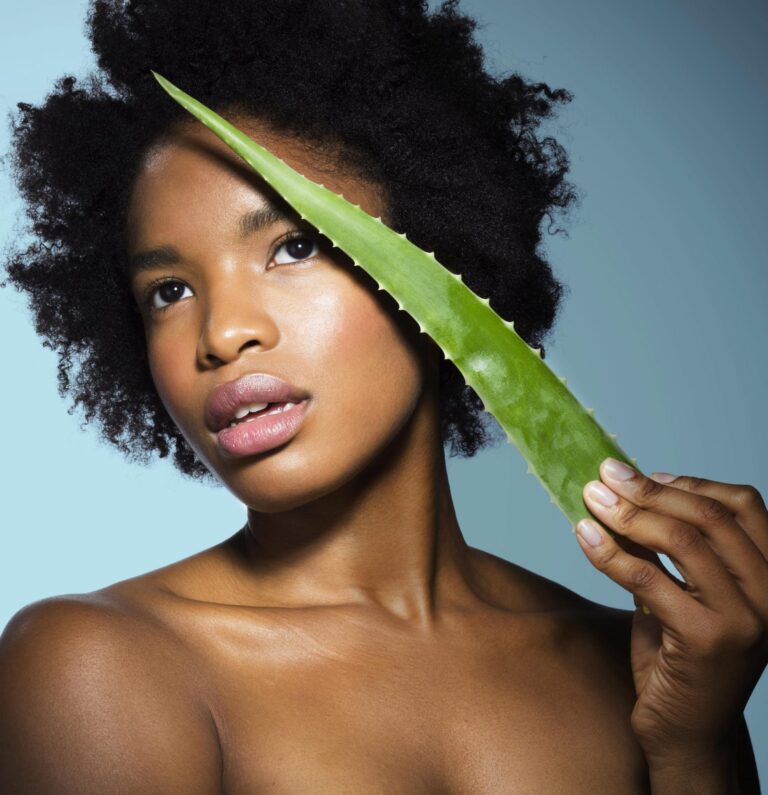
Afro, African American Civil Rights Movement, 1960s
Before the civil rights movement, African Americans wore hairstyles adapted to the standards of the dominant white society. Only straight hair, light eyes, and light skin were considered beautiful. But admirers of black aesthetics rejected European beauty standards and stopped being objects of shaming, refusing to chemically straighten their hair once and for all. The Afro became a symbol of black pride and identity.
Body Hair, Feminist Movement, 1970s
After World War II, when the bikini became mainstream, female sexuality underwent some modifications. New beauty standards declared the ideal body to be free of any hair. This image of women began to appear on advertising posters and in films. Against this trend, a feminist movement emerged, advocating the freedom to decide for oneself what one’s body should look like. This rebellion prompted singer Patti Smith to display her unshaven armpits on the cover of the album “Easter.” Toni Glenville, creative director of the London College of Fashion, stated that refusing to remove hair is a rebellion aimed at reducing the gender gap.
Mohawk, Social Rebellion, 1970s
The Mohawk hairstyle traces its roots to Native Americans, who styled their hair this way to prevent neighboring tribes from taking human hair as trophies. Later, this hairstyle was adopted by paratroopers during World War II to intimidate their opponents. After the war, the Mohawk became a symbol of the punk movement, representing oppositional views and gender identity.
Chapatsu, Japanese Rebellion, 1990s
Hair color change became popular in the 1990s when Japanese students began bleaching their hair to a brown color and changing their skin color as a protest against accepted beauty standards. Tea-colored hair was an act of rejection of Asian values, and the rebels, often of both genders, were expelled from schools and publicly criticized. In 1996, a police officer was fired for pouring a cup of beer on the head of a teenager with brown hair, and the Japanese baseball team “Yakult Swallows” was disqualified for the distracting hair color of its players.
Secret Salons, Taliban, 1990s
During the Taliban movement in Afghanistan from 1996 to 2001, women were severely persecuted for using cosmetics and visiting beauty salons. In October 1996, a woman with painted nails had the tip of her finger cut off. But even this outrageous act of aggression did not stop the revolution. Women risked their lives to free themselves from tyranny, organizing secret schools and salons for women and girls who wanted to take care of themselves. Each comb and tube of mascara was an act of protest and a desire to have the opportunity to earn a living through their own labor, in this case, by creating beauty.
Cut Hair, Egyptian Protest, 2012
On December 25, 2012, women in Egypt demonstratively cut their hair in Tahrir Square in Cairo to protest the violation of women’s rights. Mona Abdel was one of eight women protesting against the new Sharia-based Constitution, which allowed men to marry girls as young as nine. At the square, women organized a performance in which they stuffed their mouths with their hair as a symbol of their forced silence, and then cut it off.
Rainbow Nails, LGBT, 2013
During the 2013 World Championships in Athletics held in Russia, two Swedish athletes protested against a new law banning the promotion of homosexuality to minors. In support of the LGBT movement, high jump athlete Emma Green Tregaro and 200-meter runner Moa Hjelmer painted their nails in rainbow colors. Photos posted by the athletes on Instagram received 12,000 likes. The athletes themselves stated:
In sports, respect and unity are necessary, and this case is an ideal opportunity to show that.
For further reading, you can visit Heroine.