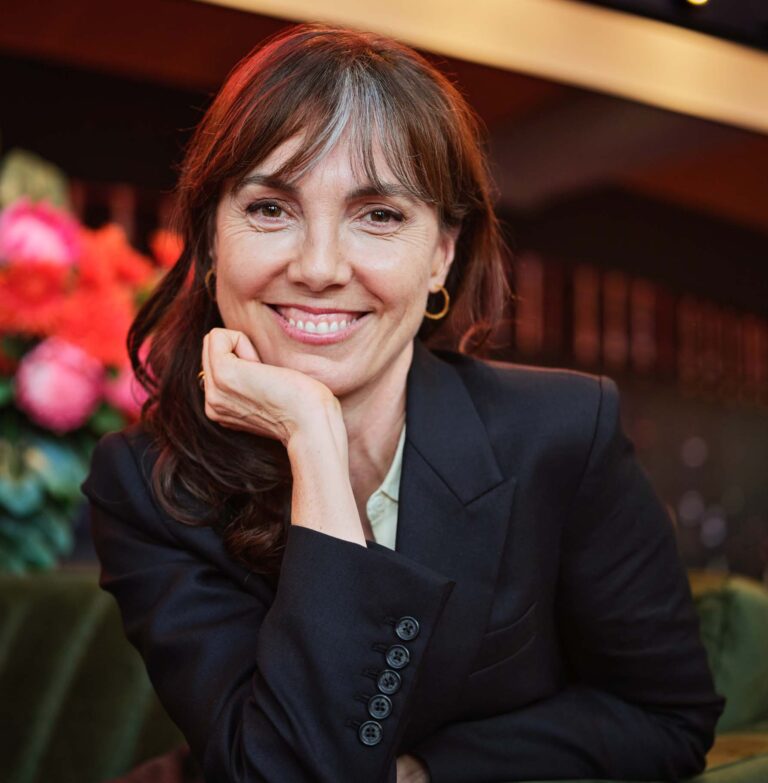
Anna Kuznetsova: The Power of Beauty Concentration in Art
Anna Kuznetsova: The Power of Beauty Concentration in Art
Art is eternal, but life is short. The unique exhibition project “The Art of Loving Life: Dolce Vita” at the National Art Museum is dedicated to living in the moment and living beautifully. From the very first days, the exhibition became a sensation and soon a bestseller! Endless queues at the ticket office, a real hunt for the opportunity to be among the listeners of curatorial excursions or walks with the collector, full halls at lectures, and requests to make the exhibition permanent. The interest in the exhibition was so overwhelming that its duration was extended for another week, despite the fact that the masterpieces of Ilya Repin are already queuing for these museum halls.
The Birth of a Unique Exhibition
Until April 8th, you can still taste the “sweet life” in the halls of the National Art Museum. We talked to the author and curator of the project, senior researcher at the Department of Foreign Art of the National Art Museum of the Republic of Belarus, Anna Kuznetsova.
The Idea Behind the Exhibition
Anna, how was the idea of such an unusual exhibition born?
By accident! During a cozy evening at home with my husband, with whom we love to discuss global and conceptual things. My husband is into photography and is also passionate about neuroaesthetics: he is interested in understanding how our brain perceives beauty. One evening, we had a dispute on the topic “What is beauty?”. You see, there are things in this world that everyone likes. As a rule, these are works from the classical world heritage, for example, the paintings of Raphael. As an art historian and a person who works with masterpieces every day, I wanted to try to make an exhibition that would become a “concentrate of beauty” and could be liked by if not everyone, then many.
Selecting the Exhibits
Today, the collection of the National Art Museum has more than 30,000 items, among which it is probably difficult to find something ugly. What was the criterion for selecting exhibits for the exhibition?
I asked my husband the same question: if the theme of the project is beauty, what do I need to exhibit in the halls to show it? “Beauty in diversity” was my husband’s short answer. This is a quote from the treatise “The Analysis of Beauty” by William Hogarth, a major English artist of the 18th century. So I understood that I would not be limited only to paintings or one era and style.
The Theme of the Project
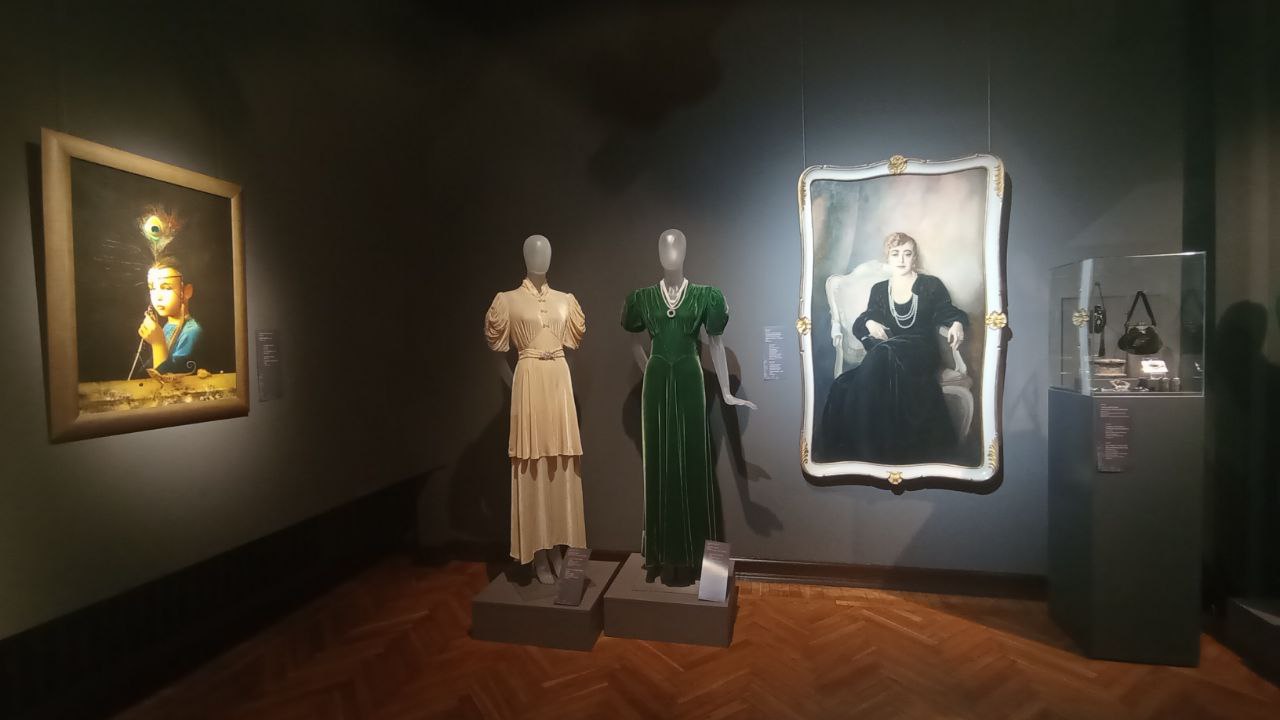
Then there was a meeting with my friend, in a conversation with whom the Italian expression dolce vita, meaning “sweet life,” flashed, the ability to live beautifully in the moment. So I decided on the theme of the project. And I realized that I could not tell about a beautiful life without things created by man to transform his everyday life. And that in addition to items from the museum’s collection, the exhibition could feature antique and vintage dresses and accessories that would help me fill the exhibition, connect the paintings on the walls of the museum halls with reality, rid the exhibition of artistic abstraction, giving it a tangible object beginning.
I was lucky, and fate in the person of a colleague, art historian Yulia Lisai, gave me the acquaintance with Tatyana Fedosova, the owner of the collection “Beauty and Fashion of the 19th-21st Centuries.”
The Exhibits and Their Arrangement
As a result, more than 100 exhibits are presented in four exhibition halls! What principle did you use to select them?
The concept of the Italian hall was the first to take shape, in which there is the spirit of Italy, but not a single painting written by an Italian artist. I did not want to speak about dolce vita directly, but only with hints, undertones, mood… At the entrance to the hall, the first thing we see is a dress that refers us to the Italian cinema classic, Federico Fellini’s film “La Dolce Vita.” In such a black velvet dress, the main character Sylvia, played by Anita Ekberg, bathed in the Roman Trevi Fountain. This, of course, is not the same dress or its reconstruction according to the patterns of Piero Gherardi, but an artistic interpretation of the image, setting the mood and as if introducing the theme of the exhibition. This outfit was specially created for us by designers of the Belarusian fashion brand Kiko Richen. The process of creating the dress was personally supervised by the director of the salon, Egor Kirichenko, an incredibly creative and responsive person. He was one of the first to whom I turned, wanting to fill the exhibition halls not only with paintings but also with dresses. At one of the meetings with Egor, I timidly voiced a dream: “I wish we had a dress like Anita Ekberg’s from the movie ‘La Dolce Vita’ at our exhibition…” To which he confidently replied, “There will be such a dress!” And now it greets everyone entering the exhibition and serves as the first reference to dolce vita and how it is understood in Italy.
The Harmony of Paintings and Dresses
How did you manage to combine paintings and dresses of different times and peoples in one exhibition? Despite the fact that they belong to different styles and eras, they complement each other perfectly! How did you manage to “pick the dresses” so ideally for the paintings? For example, this silk ball gown with a crinoline – it just perfectly matched the masterpiece by Fyodor Moller “The Kiss”!
First, paintings that I selected from the huge collection of the National Art Museum appeared in the halls. Then, Tatyana Fedosova, having viewed the works I had chosen, selected dresses and accessories from her collection to match them. This is a tremendous work that she did brilliantly, professionally, and with a feminine touch! Moreover, Tatyana gave me the right as a curator to make the final choice from all that she offered. For example, in the center of the second hall, next to the portrait of Helena Chlapowska, three dresses from the beginning of the 20th century are exhibited: although there were initially many more, but Tatyana and I chose these three. It was important for us to maintain a balance so that some exhibits did not “outshout” others. As a result, the exhibition features only 20 dresses. But ahead of Tatyana Fedosova and her collection “Beauty and Fashion” is a large-scale exhibition project at the Nesvizh Castle, which will last from May to September 2024.
The Magic of Creation
Did you have the feeling of goosebumps when everything suddenly fell into place perfectly during the creation of the exhibition?
Yes! When a chintz dress with a floral print, sewn in the 1950s in Minsk in the spirit of the ultra-fashionable New Look by Christian Dior, suddenly fit perfectly next to a still life by Galina Izergina. When the painting “Year of the Dragon” by Vladimir Goncharuk, which at first seemed superfluous in the exhibition to everyone except me and the art historian Yulia Lisai (who helped a lot in creating the exhibition), turned out to be in its place, it was enough to exhibit vintage Indian bags embroidered with gold next to it. Of course, as a person creating my first exhibition project, I had a lot of doubts. “Is this possible?” I asked myself and colleagues whose opinions I trust when I hung paintings by Konstantin Makovsky and Vasily Polenov on one wall, supplementing them with still lifes by Adolf Gugel and Evgeny Zaitsev. Yes, these are different eras, but the mood of these works is the same!