Andrei Kureichik: The Imperfect Shapes of Talent
Andrei Kureichik: The Imperfect Shapes of Talent
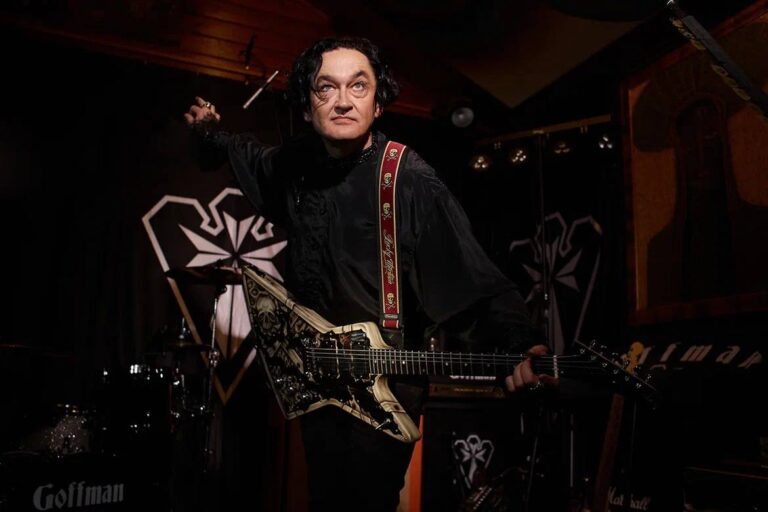
Andrei Kureichik, a renowned playwright, screenwriter, director, and producer, found fame at the tender age of 21. His career trajectory has been on a steady ascent ever since. Through his works, he illuminates the perpetual presence of positivity and joy, regardless of life’s circumstances. He strives to live his own life in the same vein—filled with happiness and smiles. In an exclusive interview, Andrei shares his insights on how to cultivate a love for life.
“I’m one of those kids who remember soda vending machines”
I firmly believe that our childhood experiences shape us far more significantly than our adult years. I grew up in the Soviet Union and was fortunate enough to witness various political processes in the country. I remember being an Octobrist, a Pioneer, and a young believer in Lenin, harboring a genuine dislike for American imperialists. Everything was straightforward in a child’s mind.
On the other hand, I recall the everyday life of that era. In the Zavodskoi district, there were soda vending machines with glasses that no one touched. You’d wash the glass, insert a kopeck, and pour yourself some soda with or without syrup. When my father managed to get bananas, it was an incredible celebration for the family. Since they were extremely green, we had to wrap them in a wool sweater and place them in the cupboard for a week to ripen.
Books Replaced Games
I started reading at a very young age. Back then, there were no mobile phones or tablets. The only forms of entertainment were books and television. The latter didn’t interest me much due to its specific programming. So, I turned to books. They replaced games and social gatherings for me. From the ages of seven to twelve, I read more than I have in the rest of my life combined. I devoured the works of Tolstoy, Dostoevsky, Chekhov, Dickens, Maugham, Shaw, Shakespeare… The last two authors inspired me to pursue drama.
Had I been born slightly later, when the first computers appeared, I wouldn’t have read as much, wouldn’t have gained the literary foundation, and wouldn’t have become a playwright.
Talent Requires Imperfect Forms
I’m not a straight-A student in life. I wasn’t a perfect student in school either. Geometry and physics were challenging for me. I had tutors, but even with their help, I struggled. I could understand the teacher’s solution, but when I tried to solve a similar problem with different numbers, I couldn’t do it. In college, higher mathematics was tough. I didn’t fail, but I couldn’t get top grades either.
Interestingly, perfectionism doesn’t always work in art. Sometimes, something created casually with the left hand turns out to be more talented and interesting than something made meticulously. Sometimes, talent requires rough edges and imperfect forms. You need to feel when it’s better to make a careless stroke and step back, as all attempts to improve the piece might make it worse.
“I don’t know how art can be taught in faculties”
This inner sense can’t be taught in faculties. I don’t understand how art can be taught. I teach a lot myself and know that no matter how much you tell an untalented person, it won’t do any good. Talent is the foundation of art. Some people have an intuitive sense of beauty and can realize it in a specific field, while others don’t. That’s what it all boils down to.
You can teach the technologies of using talent, as many art forms are highly technological. For example, cinema. Theater is built on its own technologies. Literature is not as technological. Most of the world’s famous writers never studied it, and those who did never became great…
“We have no one to talk to”
I enjoy teaching and sharing my experience with the youth. Our environment is quite sparse, and sometimes there’s no one to talk to or argue with. I imagine the artistic scene of Paris in the early 20th century, where everyone gathered, socialized, discussed, and argued. There were a dozen movements, each considering itself the best. That was life!
But in Belarus, there’s no one to communicate with in my field. Or there are people, but they’re not interesting. I want to cultivate a nurturing environment where it would be interesting for me as well. It’s selfish, of course. But I’m not growing competitors for myself; I’m cultivating an interesting creative life. I don’t know if I’ll become a real teacher, as it’s a serious responsibility, but I enjoy trying to fan the sparks in those who have them.
People Have Stopped Being Interested in Each Other
The lack of communication between creative people is characteristic of the post-Soviet space. After the collapse of the Union, the entire society fragmented, people withdrew into their little boxes and stopped being interested in life. They settled down quietly and live their lives. This is an attempt to protect themselves from imaginary danger.
But if we look at the American or European experience, we understand that knowing the work of colleagues is one of the conditions for your own advancement. To know your colleagues, you need to read magazines, newspapers, attend events, and go to festivals. That’s why there’s so much of it there. And we all live in tiny villages, not even particularly interested in each other within these small communities. This way of life will have to be broken, because in this situation, there is simply no development.
A Lone Wolf
I’m an absolute lone wolf. This is probably due to the rarity of my profession—dramaturgy. There are far fewer playwrights than other writers, not only in our country but in any country. Besides, I’m a very headstrong and prickly person in professional matters and in expressing my position. This doesn’t sit well with people who depend on someone.
I don’t depend on anyone. I’m lucky in this regard, as my main work is now abroad. I can’t be fired or called to some official, meaning they can’t “press” me, as is often done here. Many creative people can’t afford to express their views as openly and sharply as I can. Therefore, I lead a completely separate and independent life.
And now, loneliness in my personal life has been added. I walk alone in this apartment… Sometimes, I feel very cozy in my loneliness. I look at people who cling to each other, depend on each other, and at the same time hate each other. I don’t know how to do that.
“My works paved their own way”
I started my dramaturgy career early, having a production at the Moscow Art Theatre at the age of 21, followed by one at the Mayakovsky Theatre. I didn’t think it was early. I didn’t dwell on it; life carried me along with such sharp turns! Moreover, I didn’t fully believe that it was happening to me. I couldn’t understand why this mine exploded. I wrote because I couldn’t not write; ideas just poured out of me. Everything I achieved wasn’t because I tried very hard. My works paved their own way. This, by the way, later applied to my film scripts as well. They all found their own path to the stage or the screen.
I consider myself lucky. I have nothing to complain about. And at the same time, I didn’t have to make any extraordinary efforts to achieve what I have. Probably, it happened because in the early 2000s, there was a kind of void, and everyone was looking for plays and scripts. Now, no one is looking because there’s a lot of translated drama. And theater directors have a vast choice for productions.
Hope Lies with the Youth
The TV series and film “Higher Than the Sky” I made for young Belarusians. All my hope…