Ancient Female Arts: Timeless Skills for Modern Women
Ancient Female Arts: Timeless Skills for Modern Women
On International Women’s Day, it’s not just about receiving flowers and compliments, but also reflecting on what it means to be a true woman. It’s about the qualities that make us unique and the beauty of being a woman. Today, women have achieved much, proving their strength and talent. However, let’s journey back to the past and explore what women did, which skills were most valued, and how these ancient arts gave rise to cultural icons like geishas, amazons, and female warriors. In essence, let’s delve into what was cherished in women in ancient times and why these talents are still relevant for modern women.
The Art of Almea
The term “almea” translates to “skilled or learned woman,” and in Arab culture, almeas were highly regarded artists. They were accomplished dancers and singers, often invited to harems to entertain women and wealthy, noble men in Arab Egypt. Almeas held a respectable social status and were invited to various events, admired at ceremonies, and celebrated for their talents. They possessed extensive knowledge of mythology, heroic tales, ancient poetry, and traditional songs, passing these down through generations.
To become an almea, a girl needed a beautiful voice, proficiency in the literary language, the ability to play various musical instruments, and excellent improvisation skills. Beyond the arts, almeas were well-versed in etiquette, could create cosmetics, and were skilled in embroidery and sewing. Some almeas were also knowledgeable in medicine, working as midwives and healers. Their expertise in creating various healing ointments, poultices, and potions also earned them a reputation as witches.
In today’s world, the arts of almeas could benefit women who appreciate art and conversation. Knowledge of music and literature, not to mention handicrafts, could become enjoyable and profitable hobbies. And, of course, the most delightful aspect is that in any company, all eyes and attention are drawn to a woman who can not only engage in interesting conversations but also amaze with her talents.
The Art of Ghawazi
The concept of “almea” gave rise to another form of female art and dance in Arab Egypt, known as “ghawazi.” Translated as “conquerors” or “foreigners,” ghawazi were often gypsy women who skillfully used their bodies to captivate audiences and men, thereby earning a living. The art of ghawazi dance is believed to have evolved into what we now know as belly dancing.
Ghawazi were adept at satisfying not only visual but also physical desires. They often became mistresses of wealthy men, knowing how to fulfill human fantasies and needs. While belly dancing may not be the trendiest art form today, the ability to move gracefully is undoubtedly a valuable skill. The aura of mystery, sexuality, and high plasticity are qualities worth acquiring to explore one’s sexuality, understand the body’s functioning, and learn to give and receive pleasure.
The Art of Hetaira
In Ancient Greece, hetaira were free, unmarried women leading independent lives. They should not be confused with courtesans, as hetaira were highly educated and had the freedom to choose their sexual partners. Beyond their sophisticated sexuality, hetaira were skilled in social conversations and played significant roles in public life. Their homes often hosted meetings with public figures, ancient Greek politicians, poets, and other artists. While hetaira were often under the patronage of wealthy men, they shared their beds only with those they loved and chose themselves. To a large extent, hetaira served spirituality and platonic love. They were hired not for sex, but to provide spiritual rest, a touch of beauty, and a dose of inspiration. Hetaira also had the right to marry.
Despite originating from the slave class, hetaira were educated and trained by their mistresses, who eventually freed them, entrusting their care to a worthy patron. Delving deeper, it becomes clear that in ancient times, respect, admiration, and wealth were bestowed upon women who distinguished themselves with intelligence, cunning, and outstanding talents. These qualities allowed them to remain individuals who were respected and valued for their uniqueness, not just their bodies. Translating these traditions to modern life, it’s clear that inner beauty is far more important than physical perfection. Persistence and talent can pave the way to happiness, and inner wealth is much more valuable than material wealth.
The Art of Polyanitsa
In Ancient Rus’, polyanitsas were female warriors known for their physical strength, bravery, and resourcefulness. They were as skilled as men in archery and hand-to-hand combat. Some polyanitsas are known as the wives of bogatyrs—heroes of ancient Russian epics, such as Nastasya, the wife of Dunay and Dobrynya. These women were respected and revered for their strong character and skills. Despite their strength and non-traditional activities for women in Ancient Rus’, polyanitsas could also be feminine and manage households, as befitting true Russian women.
In today’s world, the ability to stand up for oneself, not just with words but also in dangerous situations, is invaluable, especially considering the perilous world we live in. While you may not perform feats for people or the state, you can certainly defend your opinion or safety. Moreover, the strength of female warriors is an endless source of inspiration, as only through cultivating the spirit can one endure all hardships and achieve set goals.
The Art of Geisha
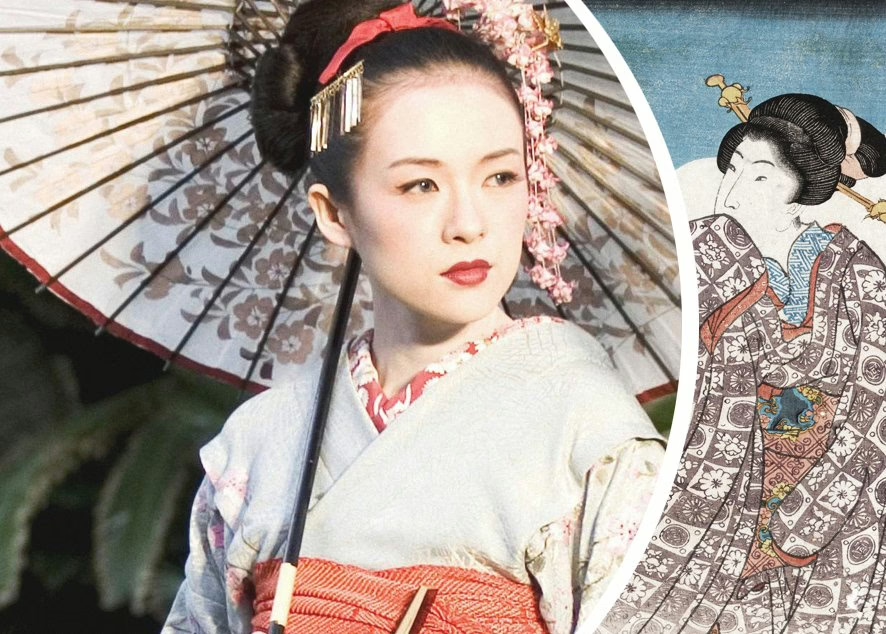
The art of geishas is known worldwide, with their lives and creativity depicted in films and books. Beyond being women skilled in dance, song, and acting, geishas are infinitely aesthetic and well-mannered. Their beautiful attire, makeup, and majesty in the classic geisha image continue to captivate. Although initially, men played the roles of geishas in Kabuki theater, the profession eventually became exclusively female. At the dawn of the geisha era, they were not workers or servants; their activities were considered art, and they were paid for their ability to turn any event into a true celebration of the soul.
In the modern world, geishas still participate in Japanese life, entertaining guests at festivals, banquets, and other events. If there’s one thing to learn from geishas, it’s elegance and excellent manners. They preserved and passed down their traditions, teaching their successors the art of seduction and chastity. The ability to play musical instruments, dance beautifully, and perform in public, honing acting skills and charisma, can also be very useful for those who want to succeed and always attract attention as versatile and charming individuals.
The Art of Amazons
Few have not heard of the Amazons and what this concept represents in ancient and modern culture. Although Amazons were considered mythological women, the idea of strong female warriors living without male influence has transcended into real life. Tribes consisting solely of women under a matriarchy, using men only for procreation and ready to defend their traditions and values at any time, have fascinated historians and anthropologists for centuries.
In today’s world, the spirit of the Amazons lives on in women who embody strength, independence, and resilience. These modern-day Amazons are not just warriors in the literal sense but also in their daily lives, breaking barriers and challenging stereotypes. They are the women who stand up for their rights, pursue their dreams, and inspire others to do the same. The legacy of the Amazons teaches us that women can be both fierce and feminine, strong and nurturing. It reminds us that the true essence of a woman is not defined by her relationship to men but by her own choices, actions, and beliefs.