A 1950s Guide to Being a Good Wife: How Times Have Changed
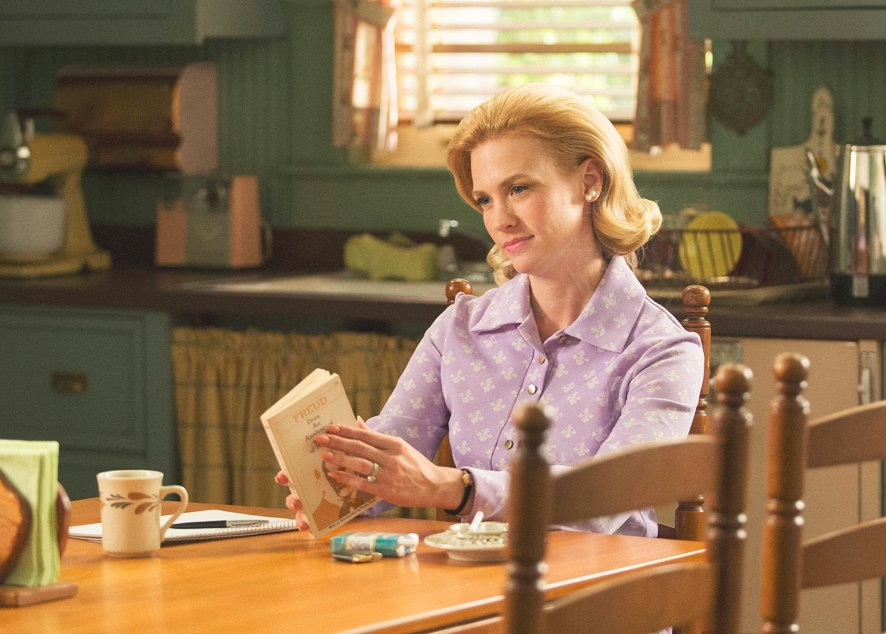
A 1950s Guide to Being a Good Wife: How Times Have Changed
In May 1955, the popular American women’s magazine Housekeeping Monthly published an article titled “The Good Wife’s Guide.” The advice provided was so emblematic of the era that it was quickly reprinted in other publications and even included in a high school family economics textbook. Comparing these guidelines to modern trends highlights the progress made over the past 60 years. American women have achieved much, rendering some of this advice almost comical today. However, some issues remain unresolved.
Dinner
The guide suggested, “Prepare dinner. Plan it ahead, preferably the day before, so that all dishes are ready when your husband returns home. This demonstrates your care and concern for his needs. Most men come home hungry, so the sight of a well-prepared meal, especially his favorite, is part of a warm home welcome.”
For a non-working housewife in the 1950s, this advice might have been reasonable. Women in the U.S. and Europe were often limited to low-paying jobs, forcing many young and capable women to rely on their husbands and focus solely on homemaking. However, this advice only considers the husband’s interests, ignoring the wife’s efforts and needs. Housework was arduous, with few electrical appliances available, and raising multiple children demanded constant attention.
Appearance
The guide advised, “Prepare yourself. Rest for 15 minutes to look fresh when he arrives. Refresh your makeup, tie a ribbon in your hair, and be slightly playful to pique his interest. After a dull workday, he needs relaxation, and it’s your duty to provide it.”
Even accounting for the bluntness of the era, the phrase “it’s your duty” is questionable. The wife’s feelings and emotions are disregarded, and the mere 15 minutes of rest seem insufficient. While homemaking is not factory or mine work, it doesn’t mean a woman should revolve around her husband’s needs, especially if she doesn’t feel like it. In healthy modern relationships, both partners are attentive to each other’s feelings and practice empathy.
Housekeeping
The guide stated, “Tidy up. Before your husband arrives, go through each room. Collect schoolbooks, toys, newspapers, and dust. In cold weather, prepare and light the fireplace. Your husband will feel like he’s in a perfectly clean paradise, which should cheer you up. After all, caring for his comfort should give you a deep personal satisfaction.”
Doing things for others and giving can be fulfilling. However, one’s comfort should not be prioritized over another’s. If your home is spotless and ready for a magazine photoshoot, take pride in your work for yourself, not just for someone else’s approval.
Children
The guide recommended, “Prepare the children. Spend a few minutes washing their faces and hands (if they are little), comb their hair, and change their clothes if necessary. Children are little treasures, and a man will be glad to see them as such. Minimize all noise. Once the husband is home, turn off the washing machine, dryer, or vacuum cleaner. Encourage the children to be quiet.”
This advice suggests that the father is distanced from his children, acting as a strict stranger whose presence demands silence and obedience. However, active paternal involvement in daily child-rearing yields positive results, even when the mother bears most of the responsibility.
Communication
The guide suggested, “Be happy to see him. Greet him with a warm smile and show a sincere desire to please him. Listen to him. You may have a dozen important things to tell him, but don’t do it as soon as he comes home. Let him speak first—remember, his topics are more important than yours.”
While it’s beneficial for partners to listen to each other, communication should not be one-sided. Modern couples share thoughts, discuss ideas, and actively participate in conversations. In a healthy family, one partner’s topics are not inherently more important than the other’s.
Relaxation
The guide advised, “Make the evening about him. Never complain if he comes home late or goes out for dinner and entertainment without you. Instead, try to understand the pressures he faces and how important it is for him to relax at home. Your goal is to make the home a place of peace, tranquility, and order where your husband can relax and rejuvenate. Don’t greet him with complaints and problems. Don’t complain if he is late for dinner or doesn’t come home at night. Consider this a minor issue compared to what he goes through every day.”
In modern relationships, partners communicate about potential delays or overnight absences. If one partner needs to stay out for work or socialize with friends, they should inform the other partner, preferably in advance. Shared leisure time is a valuable resource belonging to both partners.
Comfort
The guide recommended, “Provide him comfort. Let him recline comfortably in a chair or lie down in the bedroom. Prepare a cool or warm drink. Fluff the pillow and offer to take off his shoes. Speak softly, in a pleasant and soothing voice.”
This is one of the few pieces of advice that remains relevant today, provided the husband is willing to reciprocate when his partner needs support.
Know Your Place
The guide stated, “Don’t question his actions or doubt his integrity. Remember, he is the master of the house, and his behavior is always honest and fair. You have no right to doubt him. A good wife always knows her place.”
A good wife indeed knows her place—standing side by side with a worthy man who values her opinion. Times change, and we change with them.
For further reading on the evolution of gender roles, you can visit History.com.