The Beauty of Friendship: How Shared Rituals Bring Women Closer
The Beauty of Friendship: How Shared Rituals Bring Women Closer
Shared rituals among friends create a silent language that marks significant moments and strengthens bonds. These beauty rituals, often underestimated, play a pivotal role in fostering and deepening female friendships.
The Lipstick That Brought Us Together
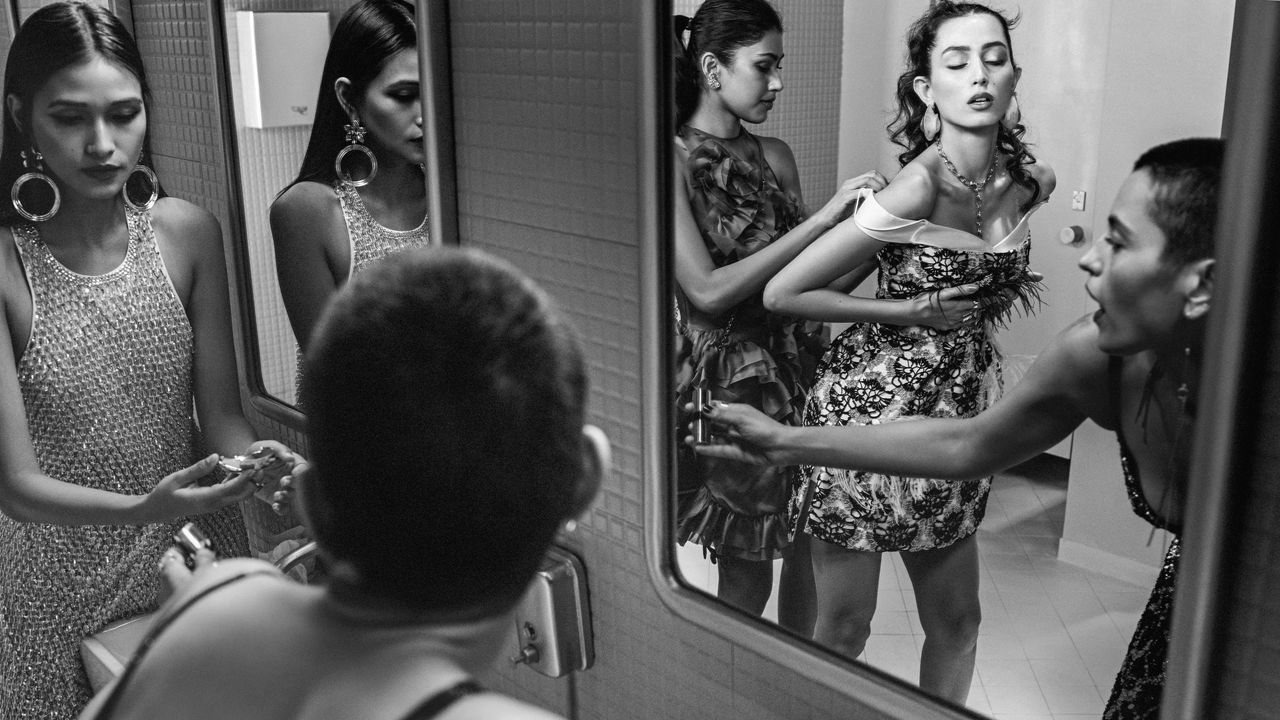
“This is our group lipstick now,” a dear friend announced as we gathered in the dimly lit bathroom of a bustling nightclub. Much like the jeans from Sisterhood of the Travelling Pants (2005), ours was a semi-matte pink liquid lipstick in the shade Committed by The Balm. Our close-knit group of four all wore the same shade, and miraculously, it looked different yet equally stunning on each of us, complementing our unique skin tones.
Vulnerability Under the Bathroom Lights
In his renowned book, Four Loves, C.S. Lewis wrote, “Friendship is born at that moment when one person says to another: ‘What! You too? I thought I was the only one.’” This quote resonates deeply when I’m at a friend’s house, preparing for a night out together. Under the revealing bathroom lights, with every pore under scrutiny, we realize our insecurities are not unique. Vanity takes a backseat to vulnerability—acne scars are unveiled, sparse brows remain untouched, and faint moustaches are left unaddressed. Here, candid conversations about our shared struggles flow with ease, reinforcing the deep bonds between us.
“Try a retinol sandwich for your hyperpigmentation,” suggests my dermatologist friend, while another hands me her new Le Correcteur De Chanel concealer, promising a porcelain-smooth complexion. As our fourth friend vigorously exfoliates her calves with a buff puff to combat post-shaving strawberry skin, we chime in, “You don’t need to do all that.” Each of us offers our own brand of reassurance, knowing full well that we’ve all faced ingrown hairs or bumpy, uneven skin at some point.
Beauty as a Lens of Friendship
Friendship encompasses many facets, but in our youth, it serves as a lens through which we interpret the world. As a child who favored Beyblade over Barbie, my introduction to the world of beauty came later than most. In the ninth grade, a close school friend introduced me to what remains an essential beauty tool in my vanity to this day: the hair straightener. This was before the era of social media beauty gurus, so I learned by watching her clamp the iron onto damp hair, the telltale sizzle of damage echoing through the room as she pulled her strands through the hot ceramic plates.
It’s a memory we cringe at now, especially as we swap notes on the latest bond-strengthening treatments like K18 and Olaplex. It’s fascinating how the evolution of our beauty rituals mirrors our own growth. From being a scruffy tomboy who looked up to her beauty-savvy friend, I’ve now become a beauty editor at Vogue India, often offering her the advice I once sought—evidence of how far we’ve come together.
The Bonding Power of Beauty Rituals
While external beautification is often dismissed as superficial, beauty rituals and their accompanying tools have quietly strengthened countless female friendships. Take, for example, my relationship with one of my closest childhood friends. With our starkly different skin and hair types—my straight-wavy strands and acne-prone skin versus her tight curls and blemish-free complexion—we’ve had countless debates over whose moisturizer works better or which aesthetician’s advice to follow. Over the years, we’ve realized that our differing needs demand unique solutions.
A warm brown lipstick radiates a sunkissed glow against her olive skin, while the same shade on my fairer complexion turns me into a chalky TV serial villain. While she’s self-conscious about her stretch marks, I fixate on the pits in my cheeks. Confronted with concerns so distinct from our own, we’ve learned to appreciate the individuality of our lived experiences. The differences in our skincare routines have become gateways to understanding this fundamental truth, allowing us to be more empathetic toward each other.
Safe Spaces and Shared Experiences
A UCLA study found that when faced with a stressful situation, women often respond by seeking support from each other—an approach that has historically ensured the survival of women. Pop culture confirms this phenomenon. Think of the scene in Mean Girls (2004) where Lindsay Lohan and the ‘plastics’ have a candid conversation about high school life while preparing for their winter talent show. Or in Zindagi Na Milegi Dobara (2011), when Kalki Koechlin’s character voices her apprehensions over her fiancé’s bachelor trip in the powder room with her friends.
These moments reflect how beauty rituals create safe spaces for women to share advice and emotional support as they navigate life’s challenges. Whether it’s a late-night conversation about a collagen-boosting face mask or a collective cringe over past beauty mishaps, these exchanges are woven into the fabric of female friendship, enriching it with layers of shared experience and mutual care.