I Forgot How to Sleep: Living with Insomnia and Accepting It as Normal
To Sleep or Not to Sleep: That Is the Question
Insomnia has become a nearly textbook example of a widespread issue, much like many other “conditions” that receive little attention. According to somnologists—specialists in treating insomnia—one in five people experience this problem, and the number of those seeking help is growing every day. A young woman shared her story with me, detailing what it’s like to live with insomnia and how it has reshaped her life and consciousness. She has forgotten how to sleep but continues to fight, analyze, and search for solutions.
3 AM: The Nightly Struggle Begins
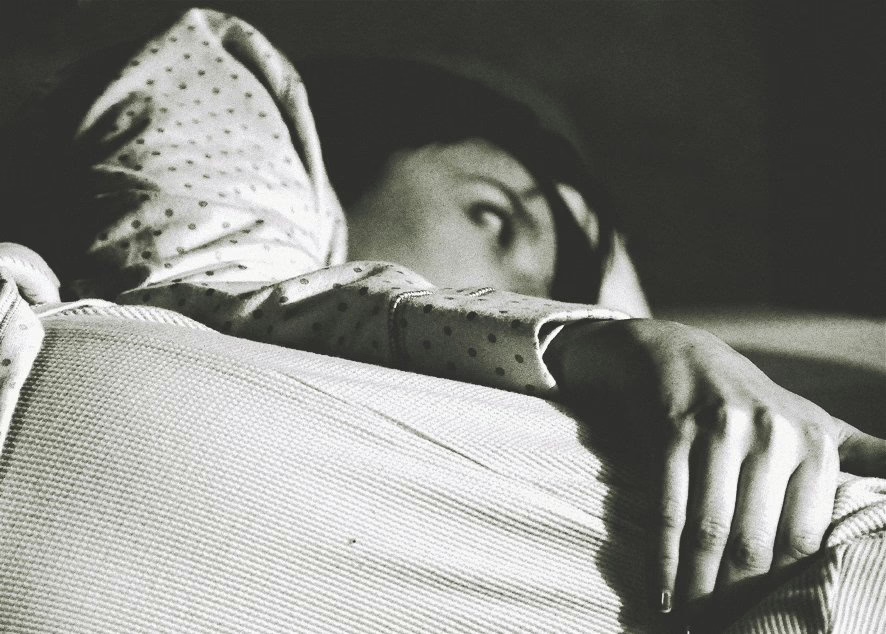
It’s 3 AM. I know the exact time, not because I just checked the clock, but because I simply know. It all starts at 3 AM, even though I go to bed at 10:30 PM. Typically, I read for a while, turn off the light, toss and turn trying to find a comfortable spot, then quietly get up to meditate for half an hour before attempting to sleep again. I constantly flip my pillow, hoping the cooler side will help me drift off. I change my pajamas, trying different positions—sitting with my knees tucked in, and in the most absurd moments, even standing. All these maneuvers take time, and before I know it, it’s 3 AM.
Resisting the urge to check the clock is my golden rule. There’s nothing comforting about knowing how many hours I’ve been awake and how many more I might have to endure. Each glance at the clock only heightens my anxiety. I realize I haven’t slept for hours and might not sleep at all. This is my personal nightly nightmare, but fortunately, I haven’t lost my mind. I know it’s temporary, and the rational part of me reassures that it will end soon. Indeed, my insomnia comes and goes, sometimes giving me days or even weeks of sweet, restful sleep. Lying down and sleeping—it’s supposed to be simple, right?
When I do manage to sleep, I stop worrying and begin to forget the essence of my suffering. What was all the fuss about? But then it all repeats again.
Childhood Insomnia: The Unnoticed Struggle
Until recently, I didn’t realize I had a problem. Insomnia had occurred before, in my childhood, but no one paid much attention. I remember being 12 years old during a particularly tough year for my family. My father was promoted, and we moved to the capital. It was a stressful time for all of us. My mother struggled to adapt to the new place, constantly worrying about finding a job, even though my father suggested she focus on household duties. For me, the new school was a source of stress—I was shy and introverted, often seen as strange or “not of this world,” as one teacher put it. It was incredibly difficult. My father was consumed by his new role, leading to frequent arguments at home over trivial matters. Tears. Screams. Broken dishes. My insomnia.
For a week, I went to bed late and couldn’t sleep until the middle of the night. I told my father, but he simply sat on my bed, stroked my head, and said:
It’s all nonsense. Don’t pay attention to it. Things are tough right now, but they’ll get better. Close your eyes and sleep.
I understand he wanted to comfort me, to be gentle and attentive despite the stress. But no one really knew about insomnia. He told me that many people, especially those with jobs requiring early rises and hard physical labor, often go without sleep. It disrupts their routine, pushing them into a different state of being. He shared stories from his time in the military and navy, where sleep was a luxury, much like it was for me. After these stories, I felt a sense of purpose, as if I were doing important work like those sailors, even though all I was doing was suffering. The fantasies that his stories sparked—ships sinking, sailors working tirelessly—energized me. Since then, much has changed. I grew up, left home, and by the age of 24, I had lived in over 20 different places, sleeping on countless beds with varying mattresses, surroundings, and levels of comfort. Through it all, I slept deeply.
In 2012, I had a serious nervous breakdown. At that moment, I realized that going to sleep was the only solution to my problems. Since then, sleep has become my problem.
The Three Phases of the Night
For those suffering from insomnia, the night is divided into phases, each with its own characteristics. The time between 10 PM and 11:30 PM is golden—a period I wish I could stretch as long as possible. These are the hours when nostalgia washes over me, and I still hold onto the hope that I might fall asleep, sinking into the soft folds of my bed like the ship from my father’s stories, only to resurface at dawn with the sound of birds and my alarm clock.
The second phase feels like Dante’s Purgatory—neither extreme evil nor true goodness. It holds me, preventing sleep until the streets empty and the house grows cold and lifeless. Here, I still believe that if I fall asleep, not all is lost; the next day might still begin well. It’s an optimistic phase, yet still unsettling. During this time, the insomniac realizes that this is their last chance to sleep, that the body and mind are ready—if only they would allow it.
If I manage to set the right mood, I still have 50% of the night left to enjoy in sleep. But it’s incredibly difficult. The second phase reminds me of my wild youth—a time when staying up late was normal because you were at a party, having fun with friends. But with insomnia, I feel loneliness and exhaustion. At 2 AM, I start asking myself unanswerable questions. Why me? What did I do to deserve this? What’s happening to me? These thoughts are catastrophic, confusing my mind, but they also mimic sleep, as I drift into a stupor that can last for hours. When it passes, I begin to think that my bed and the entire world are terrible places to be alive.
The third phase is when I get up and start reading. There’s no hope left for sleep.
Treatment and Reflection
I thought about how in English, there’s a phrase, “I can’t sleep,” which means “I can’t fall asleep.” In Russian, we say, “Мне не спится” (I’m not sleepy). For me, it’s the latter. The strange thing is, when I say it that way, the problem doesn’t seem like a problem at all. It sounds like a temporary state, not something that defines my entire lifestyle. When you’re not sleepy, you simply start thinking about everyday things—how much you need to earn, what happened during the day, what you dream about, what you want from life—harmless reflection. I experience these philosophical musings during the second phase, but afterward, the real suffering begins. My insomnia becomes a character, no longer just a state or mood. I engage in a battle with it, realizing its presence is tangible, as if it’s in the room with me. It’s exhausting but doesn’t bring me any closer to sleep.
After the reflections fade, I begin to pray for morning to come quickly, for me to get up and continue living in the hope that the next night, I will sleep.
If my problems ended with thoughts and existential suffering, I could conclude my story here. But beyond the reflections, I feel physical pain. When you don’t sleep for a long time, your bones start to ache. It feels like rheumatism—joints groaning, aching, cracking. You become acutely aware of every curve of your body, every detail of your skeleton. Through these physiological changes, I realize that my insomnia is more than just a mental struggle—it’s a physical one too.