Willem Dafoe on Van Gogh: At Eternity’s Gate – A Journey into the Artist’s Soul
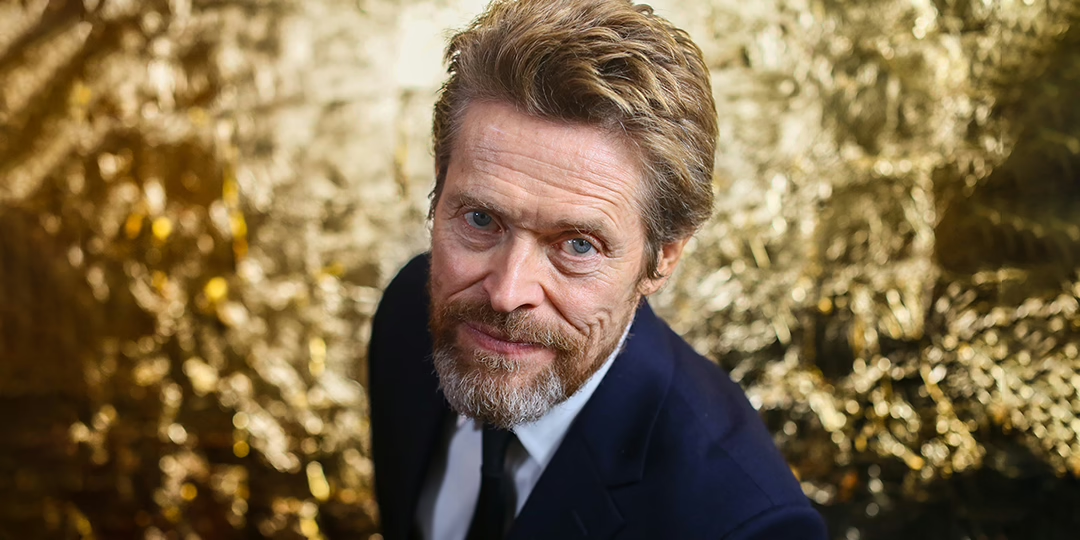
Willem Dafoe on Van Gogh: At Eternity’s Gate
In February, the film “Van Gogh: At Eternity’s Gate” by Julian Schnabel hit the screens in Belarus, offering a glimpse into the final years of the artist’s life through the recreation of images from his paintings. The renowned actor Willem Dafoe took on the lead role in this cinematic masterpiece.
The Art of Depicting Artists in Cinema
Throughout the history of cinema, numerous films have been dedicated to the lives of brilliant artists. Some notable examples include Andrei Tarkovsky’s “Andrei Rublev,” Milos Forman’s “Goya’s Ghosts,” Ed Harris’s “Pollock,” and Julie Taymor’s “Frida.” Several films have also been made about Van Gogh, with Robert Altman’s “Vincent & Theo” being considered the best until now. Even the world-renowned filmmaker Akira Kurosawa dedicated a segment of his film “Dreams” to the Dutch artist. While these filmmakers can be considered artists in their own right, none of them were painters before venturing into cinema.
Julian Schnabel, however, was already an established neo-expressionist painter before he started making films. He was known for using unconventional materials like porcelain, deer antlers, and even linoleum in his artwork. His transition to filmmaking allowed him to explore new avenues of artistic expression. His debut film “Basquiat” told the story of artist Jean-Michel Basquiat, who was often referred to as the Van Gogh of the 1980s. After directing two more films, Schnabel finally embarked on a project about the legendary Vincent Van Gogh, two decades after his cinematic debut.
Willem Dafoe’s Journey into Painting
Willem Dafoe, who portrayed Van Gogh in the film, shared his experiences during an interview with our magazine.
Learning to Paint Like Van Gogh
Dafoe revealed that he had minimal experience with oil painting before the film, having only dabbled in it for a previous role in William Friedkin’s “To Live and Die in L.A.” However, Schnabel insisted that Dafoe learn to paint properly for his role as Van Gogh, offering to teach him personally. This turned out to be a blessing in disguise for Dafoe.
Schnabel began by teaching Dafoe the basics of painting, such as how to hold a brush and secure a canvas on an easel. He then explained that a painting is essentially a series of marks that come together to create an image. They discussed color and light extensively, with Schnabel encouraging Dafoe to see the world differently, focusing on shapes, colors, and highlights rather than the functions of objects.
Van Gogh’s Perspective on Art and Life
Dafoe shared that Van Gogh believed in the existence of infinity within the temporary and the fleeting. Through his paintings, Van Gogh aimed to awaken viewers and offer them a glimpse into the whirlwind of life surrounding them. Dafoe found this perspective on art deeply resonating, as it aligns with the idea that art allows us to see the world more clearly.
Dafoe’s Paintings in the Film
While some paintings in the film were collaborations between Dafoe and Schnabel, Dafoe proudly mentioned that he painted the boots featured in the movie by himself.
Van Gogh’s Legacy and the Film’s Unique Perspective
The idea for “Van Gogh: At Eternity’s Gate” came to Schnabel during a visit to the exhibition “Van Gogh/Artaud. The Suicided by Society” at the Musée d’Orsay in Paris in 2014. Accompanied by his friend, the renowned French screenwriter Jean-Claude Carrière, Schnabel found inspiration in Van Gogh’s paintings, which seemed to guide the structure of the film.
The resulting film is not merely a biographical account of Van Gogh’s life but a unique exploration of what it means to be an artist. It challenges the conventional narrative of Van Gogh’s death, suggesting that he may not have committed suicide but was instead shot by hoodlums. This new perspective sheds light on Van Gogh’s final words, “The sadness will last forever,” and invites viewers to contemplate the meaning of life and art.
The Artistic Process and Self-Criticism
Dafoe shared his interpretation of one of Van Gogh’s quotes from the film: “I paint because it makes me stop thinking.” He believes that when an artist is creating, they are in harmony with themselves, free from worries and distractions. This state of being fully immersed in the creative process is something that everyone can relate to when engaged in an activity they are passionate about.
Regarding Van Gogh’s statement that painting only brings him satisfaction when he succeeds, Dafoe acknowledged the importance of self-criticism in the creative process. He distinguished self-criticism from self-flagellation, emphasizing that doubts and mistakes are essential for growth and learning. Sometimes, mistakes can be more valuable than successes, as they provide invaluable experience and can prevent greater catastrophes.
The Success of the Film
One of the key factors contributing to the success of “Van Gogh: At Eternity’s Gate” was the casting of Willem Dafoe as the Dutch artist. Despite the age difference between Dafoe and Van Gogh at the time of his death, Schnabel believed that Dafoe was the perfect choice for the role.
For more information on Van Gogh’s life and artwork, visit the Van Gogh Museum website.