North Macedonia: A Journey Through Timeless Beauty and Cultural Riches
Exploring North Macedonia: A Hidden Balkan Gem
North Macedonia, a small country nestled in the Balkan Peninsula, is a rare destination for travelers from Belarus, especially during the pandemic. However, as the saying goes, boundaries exist only in our minds, and North Macedonia is indeed accessible. Journalist Veronika Solovei visited this enchanting country and shares her travel notes exclusively for our readers.
Getting to North Macedonia
Before delving into the beauty of North Macedonia, let’s address a practical question: how to get there? There are no direct flights, so you’ll need to fly to Turkey first and then continue to Skopje or the resort city of Ohrid, which are about 3.5 hours apart by car. Be prepared for thorough passport control; it seemed like almost every border officer wanted to inspect my documents. Belarusian citizens require a visa or a tourist voucher.
Discovering Skopje: A City of Contrasts
North Macedonia is one of Europe’s least explored countries. I began my journey in Skopje, a city with over 2,000 years of history that has been rebuilt several times due to earthquakes. The last major earthquake in 1963 left little standing.
The city is a mix of new buildings and authentic architectural landmarks. The old quarters are a bustling bazaar with several caravanserais from the Ottoman period. Narrow streets, cobblestone roads, colorful shops, and artisans create a lively atmosphere. The gold trade is particularly vibrant here, with numerous jewelry displays catching the eye. There’s even a whole district dedicated to tailoring and several “men’s clubs” where locals gather to discuss the latest news over a cup of tea.
Kale Fortress and the Stone Bridge
One of Skopje’s most interesting attractions is the Kale Fortress. Its walls and semi-abandoned towers, some dating back to the 11th century, are still intact. The cobblestone paths are safe to walk on, but it’s important to note that this is not a tourist attraction but a historical site.
The fortress offers stunning panoramic views of the city and the main attractions along the Vardar River. You can reach the fortress on foot from the city center through a park, passing by the Mustafa Pasha Mosque, the brightest Islamic monument in North Macedonia.
The Stone Bridge, connecting the old and new parts of Skopje, was laid during the Roman Empire. According to legend, those who cross the bridge with pure thoughts and a clear heart will be blessed with good luck.
The New Skopje: A City of Statues
The new part of the city leaves a rather ambiguous impression due to the abundance of giant and somewhat odd statues. There are monuments to religious and political figures, military heroes, creative elites, abstract figures, and animals. The number of statues erected under the national program is countless, giving the impression that no building can do without a statue. The overall effect is quite peculiar.
Lake Matka: A Natural Wonder
We didn’t stay long in the capital but rented a car to explore the country. North Macedonia offers incredible lakes, ancient monasteries, and breathtaking nature.
The roads in North Macedonia are an art form in themselves. Steep, dangerous serpentines, unique mountain reliefs, picturesque tunnels, and sudden views from heights that take your breath away. Every 300 meters, you’ll find yourself exclaiming “Wow!” and asking the driver to slow down. The beauty is overwhelming.
Our first stop was the Matka Canyon, a unique open-air museum just 17 km from Skopje. The water in this oldest artificial reservoir in the country is a cosmic, bright turquoise color. The lake is transparent, surrounded by jagged cliffs and deep silence. It feels like you’ve landed on another planet, and everything else fades away.
The Caves and Monasteries of Matka Canyon
The canyon has 10 caves and the Treska River. The Vrelo Cave, among others formed over billions of years, features a three-meter stalactite “bump” and two lakes, one of which is 500 meters deep! Experts believe that Vrelo could be one of the deepest underwater caves in the world.
Along the shores of Lake Matka and hidden in the cliffs are ancient monasteries and churches. The area is said to be home to rare species of animals and plants listed in the Red Book. From spring to late autumn, the canyon offers activities such as kayaking, swimming, diving, rock climbing, fishing, and hunting.
Boat Tour with a Celebrity Guide
There are hiking trails, but we opted for a boat tour and were not disappointed. Our guide was none other than a star from the travel show “Eagle and Tails,” who enthusiastically shared stories about his country.
Ohrid: The Pearl of North Macedonia
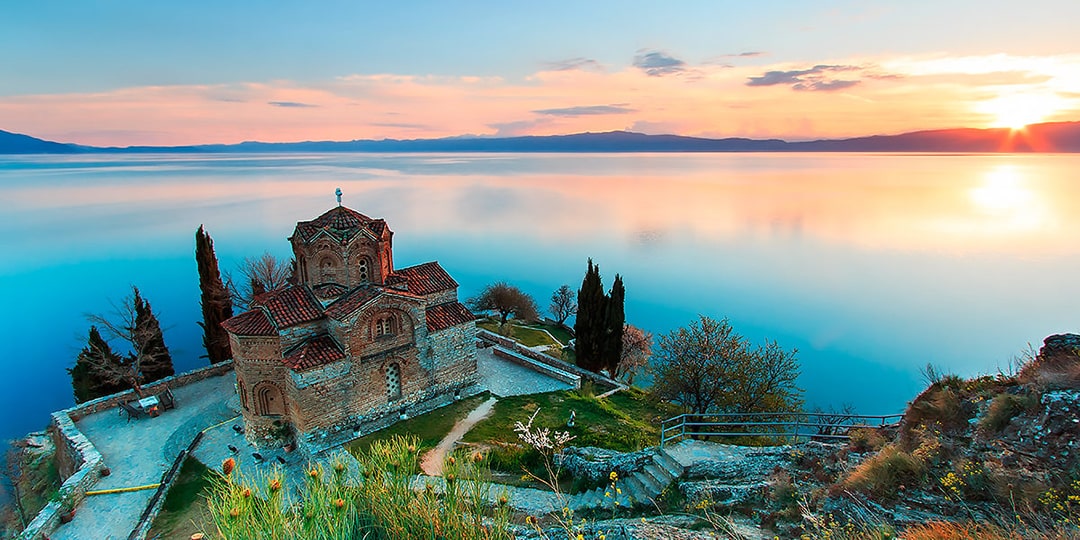
North Macedonia may not have a coastline, but it boasts many picturesque lakes. The most famous is Lake Ohrid, located in the colorful tourist town of Ohrid. The town greeted us with narrow streets and houses with red roofs. The postcard-perfect views are everywhere: Ohrid is famous for its first Slavic university, numerous churches, an ancient amphitheater, and a beautiful monastery perched above the water.
Lake Ohrid is the oldest and deepest lake in the Balkans, with an age of about five million years, predating the glacial period! When I first saw it, I was speechless. The soft blue water sparkled in the January sun, and the surrounding mountains seemed to gently embrace the lake. It looks vast, like a sea. The shore resembles the Adriatic coast and is just as beautiful. The water is very clean because no wastewater is discharged into the lake, and even the Black Drin River, which flows into it, is cleaned of debris before entering. The promenade is dotted with cafes and small shops.
Christian Heritage and Saint Naum Monastery
North Macedonia is one of the brightest and most contrasting cultural hubs on the continent. It is home to Macedonians and Albanians, Orthodox Christians and Muslims, Turks and Greeks. But above all, it is a place where you can truly immerse yourself in the history of Christianity. North Macedonia was one of the first in the Mediterranean to adopt this religion. The apostle Paul visited Macedonian land three times during his missionary travels.
Here, you can find churches from the 12th and 13th centuries with unique frescoes. The paintings in these holy places are impressive in their beauty, and the images on the frescoes are quite innovative for the era of Byzantine art.
One day, we embarked on a pilgrimage to the holy sites. It is worth noting that it was here, in ancient Ohrid, that Christianity and the Slavic script emerged and spread to Serbia and Bulgaria. We visited the Monastery of Saint Naum, located 30 kilometers from the city, founded by a disciple of Cyril and Methodius. The first to greet us at the entrance of this beautiful attraction were peacocks, which happily posed for the camera.
The monastery houses a relic that attracts tourists and pilgrims: the remains of Saint Naum. It is said that if you put your left ear to the sarcophagus, you can hear the saint’s heartbeat.
Wine and Pearls: Macedonian Delights
You may not have heard of Macedonian wines, but local winemaking has a history of over 2,000 years. The climate here is ideal for viticulture. As you travel through the country, you’ll see numerous vineyards (there are over 80 wineries here). Be sure to try the red wine made from the “Vranac” grape variety and the unforgettable vintage “A’gupka.” Another popular strong drink is rakija, a fruit brandy.
North Macedonia is also known for its pearls. The country has a unique type of freshwater pearl, which is highly valued. You can find beautiful jewelry made from these pearls in local shops.
In conclusion, North Macedonia is a country that offers a rich blend of history, culture, and natural beauty. From the bustling streets of Skopje to the serene shores of Lake Ohrid, there is something for every traveler to discover and enjoy.