Nikita Monich: Art is Not an Object, It’s the Relationship Between You and the Object
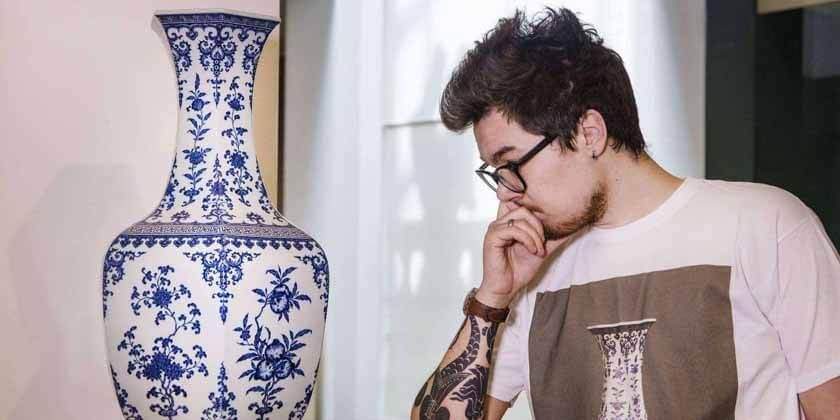
Nikita Monich: Art is Not an Object, It’s the Relationship Between You and the Object
A few years ago, crowds would gather for Nikita Monich’s tours at the National Art Museum. Once, his Facebook fans even organized a flash mob to persuade the orientalist, tour guide, and then-research fellow of the Russian and foreign art department at the National Art Museum to conduct a tour.
Since then, it has become clear to every Belarusian who has even slightly touched the world of art: art is very interesting. Now, Nikita continues to popularize art and culture on his YouTube channel “About Culture.” The formats have changed, but the importance of art has become even more evident. We publish our conversation with Nikita about where to start your acquaintance with art and what to do if the fear of seeming silly makes you run away even from the first date with the beautiful.
Can Anyone Learn to Feel and Understand Art?
– Nikita, can anyone learn to feel and understand works of art? Or is it necessary to be born with certain talents, in a family of artists, actors, or art historians?
– In most cases, undoubtedly, it is in the family that love for art is cultivated. Even if parents do not go to exhibitions or the theater, but send their child to art or music schools, they grow up in the right environment. When there is a corresponding background and atmosphere, step by step, one comes to an understanding of art.
But even with a different childhood, you can still achieve your goals. The main thing is to have motivation. Without it, nothing will work. After all, you need to gather yourself, go to a museum or theater, pay money, and at home, there is the internet, where with one click you can find many entertainments.
Improving Life Quality Through Art
– What do you think of the motivation that knowing beauty improves the overall quality of life?
– When we get acquainted with any kind of art, of course, we expand and complicate our worldview. However, the slogan “let’s study Modigliani’s work to live better” will not work for the whole society. It turns out to be too complex and multi-step.
Where to Start Your Acquaintance with Art
– Where should one start their acquaintance with art? Go to an exhibition, a play, or a concert? Or read a book, for example, about Claude Monet?
– You often need to read many books to understand what you can realize in five minutes by looking at a painting in person. You know, talking about music is like dancing about architecture. You can, but it’s difficult. The same goes for literature about artists and paintings.
It’s better to first see their works with your own eyes, and then you can read a book. I have a game like this. First, I go to an exhibition, carefully look and analyze my impressions, and then I read books about this artist and their works. And I am pleasantly surprised when I find my ideas in them. Watching is more important than reading, as a regularly trained eye makes fewer mistakes.
If we return to the question of where to start your journey into art, for many people, it is important to find a company with whom you can go to a museum, theater, or lecture. Even if you don’t like the event, you will definitely have a good time. Of course, it’s worth reading about the exhibition or play you are going to visit. That is, you need to find those “keys” to consuming art that suit you personally.
We are always waiting for a magic pill. But there isn’t one! Essentially, you just need to buy a ticket and start going somewhere. The process of studying painting and music should bring you pleasure. Look at children, how they can immerse themselves in any activity. Being able to play so enthusiastically is the most important thing for understanding art.
Dealing with Disappointment in Art
– One of my acquaintances dreamed of visiting the d’Orsay Museum and seeing the impressionists. Her dream came true. But it turned out that nothing touched her in person… This example, it seems to me, is typical for many who are getting acquainted with art. Especially if it has features of modern art. I came to the exhibition, understood nothing – I feel uncomfortable, which means art is not my element…
– The problem with your acquaintance and others who have been in a similar situation is that they try to get acquainted with art, carrying the burden of mandatory expectations. Expectations can bring disappointment. The girl succumbed to public opinion that the impressionists are geniuses, and they cannot be disliked. But no one can convince a person to love what they don’t like.
For example, my father likes the work of Caravaggio. And if we go to some museum, he always asks if there are works by his favorite artist. If there are, then the father will visit this museum, and if not, then “sorry, son, I’ll wait for you in the nearest bar.” He found what he enjoys. That’s how it should be.
As we gain experience, we either expand or narrow the circle of our sympathies. Earlier, it seemed to me that there was nothing better than Gustav Klimt. Gold, secession – it’s so beautiful! And then I saw an exhibition of Egon Schiele and realized that Schiele, with his pure, refined, poeticized pain, evokes something in my soul. After viewing his works, I am not let go for a long time.
Don’t Give Up on Art
– So, if you didn’t understand the painting or the play from the first acquaintance, you shouldn’t give up?
– You should never give up. Art is not an object; art is the relationship between you and the object. Paintings in a museum are not art. This is the property of the people, having historical and artistic significance, insurance value, physical parameters. And when you look at a painting, an interaction occurs, which is called art.
Sometimes nothing happens between you and the object. Nothing terrible! There are ways to “break through.” It is difficult when there is no guide to the world of art, no methodology. Nowhere do they teach us how to look at paintings, how to listen to classical music. You came to the museum, you like it – good, you don’t like it – you can be free.
Making Art Accessible and Interesting
– How can you tell about classical music or avant-garde painting in an accessible and interesting way?
– Art should be “decoded” for the ordinary consumer. The language of art history is complex and academic; it is professionally deformed. My task is to “recode” it into a living language, into a message: art is interesting! Look at what pleasure I get from getting acquainted with it!
I try to redirect this message to the audience. To be a catalyst for the reaction. I develop the same state in those who come to my lectures or tours, sometimes through provocation, through acting, through exaltation.
The Demand for Art Education
– In recent years, many schools, courses, and lecture halls have appeared in Minsk, where everyone can learn to understand art. In your opinion, what is the demand for such educational services connected with?
– First, art is interesting! Many Belarusians love to travel. When people are in different countries, visit museums, see unique architecture, they understand how interesting it is to listen to stories about beautiful things. Such trips undoubtedly take root and scatter their seeds.
Paintings in a museum are not art. But when you look at a painting, an interaction occurs, which is called art.
In addition, art is a marker of social status. It is prestigious to understand art, to be able to discuss it. This is a kind of social lift. People want to be part of the cultural elite, and this is a good motivation.
Finally, art is a way to spend leisure time with benefit. Instead of sitting in a bar or at home, you can go to a museum or theater, listen to a lecture, and then discuss it with friends. This is a more meaningful and interesting way to spend time.
For more information on art and culture, you can visit Nikita Monich’s YouTube channel About Culture.