Exclusive Interview with Chernobyl Star Emily Watson: A Journey Through History and Heroism
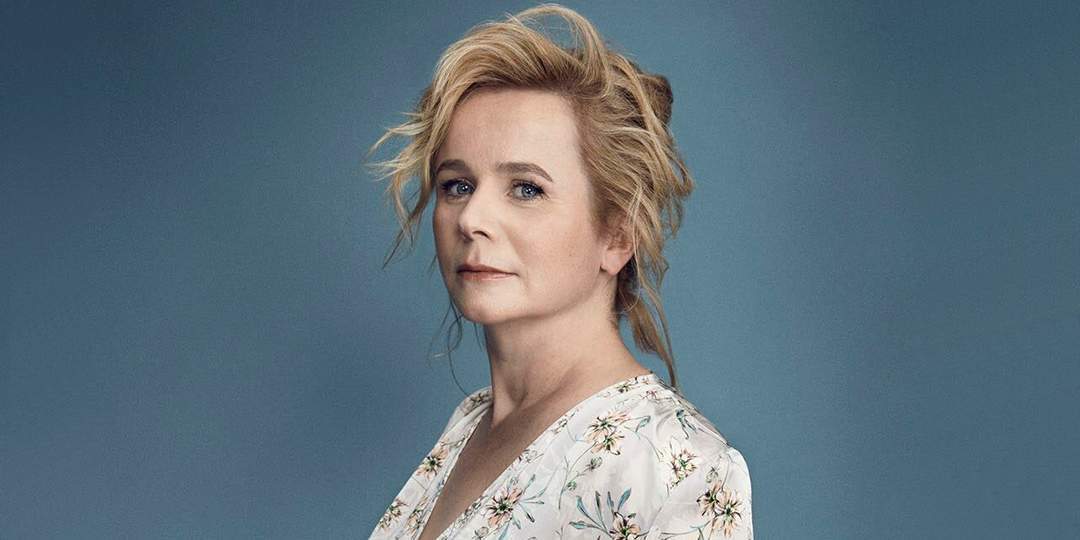
An Exclusive Chat with Emily Watson: Chernobyl’s Leading Lady
In a recent meeting in New York with British actress Emily Watson, who played Ulana Khomyuk in HBO’s mini-series “Chernobyl,” we discussed the challenges of portraying the dramatic events of the real-life catastrophe on screen, and why understanding these events is crucial for people today.
Emily Watson: A Career Forged in Wisdom and Innocence
It’s hard to believe that the lead role in the famous French film “Amélie” was initially offered to Emily Watson, not Audrey Tautou. The British actress turned down the offer because the lead character had to speak French. Emily felt her French wasn’t good enough, even though director Jean-Pierre Jeunet had her in mind for the role.
The French director was amazed by Emily’s ability to create characters on screen that possessed what he called “wise innocence.” This was evident in her portrayal of Bess in the 1996 film “Breaking the Waves,” alongside Stellan Skarsgård. Her character was so naive that people around her treated her like a child. Bess wasn’t afraid to endure humiliation for love, even when people who didn’t understand her turned away. Director Lars von Trier won the Jury Grand Prix at the Cannes Film Festival for this film, and the European Film Academy awarded Emily Watson the prize for Best Actress.
The Chernobyl Project: A Journey Through History
When Craig Mazin pitched his new project for a mini-series about the Chernobyl disaster to HBO in 2015, the network’s executives were surprised by his interest in such a serious topic. But Mazin, known for his work on comedies like “The Hangover Part II & III” and “Identity Thief,” believes that comedy and drama are two sides of the same coin. He even pointed out that it’s impossible to tell if a person is laughing or crying just by looking at their back.
In April 1986, Mazin was 15 years old, but he vividly remembers the empathy he felt for the victims of the Chernobyl disaster. He understood the horror of loss caused by a sudden explosion, as the American public had experienced a national shock just three months earlier with the explosion of the space shuttle Challenger.
Years later, Mazin set out to uncover the true cause of the Chernobyl disaster. Through his investigation, he aimed to remind the world not only of the tragedy but also of the heroes who sacrificed their health and lives to save humanity from an even greater catastrophe. This was the purpose behind Mazin’s creation of the “Chernobyl” project.
Chernobyl: A Global Endeavor
Alongside real-life heroes, Mazin created the fictional character Ulana Khomyuk, played by Emily Watson. Ulana is a scientist who was one of the first to notice the increase in radiation levels due to measurements taken at a Belarusian research institute. Although the institute where she works is more than a hundred kilometers away from the source of contamination, Ulana understands that the cause must be sought at the Chernobyl Nuclear Power Plant.
Her character’s residence in Belarus is not coincidental, as the wind drove the radioactive cloud in that direction. Belarus suffered the most significant losses from the accident outside the immediate disaster zone. Ulana Khomyuk’s image became a collective representation of all the scientists involved in investigating the causes of the accident and considering possible scenarios for the development of events after it.
Moreover, Ulana Khomyuk embodies the conscience of Academician Legasov, who faced a difficult choice: to tell the international community about the real causes and scale of the tragedy at the IAEA experts’ meeting in Vienna or, following the KGB’s recommendations, to make every effort to conceal the facts from the public to avoid tarnishing the image of the Soviet Union.
A Conversation with Emily Watson
Our interview with the actress took place at The Beekman hotel in New York, the day after the creators of the TV series and the lead actors met with UN members to commemorate the 33rd anniversary of the Chernobyl disaster. Although only a few viewers had seen the series by then, there was little doubt that it would become a global phenomenon.
As it turned out, the reality exceeded the expectations of both critics and the creators themselves. The series’ rating on the world’s largest movie database, IMDb, reached 97%, even surpassing another cult HBO series, “Game of Thrones.”
“Chernobyl” became a truly international project, with Britons, Swedes, Danes, Germans, French, Finns, Lithuanians, Latvians, Estonians, Icelanders, Ukrainians, Belarusians, and Russians all participating. Interestingly, among the creators, there were only two Americans: screenwriter Craig Mazin and producer Carolyn Strauss.
Despite the fictional nature of the plot, which does not claim documentary accuracy, one of the essential merits of “Chernobyl” is the authenticity of the events depicted and the respect shown to the people who had to endure one of the most severe tragedies of modern times.
Emily Watson shared with “City of Women” readers how she prepared for filming, what “piece of Belarusian history” helped the actress remain internally strong and unshakable, and what made her laugh during the filming process.
Emily Watson: Reflections on Chernobyl
“Do you remember where you were when you heard about the Chernobyl disaster?” we asked.
“At that time, I was a student at the University of Bristol. Even then, I was aware that the presentation of news in the West and the Soviet Union was significantly different due to the Cold War. And since some of our students were studying in Kiev through an exchange program, we couldn’t help but worry about their safety.”
“Of course, we were advised in England about certain foods that were better not to eat. You know, I always perceived the Chernobyl accident as an event that had already gone down in history. But just yesterday, at the UN meeting, it suddenly dawned on me that now, knowing much more about this event, I understand: we are still living with its consequences, and it is far from being in the past.”
“For another 25,000 years, those places will be unsafe for human life! And the sarcophagus protecting the fourth reactor is designed for only the next 100 years. At the meeting, we talked with wonderful people who help the victims of this terrible accident.”
“For example, I met an Irish woman named Adi Roche, who is the executive director of the Chernobyl Children’s Project International charity. She still personally visits Belarusian cities and villages to provide direct assistance to the children living there.”
“Your character in the TV series is a collective image. What exactly did you rely on when working on its creation?”
“First of all, I based it on the fact that my heroine is from Belarus. And her childhood must have taken place during the times when the country was healing the wounds received during World War II.”