Marina Akhmedova: My Tough Character and the Echoes of War
Marina Akhmedova: A Chronicle of Our Times
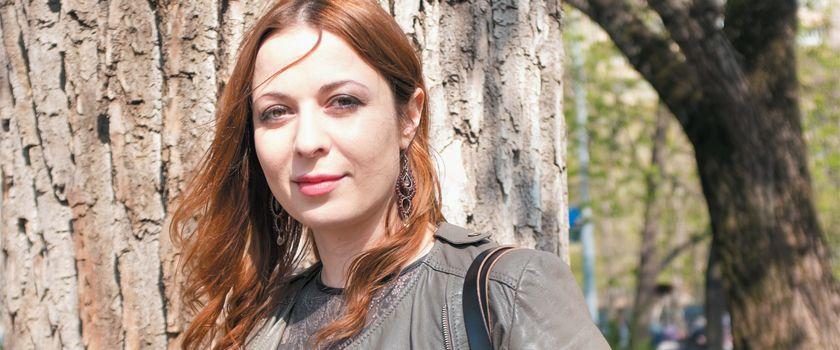
Marina Akhmedova is one of those remarkable individuals who, through talent and courage, documents her era. Someday, her books and reports will be studied, questioned, and admired. Today, Marina shares her awe for the beauty of the Carpathian nature, her disdain for war, and her hope that no criminal will escape just punishment.
About Marina Akhmedova
Marina Akhmedova is a journalist and writer, known for her books such as “Diary of a Female Suicide Bomber: Hadija,” “A Woman’s Chechen Diary,” “House of the Blind,” and “Crocodile,” among others. She has authored numerous reports from combat zones and hotspots, serving as a special correspondent for the socio-political weekly “Russian Reporter.”
The Impact of the Ukrainian Civil War
Throughout her life, Marina has visited numerous places with extreme conditions. When asked about the impact of the current civil war in Ukraine on her, she responded:
“I hope that the war has left no mark on me. A war mark is probably depression, gloom. Sometimes I look at photos of people saving others from some disaster, and I see that look in their eyes. It ages them. I hope my gaze does not reflect war, misery, or depression. When you watch war on TV, it seems dangerous everywhere. But that’s not the case. There are frontlines, shelled cities, and cities that are more or less shelled. Comparing Donetsk and Oktyabrsky, Donetsk is an island of calm. It was loud there before the ceasefire, especially in the evenings and nights, but at least it didn’t whistle past your ear. You constantly keep in mind that at any moment something can fly in. At you. But working in Oktyabrsky or Shyrokyne is a different matter. I am a female journalist and do not rush to the frontline. I don’t want to go there and can’t imagine what I could write from there.”
Lessons from the War Zone
When asked about what new experiences she gained while working in the war zone, Marina shared:
“Nothing particularly new professionally. Honestly. Although I understood why people often tell me that I have a tough character. For example, I needed to take an old woman from Oktyabrsky to a hospital in Donetsk. I had already arranged it with the doctor. But the day before, while we were in Oktyabrsky, the village came under fire. We left. In the evening, Grandma Manya called me from the basement and said she felt like the earth was about to turn over. There were hits on houses and again on the 21st hospital, in the surgery department. In the evening, I talked to the driver who had never refused to go to unpleasant places, and for the first time in our work together, he said: ‘Maybe we shouldn’t go there tomorrow? Think about how necessary it is.’ Generally, I felt comfortable working with my driver Artem all year because he always remained calm, and I, sitting in the back seat, locked in the small world of the car, felt protected by our metal armor. But when Artem said, ‘Think about it…’, I got seriously tense. But I had promised, so I had to. I arranged with the doctor, organized everything, and they were waiting for us.”
The Moment of Waiting
Marina described the difficulty of waiting in such situations:
“I was wildly irritated that someone was shooting from heavy guns at that moment, preventing me from keeping my promise. Probably, it’s related to the rhythm we are used to in Moscow: I already have everything scheduled, planned, don’t interfere with my schedule! And in the morning, another driver, Oleg, suggested I stay in Donetsk, saying he would go for Grandma Manya himself: ‘I’ll find a place to hide if necessary. I’ll jump out of the car…’ I was outraged again: why should another person risk their life because of a promise I made, and I would wait in comfort? We went to Oktyabrsky. At the checkpoint, they told us: ‘It’s quiet for now…’ We picked up Grandma Manya, took her to the doctor, and brought her back. I realized that when they shell the place I need to go, I feel not so much fear as irritation that they are preventing me from doing my job. My job is the main thing, and they with their shells are secondary. Probably, I really am a person with a tough character.”
Literary Inspirations
Marina’s last book, “Crocodile,” was written under the impression of the life of drug addicts. When asked about what else she has seen that she would like to share in literary form, she said:
“I have just finished a book. I don’t know yet what to call it. I want to call it ‘Demons from Volosyanka.’ It’s about demons—literally, not metaphorically. About demons and people. The action takes place in one of the Carpathian villages in Western Ukraine. I wanted to write this story, impressed by the nature of the Carpathians. It evokes both admiration and fear in me.”
The Fear of the Carpathians
When asked why she feels fear, Marina explained:
“Probably because it seems mysterious to me. I have long been interested in the Carpathian molfars and witches. I am generally interested in everything related to mysticism. Mysticism both frightens and attracts me, like the nature of Western Ukraine. The Christmas before last, I spent with my friend who lives in Lviv. We went to the Carpathians, and I also took my friends—they live in Moscow but are originally from Ukraine. Arriving in the village, I just walked around with a notebook and a pen. I stopped by a stream that quietly bubbled under the snow and listened to it. Mountains rose above the village. Houses jumped from hill to hill. I heard how a light wind, which did not blow or freeze, carried the quiet rustle of pines standing on the gentle peaks to my ears. In this rustle, I also heard mystery. And the forest on the distant mountains reminded me of a fence, and I wanted to reach out to it, put pots and jars upside down on it. And it also seemed that I could really reach it with my hand. Then I came there in spring and summer to see how nature changes. And again, I walked everywhere with a notebook. I went into an abandoned veterinary point and sniffed for a long time, trying to break down the smell of mountain soil, spores, dampness, and abandonment into its components. I went into houses, collected stories about the past. I asked to play the flute for me, to sing hayivkas, carols, to translate them into Russian. Then the war was already going on in Donbas, but nevertheless, I climbed into the very heart of Western Ukraine and calmly walked alone through the houses. I knocked on them.”
Communicating with Locals
When asked if she communicated with the locals without problems, Marina shared:
“When they opened the door for me, I started speaking in Russian. My friend Ira, who came with me, finding that I was not in the hut, went out into the village and asked the villagers: ‘Haven’t you seen my crazy friend here?’—’Ah! Is that the one who talked to the horse in Russian?’—’Yes, that’s her…’—’Ah, the one who tried to talk to the apple tree?’—’That’s exactly her! Which way did she go?'”
The Book About Demons
Marina decided that her book would be about demons during her first visit, at Christmas:
“We left our hut, and it stands between a church with gingerbread domes and a cemetery. It was evening. The villagers had already gone to the cemetery and left candles in colored candlesticks on the graves. This picture that opened to us from the hill was indescribable. The cemetery was covered with blue, red, yellow, green lights. They flickered quietly, as if the souls of the dead were waiting for the hour when they would be released and would fly into the huts and enter through the specially left open transoms. They would sit at the festive table and taste the dinner prepared for them by the living. I opened the transom in my room and slept like that all night, but I didn’t dream anything. And during the day, I learned that an old witch lives in this village. I got ready to go to her. But none of the villagers wanted to show me her house. ‘What are you thinking?! My cow’s milk will disappear if I show you!’ ‘What are you thinking, my baby will cry all night if I show you!’ ‘She steals milk from cows with one look! She casts evil spells…'”
For more information about Marina Akhmedova and her works, you can visit her official page.