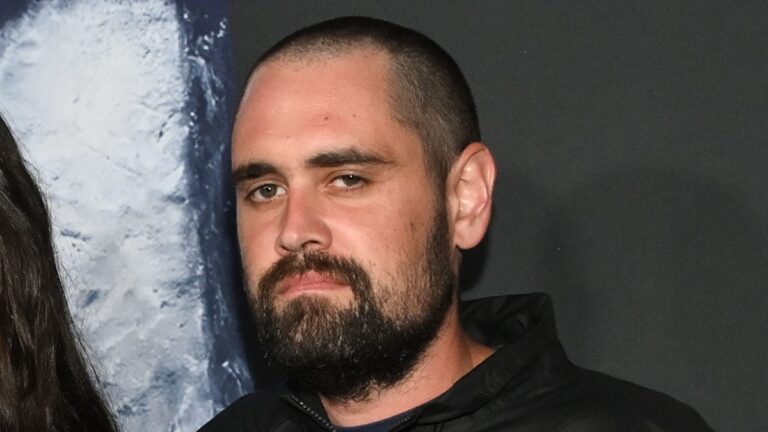
From Stage to Screen: An Insider Chat with Rising Star Egor Kutenkov

A Journey into Acting: Egor Kutenkov’s Story
Who hasn’t dreamed of stepping into the spotlight? For many, acting remains a distant dream, but some, like Egor Kutenkov, take the leap and make it their reality. Known for his lead role in the Russian series “The Magnificent Five,” Egor shares his theatrical secrets, insights into the acting world, and his thoughts on Minsk with “City of Women.”
From Childhood Dreams to Professional Stages
Egor’s journey into acting began in his childhood. “I mainly sang,” he recalls. “In the 9th grade, I started attending a theater school, and then I entered a theater institute.” Although he didn’t initially see himself as an actor, his passion grew over time. “It was just a hobby,” he admits, but it eventually became his profession. Like many, Egor faced teenage insecurities and self-doubt, but he pushed through.
Balancing Act: Career and Family
For Egor, career is crucial, but family comes first. “A career is always very important for a man,” he says. “But the main thing is family.” His wife understands the demands of his profession and supports him. “If work appears, I have to be there,” he explains. “But if it’s something non-essential, I choose in favor of the family.”
Egor admits that there are times when he considers changing professions. “People get tired of everything, even their favorite profession,” he says. But his love for acting always brings him back. He finds inspiration in other professions, like surgery, which he sees as a noble and helpful career.
Theater Life: Tricks and Relationships
On average, Egor performs in 10 plays per month. He doesn’t believe in omens but focuses on concentration and repetition. “The most effective way to deal with excitement before going on stage is concentration,” he shares. “An actor, like a surgeon, performs an operation. Only not on the body, but on the soul.”
Memorizing lines comes with repetition. “If you repeat something 100 times, you will remember anything,” Egor advises. “If you repeat it 400 times, it will be brilliant.” He describes the theater as a small model of the world, with relationships built on friendship and camaraderie.
Theater vs. Cinema: A Comparison
Egor finds both theater and cinema interesting but different. “Theater and cinema differ as much as big tennis and table tennis,” he explains. The theater is a platform for constant training and improvement, while cinema focuses on details and internal power.
Recently, Egor starred in the series “The Magnificent Five,” playing Lieutenant Vladimir. He appreciates the differences between him and his character, especially in terms of technical skills. Egor prefers roles that inspire and motivate people to do good.
Future Roles and Inspirations
Egor believes his main role is still ahead. He admires directors like Boris Khlebnikov, Zhora Kryzhovnikov, and Damien Chazelle. He’s also drawn to Jackie Chan’s work ethic and principles. “Working with a director is always a joint journey into something new,” he says.
Impressions of Belarus
Egor visited Minsk in December with the St. Petersburg State Drama Theater “Comedian’s Shelter.” He performed the tragicomedy “No Tolstoy” at the Yanka Kupala Theater. “I have a very good impression of Belarus,” he shares. “It is a country where there is order, everything is well-maintained, everything is in its place.”
For more insights into the world of acting and theater, check out this authoritative source.