Discover the Unique Charm of the Belarusian Malyavanka Museum: A Journey Through Folk Art
Discover the Unique Charm of the Belarusian Malyavanka Museum: A Journey Through Folk Art
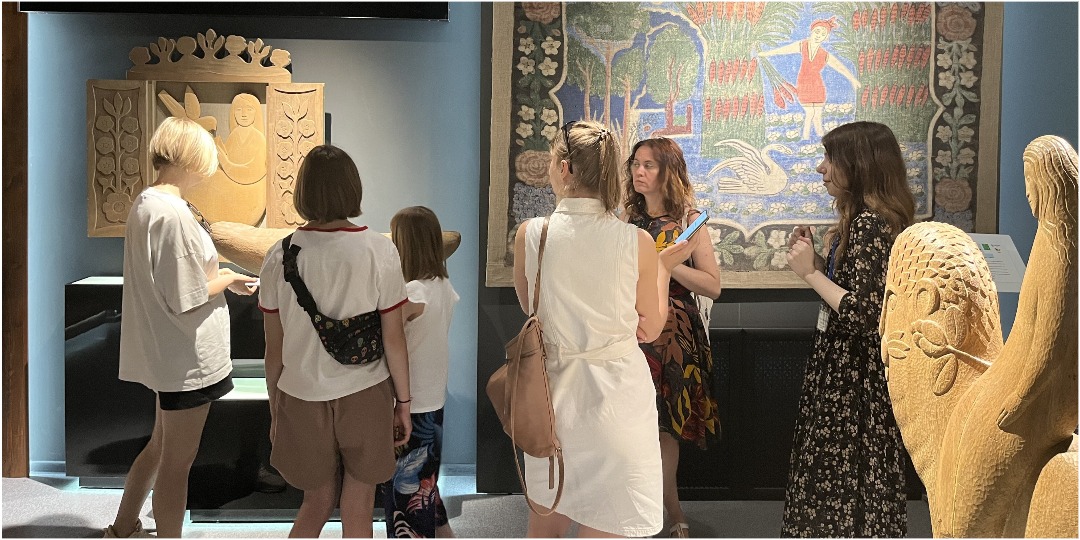
Nestled in the heart of Zaslavl, the Belarusian Malyavanka Museum recently opened its doors, offering a captivating glimpse into the world of traditional painted carpets. The journey to its creation, however, began over three decades ago in 1988, when museum staff embarked on their first expedition to collect these unique artifacts.
The Birth of a Unique Museum
The Historico-Cultural Museum-Reserve “Zaslavl” has been a beacon of cultural preservation for over forty years. The idea of creating a dedicated space for Malyavankas, traditional Belarusian painted carpets, was conceived in the late 1980s. By the early 2000s, the museum had amassed a significant collection, necessitating additional space for display.
The museum proposed repurposing the former House of Children’s Creativity, which had fallen into disuse. In 2019, with the aid of a presidential grant, renovation work commenced. Over four years, the building was meticulously prepared, and the exhibition was designed in collaboration with the firm “Mastak-Service,” which handled both the design and installation.
The Art of Collecting Malyavankas
In the late 1980s and early 1990s, collecting Malyavankas was a fruitful endeavor. Expeditions lasting just a week could yield up to ten painted carpets. However, finding these treasures has become increasingly challenging. The last expedition in 2018 to the Glubochina region resulted in only two Malyavankas being discovered.
This scarcity can be attributed to the passage of time and the natural aging of the original owners. Many Malyavankas, commissioned in the 1930s, have deteriorated or been repurposed for practical uses such as carrying hay. As a result, they are often discarded when no longer needed.
The Artistic Significance of Malyavankas
Malyavankas hold a special place in Belarusian folk art. These painted carpets allowed artists to express their creativity and imagination, which was often limited in other forms of traditional art like embroidery. The accessibility of paints in the 20th century led to the widespread popularity of Malyavankas.
This art form is often associated with naive art and primitivism, characterized by its simple and straightforward themes. Notable artists in this genre include Niko Pirosmani and Henri Rousseau. The “World Encyclopedia of Naive Art,” published in 1984 in Yugoslavia, lists around 800 artists, including the Belarusian artist Alena Kish.
Themes and Symbolism in Malyavankas
Malyavankas often depict a variety of themes, from hunting scenes and romantic couples to mythical creatures and vibrant floral arrangements. The most popular motif is a bouquet of flowers in a vase, known for its vivid colors. Artists frequently drew inspiration from famous paintings, such as Ivan Shishkin’s “Morning in a Pine Forest,” adapting them to the decorative carpet format.
While the symbolism in these carpets may not be deeply profound, they were primarily created to beautify homes. Artists often used stencils for floral patterns, occasionally incorporating their own unique designs or fulfilling specific requests from clients.
Exploring the Museum’s Exhibitions
The Malyavanka Museum offers a range of thematic tours, each focusing on different aspects of this unique art form. Visitors can explore the rotating exhibition hall, the hall dedicated to Yazep Drazdovich, and the hall showcasing the works of Alena Kish.
Alena Kish: A Life Dedicated to Art
Alena Kish, hailing from the Sluchchyna region, lived a life dedicated to her art. Despite coming from a large family, she never had children of her own and spent much of her life living with her sister. Many considered her eccentric, as she did not work in the traditional sense but instead traveled from village to village, creating painted carpets in exchange for food and shelter.
Her works, once simple household items, are now highly valued as genuine works of art. Kish’s unique style will even be featured in the emblems for the upcoming sports games of the CIS countries in Minsk.
Yazep Drazdovich: A Visionary Artist
Yazep Drazdovich’s life was marked by significant historical events, including both World Wars and the revolution. Despite these challenges, he remained deeply educated and curious about various subjects. Unlike many Malyavanka artists, Drazdovich had formal artistic training.
His favorite theme was the cosmos, and his works often depicted celestial bodies and imaginary extraterrestrial life. Drazdovich also dedicated a significant portion of his art to Belarusian architecture, featuring castles and churches. Despite his unconventional style, which led to his rejection from the Union of Artists, Drazdovich continued to create art in exchange for food during difficult times.
He was known for educating villagers, teaching them to read and write, and sharing his knowledge of history, astronomy, and more. His passion for the cosmos often left villagers with a newfound appreciation for the night sky.
Challenges and Future Plans
The preparation of the exhibition was not without its challenges. The structures designed to display the Malyavankas weigh 400 kg each and are equipped with wheels for easy movement. However, the initial wheels were too small and broke under the weight. New, more robust wheels had to be sourced to support the heavy structures.
The museum plans to rotate the exhibited Malyavankas periodically. With a collection of around 300 pieces, only 25 are displayed at any given time. This rotation will allow visitors to experience a variety of works from the museum’s extensive collection.
International Connections
While the Malyavanka Museum is unique, there are similar institutions in other countries. For instance, the Museum of Traditional Art of the Peoples of the World in Moscow houses around 75 Malyavankas, 25 of which were brought from Belarus. The remaining pieces are believed to be of Russian origin, reflecting the constantly changing borders and shared cultural heritage of the region.
For more information on naive art, you can visit the Naive Art Wikipedia page.