Wild Harvest 101: Expert Forager Johanna Knox Spills Her Top Tips!
Wild Harvest 101: Expert Forager Johanna Knox Spills Her Top Tips!
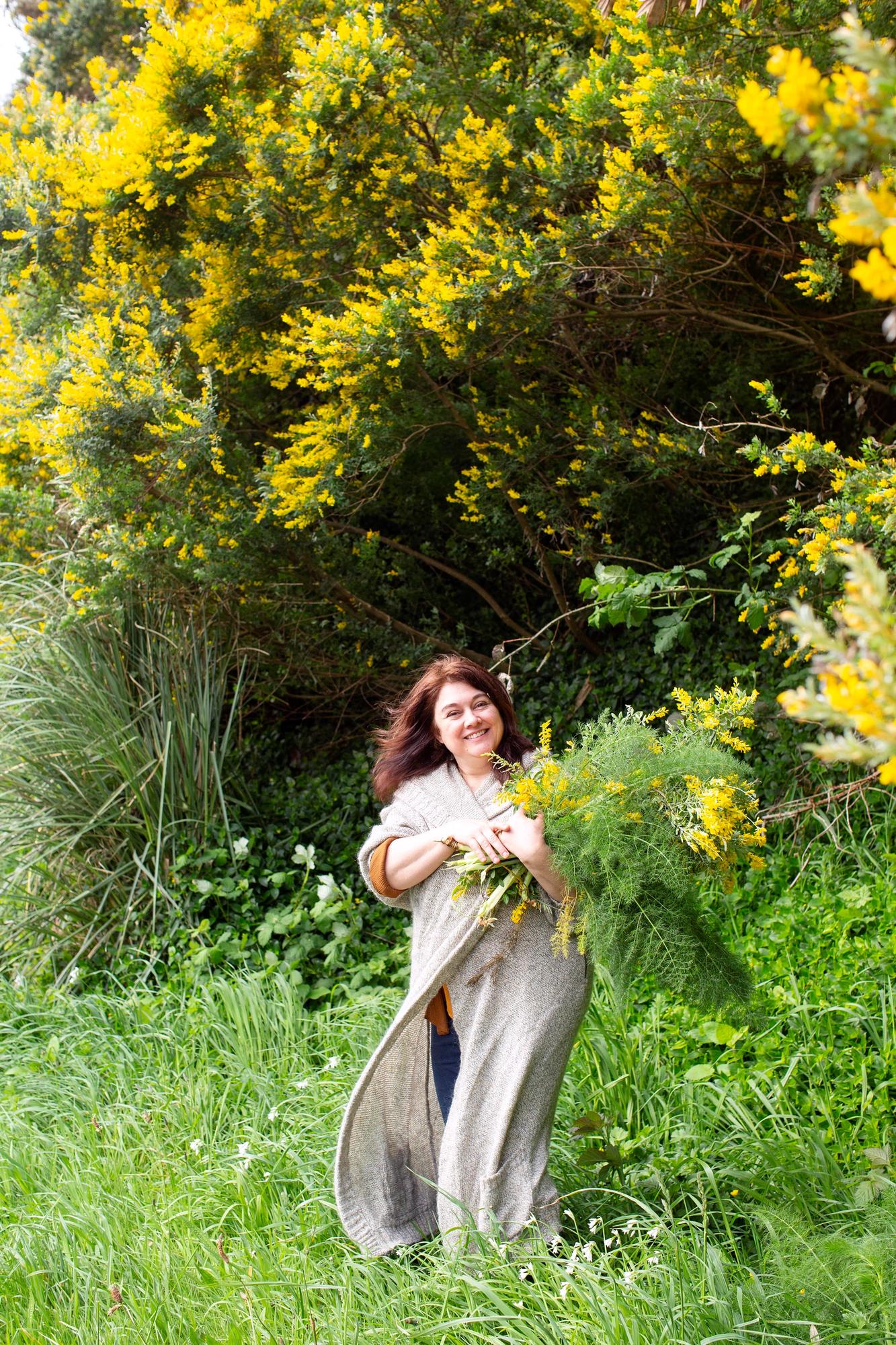
Kiwi forager Johanna Knox reveals that there’s a cornucopia of food just waiting to be discovered in both urban and rural wildernesses – if you know where to look.
We’re All Born Foragers
I believe we’re all natural-born foragers. From the moment we’re born, we’re driven to explore our surroundings, using our senses to find sustenance. As we grow, we continue to use all our senses in the hunt for health and nourishment. Foraging satisfies many needs at once: the need to escape, to explore, to discover, to collect, to heal, and to provide for ourselves and our loved ones. But most importantly, it connects us to the world around us.
Discover the Terroir
As a forager, you have a unique opportunity to discover the effects of terroir on the plants in your area. A short walk can reveal, for example, that the lavender flowers growing outside a local café have a different fragrance than those growing by a neighbor’s gate. This is the magic of foraging – discovering the unique characteristics of the plants in your patch.
Foraging Guidelines
Before you start your foraging journey, make sure to familiarize yourself with the relevant guidelines and legislation. Be careful to forage away from areas of pollution and avoid areas that have been sprayed with herbicides or pesticides. If you’re unsure where these areas are, contact your local council to check.
Treasures to Forage For
Mānuka and Kānuka
It’s easy to confuse mānuka with its relative kānuka, but kānuka has noticeably softer leaves. It also generally grows larger than mānuka, lives longer, and has smaller flowers – white only – that tend to grow in clusters. Mānuka is the go-to source of woodchips or sawdust for smoking meat, fish, cheese, chocolate, and more.
Mānuka leaves make a delicious flavoring for both savory and sweet dishes. Use slim branches to infuse the cooking liquid, then remove them as you would rosemary. Alternatively, dry the leaves and powder them to use like any other dried herb. Kānuka generally has a more harshly medicinal flavor and aroma. Try young, new leaves, stripped from their branches and finely chopped, in any recipe where you’d normally use thyme, lavender, or mānuka.
Clover
The petals have sweet nectar at their base and can be pulled apart and sprinkled into salads or onto biscuits, cakes, and desserts as a garnish. The leaves are quite edible, too, although most people are underwhelmed by that thought. Where they grow lushly, red clover flowers have a gorgeous honeyed fragrance, but this doesn’t last long after picking.
Clovers are also highly valued by some for the estrogenic isoflavones they contain and are said to help with troublesome symptoms of menopause. Many over-the-counter treatments contain red clover extracts, but some people swear by a simple tisane of the flowers, taken daily (it’s pleasant and mild in flavor).
Ice Plant
Ice plants sprawl in mats across beaches around the country. The fig marigold is a large yellow ice plant with thick, finger-like leaves that are three-sided in cross-section. It’s an invasive pest from South Africa that overruns native plants and changes the structure of sand dunes. Our native ice plant, horokaka, needs to be cherished. It has smaller pink flowers, and its leaves are smoothly curved like tapering tubes, rather than three-sided.
Succulent ice plant leaves are harshly tannic and only barely edible raw, but they can be sliced and pickled. Pound the leaves to release the juice and use it neat or in vinegars or tisanes. Applied externally, the juice soothes and protects grazed, irritated, or inflamed skin.
Edited extract from The Forager’s Treasury by Johanna Knox (Allen & Unwin, RRP $45). Photos by Luke Harvey and Johanna Knox.