Sue Kedgley: A Trailblazing Feminist’s Journey Through Women’s Liberation and Beyond
Sue Kedgley: A Trailblazing Feminist’s Journey Through Women’s Liberation and Beyond
From the front lines of women’s liberation to the halls of the UN and Parliament, Sue Kedgley has been a driving force for change over the past 50 years. In an inspiring conversation, she shares her journey, the pivotal moments that shaped her path, and her optimism for the generations to come.
A Life Shaped by Chance and Purpose
“So much of my life happened by chance,” reflects Sue Kedgley, a statement that belies the profound impact she has had on women’s rights in New Zealand. Known to many as a former Green MP, Sue’s influence as one of the country’s original women’s liberationists is immeasurable. As she invites us into her Wellington home to discuss her latest book, Fifty Years a Feminist, the 73-year-old shares her remarkable journey, from a passionate young activist to one of the nation’s most tireless campaigners.
An Extraordinary Path Unfolds
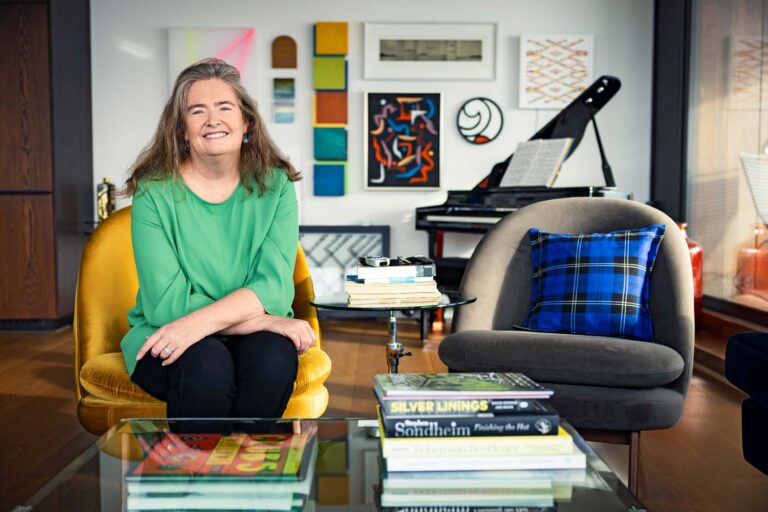
On a crisp autumn Tuesday, we ascend the stairs to Sue’s Oriental Bay home, which she has shared with her husband, lawyer Denis Foot, for the past decade. The house is adorned with art and artifacts collected over the years, including stunning pieces by Sue’s twin sister, artist Helen Kedgley. As we settle into the living room with cups of liquorice tea, the breathtaking views of Wellington Harbour serve as a reminder of the beauty that surrounds this fierce advocate for change.
A Feminist Perspective on Life
Sue’s life has been marked by a series of transformative experiences. Her seventh book, Fifty Years a Feminist, offers a deeply personal look at her journey, distinct from her previous works that focused on motherhood and suburban neurosis. “This book is me looking at my life from a feminist perspective,” Sue explains. “It’s about how I’ve lived since becoming a passionate women’s liberationist at 23, which meant not having to bow down to a man but doing what I wanted.”
The Struggle for Equality
The fight for women’s rights has been a long and arduous one. In the 1800s, New Zealand women were not even recognized as legal entities. By the early 1970s, when Sue became awakened to feminism, only 11 women had served as MPs in the country. There was no state support for women leaving violent partners, and women were not entitled to matrimonial property. Sue believes that the lingering effects of 6000 years of patriarchy, which held that men were inherently superior to women, continue to be felt today.
“Back then, after marriage, a woman ceased to exist as a legal person and became the property of her husband, much like a table or chair,” Sue recounts. This stark reality underscores the importance of her book, which aims to educate young women about the struggles and triumphs of the feminist movement.
Confronting Sexual Violence
Sue’s own life has been touched by the dark specter of sexual violence. In her book, she reveals that at the age of 23, she was sexually assaulted by Australian media personality Harry Miller, whom she describes as the “Antipodean version of men like Harvey Weinstein and Jeffrey Epstein.” The assault took place in an Auckland hotel room, and Sue’s harrowing account serves as a stark reminder of the pervasive nature of sexual violence and the silence that often surrounds it.
“He grabbed me, threw me onto the bed, and tried to pull up my dress and force me to have sex with him,” Sue writes. “An almighty wrestle ensued as I kicked and fought for my life.” Despite escaping, Sue did not report the assault, a decision that reflects the societal attitudes of the time. “There was nowhere to go and no one who’d believe you. Back then, it was perfectly legal for men to rape their wives.”
A Feminist Awakening
Sue’s feminist journey began in earnest when she attended Victoria University of Wellington. Inspired by a book she still owns, Sisterhood is Powerful, Sue experienced what she describes as a “feminist click,” a lightbulb moment that illuminated the deep-seated inequalities in society. “It suddenly struck me that everything in our society revolved around men, and women were simply expected to be a servant class to the male population,” she recalls.
Galvanized by this realization, Sue established New Zealand’s first women’s liberation group, which eventually led to roles in the Labour Party and the American feminist group NOW (National Organization for Women). Her activism took her to a women’s conference at Harvard University, where she had the opportunity to meet John Lennon and Yoko Ono. “Those were the days before cellphones, and I didn’t have my camera with me, but I wished I’d taken some photos of them and their apartment,” Sue reminisces.
A Global Perspective on Women’s Issues
Sue’s work at the United Nations provided her with a global platform to advocate for women’s rights. She was at the forefront of two global UN women’s conferences, the first time women from around the world came together to voice their grievances. “I realized that the same things concerned women the world over; things like equal pay, sexual harassment, and having to do the lion’s share of caregiving and domestic work,” Sue observes.
It was also at the UN that Sue met former UN Secretary-General Kofi Annan. When asked about dating him for a year, Sue responds with grace and fondness, recalling Kofi as a lovely man whom she kept in contact with for many years before his death in 2018.
A Return to New Zealand and Continued Advocacy
After eight years in New York and at the UN, Sue returned to New Zealand to be closer to her family following a car accident involving her parents. She resumed her career in journalism, this time at TVNZ, where she worked on various projects, including writing the news and directing Country Calendar. In 1998, Sue met Denis, a divorced father of two, and they married in 2000.
Throughout her life, Sue has remained a steadfast advocate for women’s rights, her journey a testament to the power of passion, perseverance, and the unwavering belief in the cause of equality.