7 Absurd Medieval Fashion Rules You Won’t Believe
7 Absurd Medieval Fashion Rules You Won’t Believe
When we think of medieval fashion, romantic images of women in ball gowns, gold jewelry, and velvet cloaks come to mind. However, the reality of medieval women’s style was radically different from what is depicted in historical dramas. There were even regulations dictating what women could and could not wear on specific days. It’s clear that peasant women couldn’t afford mink coats, but did you know they were outright forbidden from purchasing them? Women of that era didn’t follow the latest fashion trends from Paris; instead, they adhered to strict rules about what could be in their wardrobes.
Wear What the Lord Has Given You
The Middle Ages were a deeply religious period. If a woman was a serf, she was stuck with the same outfit for life. If the Lord made her a castle lady, her clothing had to reflect that status. The same went for merchants’ wives or lepers. The arguments weren’t with stylists but with the church. If you lived in the Middle Ages, you would wear the same clothes for your entire life. Sure, a woman could buy different attire, but society would condemn her for such a frivolous act.
Cover Your Hair When Leaving the House
In our time, covering hair with hats might seem a bit old-fashioned, but this shift happened quite recently. Just think: in any adaptation of Jane Austen’s works, women constantly wear berets or hats. All clothing, including headwear, indicated status, profession, marital status, and religion—all discernible at first glance. Before changing a hairstyle, one had to seriously consider whether the new style would match their social standing.
Avoid Ostentation at All Costs
The Bible lists pride and gluttony among the seven deadly sins, so pious Christians had to live modestly and resist temptations. The Devil’s playthings included gold jewelry and silk. To avoid temptation, rulers issued laws determining clothing prohibitions. The main goal was to control the hierarchy. Even a merchant’s wife wasn’t allowed to wear imported clothing, as a fashionista had to be aware of not just her gender but also her class. Artisans’ wives were forbidden from wearing silk veils and furs, except for rabbit, cat, or fox.
Medieval rulers often linked economic failures to women’s clothing and rising birth rates. Perhaps their logic was that women became too excited by dressing up and wanted to have more children.
Loose Hair Equals Sex
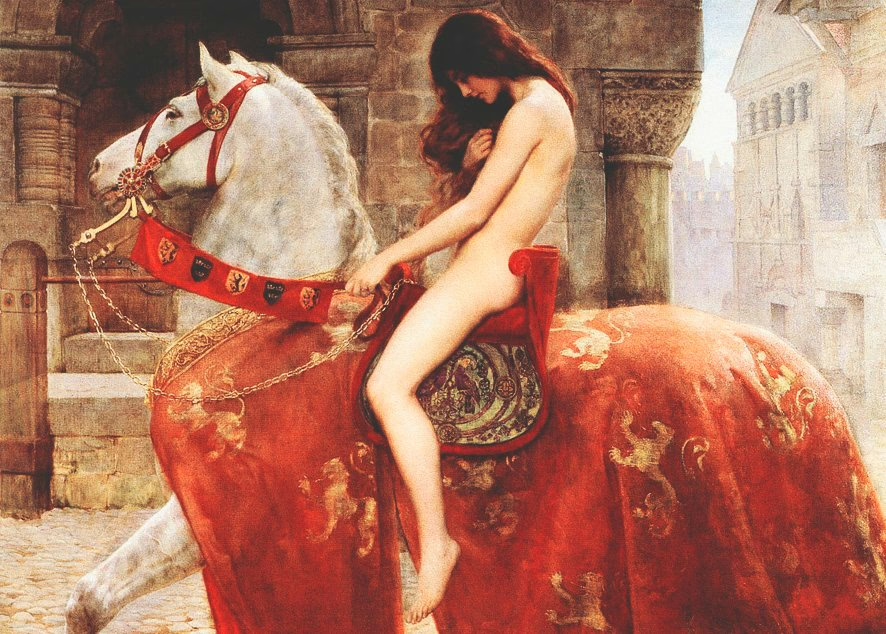
Not only were women not allowed to stand out, but they also had to fit into societal norms. Today, we see clothing as a way to express individuality, but for medieval people, the manner of dress was a way to indicate group affiliation. Loose hair symbolized sexuality, so only prostitutes could wear their hair down. Imagine if one morning, while going to work, you forgot your hat or hairpin, and by evening, the whole town would be gossiping about your supposed change in profession.
In the French town of Arles, if a woman saw a prostitute with her head covered, she had the right to tear off her head covering to reveal the prostitute’s identity and prevent anyone from being deceived. Wouldn’t it be nice if we could do the same when we see someone wearing the same dress as us?
Boots by Rank
The most interesting restrictions concerned footwear. Rules existed for the shape, material, and, most importantly, the height of boots. A high boot meant that the craftsman required more materials to create, hence more gold coins. Using a large amount of materials illustrated luxury and vanity, which people aspired to. This had to be restricted at the state level.
In the Middle Ages, women embodied the honor and social status of the family. They had no special rights or opportunities to work, but what they wore was of great importance to those around them.
Illustrations in Books Must Be Modest
This rule even applied to textbooks. Here’s an example from an anatomical book of that period: the illustration shows a pregnant woman and her internal anatomy. Notably, she is drawn wearing a head covering that hides her hair and neck. Thus, her honor is preserved, and readers can be assured that she is a respectable woman, not just a dissected corpse of a careless courtesan.
Don’t Try to Outsmart the Law
It was hard to explain to the king and the church the importance of dress decorations, but that didn’t stop women from trying. For this purpose, a fashion police was created—the ‘Officials for Women’s Affairs,’ who kept an eye on all extravagant individuals strolling through the streets. Wealthy ladies found ways to outsmart them: they would dash into the church, which was a safe haven.
The fashionable women of those times were known for their quick reactions, wit, and evasive answers. Regardless of what the country and the church dictated, they always found a way to look fabulous.
For further reading on historical fashion, you can visit The Metropolitan Museum of Art.